The Consent Gap: Why WhatsApp Growth Needs Governance
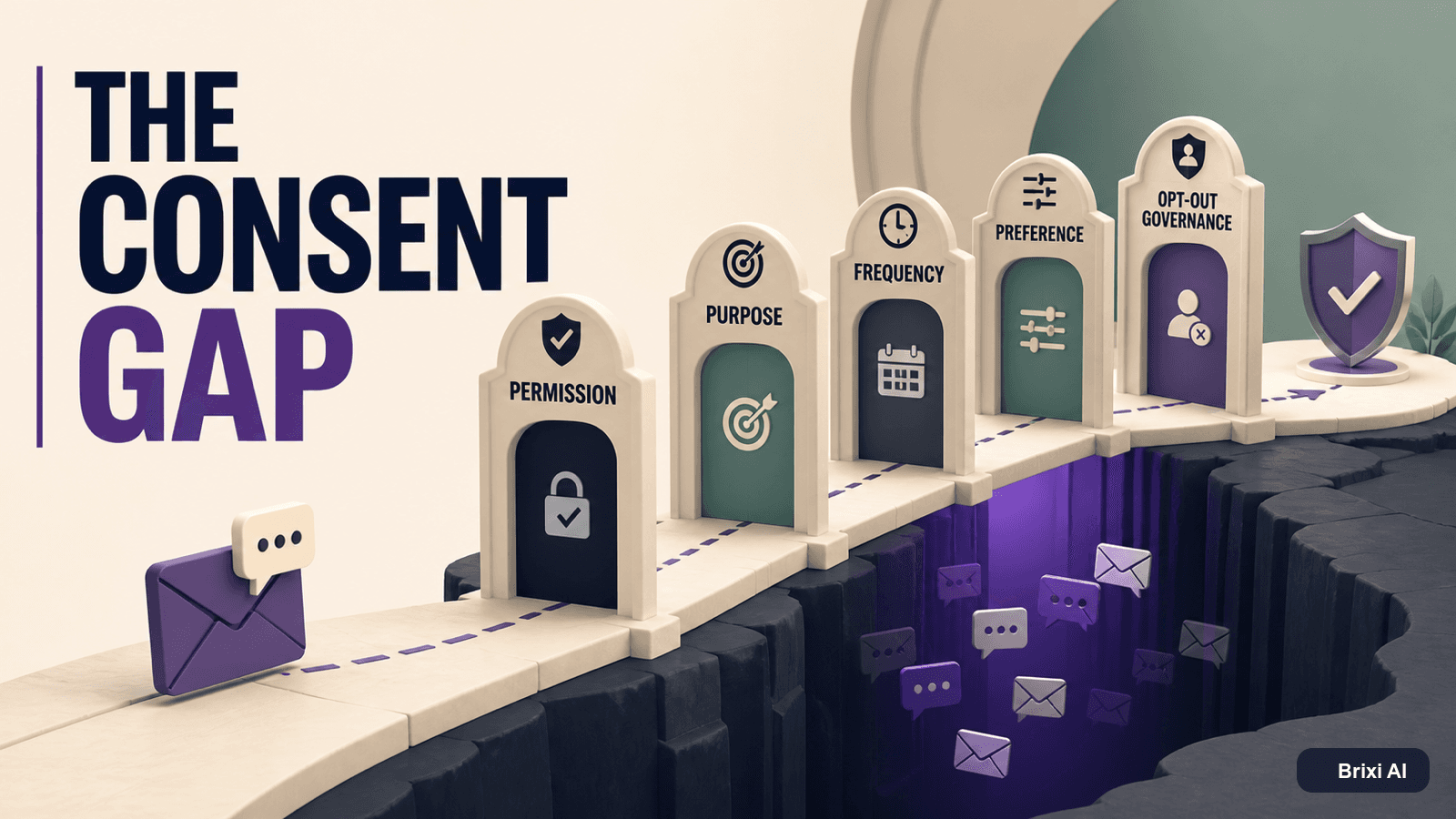
Consent is not a checkbox that permanently authorizes every campaign. The Consent Gap appears when acquisition teams capture permission but operations cannot prove or respect its context.
At 4:32 on Friday, a growth manager launches a WhatsApp campaign to 18,000 contacts collected from forms, events, imports, and old sales lists. Within an hour, support starts receiving complaints from people who do not remember agreeing to promotional messages.
The campaign team can point to a consent field. It cannot show what language the person saw, which purpose they accepted, when it happened, or whether a later opt-out reached every workflow. That distance is the Consent Gap.
The Consent Gap separates permission capture from operational behavior
Consent has context: source, purpose, disclosure, time, identity, and withdrawal. Treating it as a permanent yes-or-no field makes governance fragile and customer experience careless.
Platform requirements and applicable law can change by market and message type. Teams should verify current Meta requirements and local legal obligations rather than treating this article as legal advice. The operating principle remains stable: messaging should be expected, relevant, controllable, and auditable.
Permission must travel with the customer record
Store how consent was collected, which purpose was described, the language shown, the timestamp, and the source. Imported lists without evidence should not inherit broad messaging permission.
Identity resolution matters because one person may appear under multiple phone formats or records. An opt-out attached to only one duplicate creates contradictory behavior.
- Consent source and timestamp
- Purpose and disclosure version
- Customer identity and market
- Opt-out, suppression, and preference history
Governance must shape the workflow before send time
A last-minute list check cannot repair weak journey design. Eligibility, message category, approved content, frequency, quiet periods, and escalation should be part of the workflow.
Customer replies also change the path. A request for help should route to service, a purchase question to sales, and an opt-out to immediate suppression rather than another campaign branch.
Relevance is an operating control, not just a copy choice
Even permitted messages can damage trust when they ignore lifecycle, recent conversations, frequency, or resolved needs. Governance should ask whether the message is appropriate now.
Shared memory prevents a marketing automation from sending a promotional sequence after a complaint, cancellation, or completed purchase has changed the relationship.
Permission without context is weak governance
A defensible messaging program can explain why this customer received this message at this moment and how they can stop it.
Brixi connects messaging policy with customer context
Brixi brings WhatsApp conversations, CRM records, workflow logic, AI assistance, ownership, and opt-out handling into one operating layer. Eligibility can reflect both stored permission and current journey context.
Replies become actionable customer signals. Suppression and preference changes can update the shared record so other campaigns and teams do not continue contradictory outreach.
- Consent and preference context in CRM
- Journey-aware message eligibility
- Reply intent routing and human escalation
- Central suppression and audit history
A quarter should improve trust as well as delivery
Baseline complaint, block, opt-out, response, resolution, and conversion measures by source and message purpose. Delivery alone is not evidence of a healthy program.
Review exceptions every month. Old imports, ambiguous permission, repeated templates, and disconnected suppressions usually reveal where governance needs redesign.
- Clearer consent evidence
- Lower complaint and duplicate-send risk
- Faster handling of replies and opt-outs
- More relevant messaging by lifecycle and intent
The deeper bet is relationship-aware messaging
As AI increases message volume, indiscriminate outreach becomes easier and more damaging. The scarce capability will be restraint informed by context.
The strongest platforms will not merely help companies send more. They will help each company know when to send, what purpose is legitimate, when to stop, and when a person should take over.
Build WhatsApp growth on customer trust
See how Brixi connects messaging, CRM context, workflows, preferences, and team ownership.
Explore WhatsApp MarketingFrequently Asked Questions
No. Maintain evidence of appropriate permission and follow current Meta requirements and applicable local law for the message and market.
Store source, timestamp, purpose, disclosure version, customer identity, market, preference changes, and opt-out history.
Review policy changes continuously and audit campaign eligibility, complaints, blocks, opt-outs, duplicates, and workflow exceptions at least monthly.