Omnichannel Customer Engagement Platform: 2026 Buyer Guide
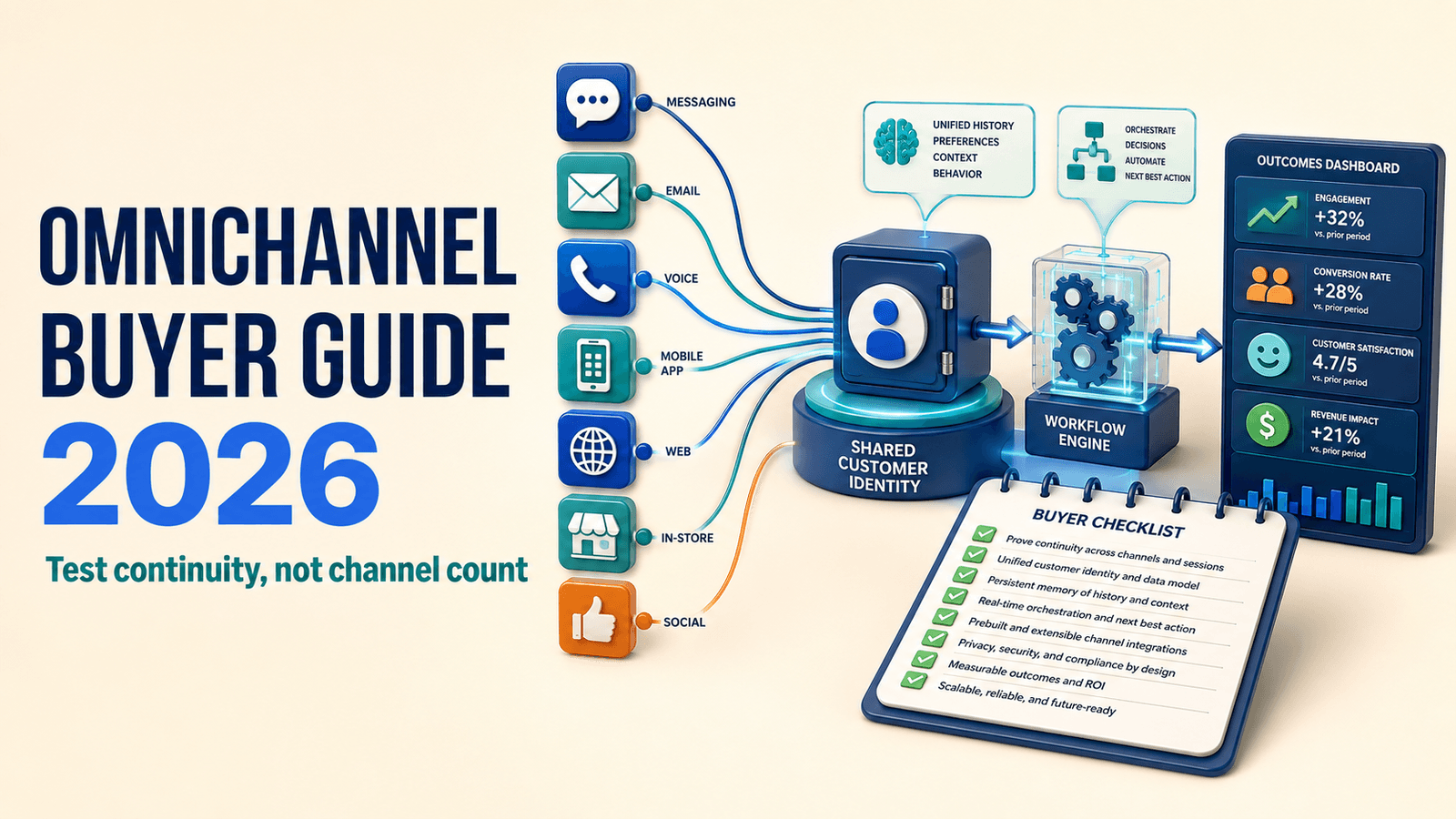
Many platforms put several channels on one screen while preserving separate customer histories and workflows underneath. This buyer guide tests the operating layer.
At 9:30 on Monday, a buying committee watches a vendor combine WhatsApp, email, voice, and chat in one inbox. The demo looks unified. Then the operations lead asks whether a callback promise made on voice can suppress an email sequence and route a WhatsApp reply to the same owner.

The operational moment where the hidden cost becomes visible.
An omnichannel customer engagement platform should be evaluated as an operating system, not a collection of tabs. The Continuity Test asks whether identity, memory, ownership, and workflow state survive every channel change.
The Unified Inbox Illusion stops at the interface
A shared screen can still sit on top of separate records, automation rules, analytics, and ownership models. The Unified Inbox Illusion makes navigation easier without making the customer journey coherent.
The buyer should test one real journey across channels and inspect whether context and actions remain connected underneath.
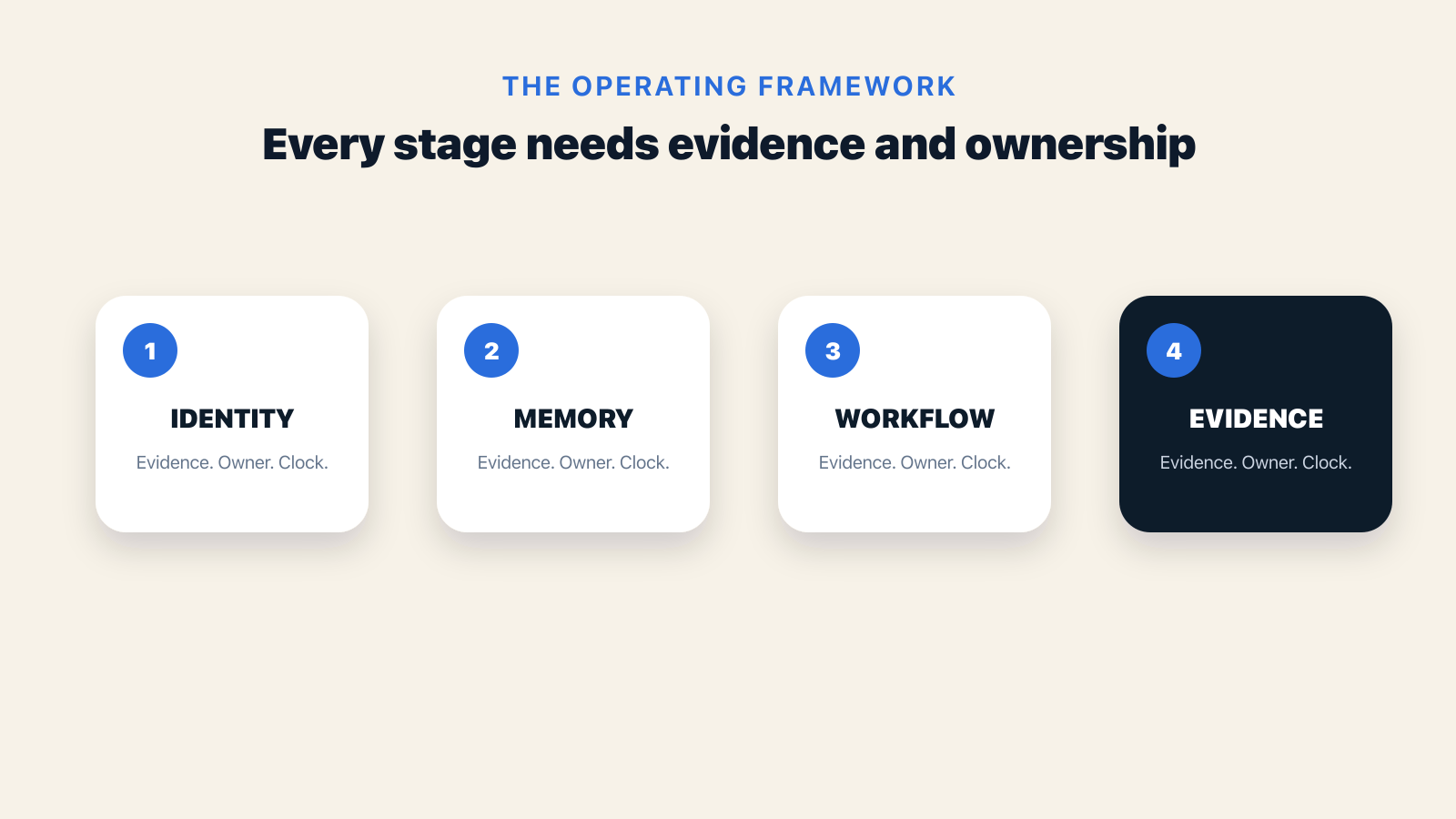
The workflow becomes manageable when causes, decisions, and owners are visible.
Eight capabilities determine platform depth
Ask vendors to demonstrate the behavior, not confirm a checklist. Use customer-level scenarios with rescheduling, failure, escalation, and channel switching.
The right platform should explain why it made each decision and what happens when confidence is low.
- Identity resolution
- Shared conversation memory
- Intent detection
- Ownership and routing
- Cross-channel workflows
- AI action boundaries
- Human handoff
- Journey analytics and governance
Test exceptions before polished happy paths
Ask what happens when the customer changes intent, replies from a different channel, opts out, becomes angry, or needs a specialist.
A platform that cannot coordinate exceptions will push the hardest work back into tickets, spreadsheets, and manager messages.
Price the operating stack, not the inbox license
Include integration, workflow maintenance, conversation charges, AI usage, implementation, oversight, failure recovery, and the people required to reconcile tools.
A lower seat price can create a higher operating cost when teams must supply the missing memory and coordination manually.
Run the Continuity Test
Change the channel, owner, timing, and customer intent. The journey should remain coherent and explainable.
Brixi is built as a complete AI-native customer platform
Brixi connects AI assistants, CRM, Voice AI, WhatsApp, email, web chat, workflows, buyer intent, conversation intelligence, and human execution.
The customer timeline, operating state, and outcome evidence remain connected while channels and owners change.
- One customer identity and memory
- AI and human action on shared context
- Cross-channel workflow orchestration
- Journey-level analytics and governance
A 90-day pilot should prove one complete journey
Choose a workflow with real volume and measurable leakage. Establish the baseline, connect required data, define autonomy and escalation, then compare outcomes.
Avoid pilots that demonstrate messaging without testing ownership, exceptions, failure recovery, and business results.
- Verified channel continuity
- Known integration and operating cost
- Measured resolution improvement
- Clear roadmap for expansion
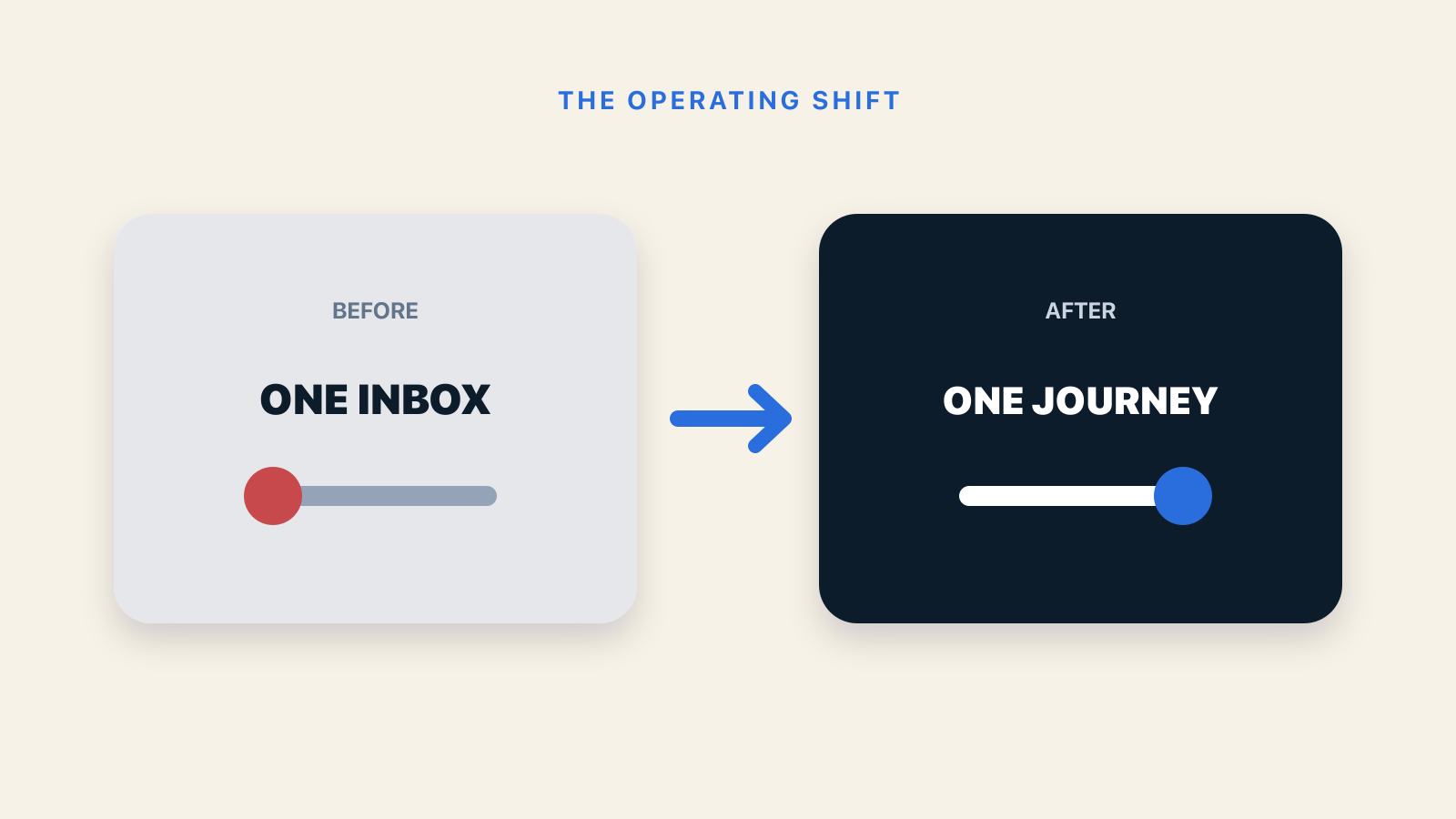
Better customer outcomes appear when the full loop is measured.
The deeper bet is that omnichannel becomes customer-level continuity
Customers do not care how many channel integrations a platform lists. They care whether the company remembers, responds appropriately, and completes what it promised.
Omnichannel will become less about message transport and more about maintaining one coherent operating relationship.
Put your omnichannel shortlist through the Continuity Test
See how Brixi connects customer identity, memory, AI, workflows, ownership, and outcomes.
Book a platform walkthroughFrequently Asked Questions
It connects customer identity, conversations, context, routing, workflows, analytics, and human teams across channels.
Multichannel offers several channels. Omnichannel preserves one customer journey and operating state as the customer moves between them.
Measure continuity, resolution, handoffs, customer effort, manual work, failure recovery, and the economic outcome of one complete journey.