The Forecast Evidence Gap: What Sales Conversations Reveal First
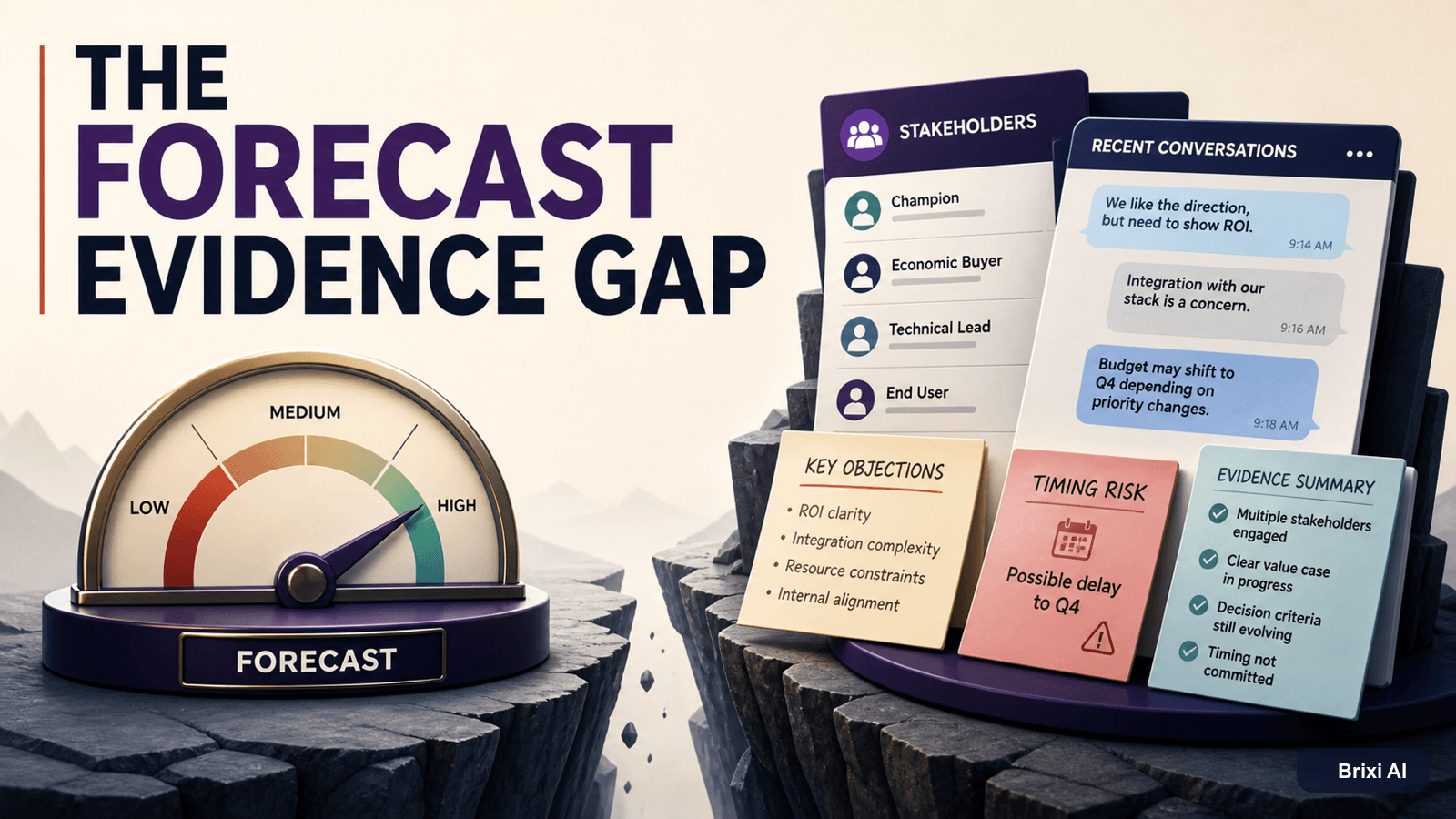
A CRM stage can remain unchanged for weeks while the buyer language has already shifted. The Forecast Evidence Gap is where pipeline confidence separates from customer reality.
At 3:20 on Monday, a regional manager reviews a deal marked proposal sent with an eighty percent probability. The last call sounds positive until the buyer says the finance head has not seen the proposal and the current vendor offered a six-month extension. Neither detail appears in CRM.
The stage says the deal advanced. The conversation says the decision became harder. That difference is the Forecast Evidence Gap.
The Forecast Evidence Gap grows between field updates
CRM stages compress a changing negotiation into one label. Reps update them intermittently and often wait for explicit events. Buyer language changes earlier through hesitation, stakeholder references, timeline shifts, competitive mentions, and weak commitments.
Conversation intelligence should not replace judgment with sentiment scores. It should make the evidence behind judgment visible, comparable, and reviewable.
Commitment language matters more than positive tone
A friendly call can produce no progress. Forecast evidence comes from reciprocal commitments: named actions, responsible people, dates, access to stakeholders, document requests, and agreed decision steps.
Vague phrases such as circle back, discuss internally, and keep you posted should lower confidence until a concrete next step appears.
- Named next action
- Responsible buyer and seller
- Specific completion date
- Evidence of broader stakeholder access
Risk appears as change, not a single phrase
One budget objection may be routine. A sequence of slower replies, cancelled meetings, reduced stakeholder participation, and repeated timing questions is more informative.
Compare the current conversation pattern with the deal's own earlier baseline and with historical win and loss patterns. Change in evidence often matters more than absolute sentiment.
Managers need receipts for forecast intervention
A risk label without supporting excerpts creates argument. Reps defend relationships that managers cannot see, while models appear arbitrary.
Surface the reason, conversation moment, timeline, and recommended inspection question. The manager can coach or intervene without listening to every recording.
Tone is not commitment
Forecast confidence should rise when buyer actions become more specific, mutual, and time-bound.
Brixi connects conversation evidence with pipeline action
Brixi analyzes customer conversations for intent, objections, urgency, risk, stakeholders, and next steps, then connects those signals to CRM and workflows.
A risk can trigger a review, a missing stakeholder can become a coaching action, and a timing change can update the follow-up plan without losing the source evidence.
- Conversation evidence tied to deals
- Risk and commitment change detection
- Manager-ready coaching receipts
- Workflow actions from forecast signals
After a quarter, pipeline reviews become evidence reviews
Run conversation evidence beside the existing forecast before changing commit policy. Compare which signals preceded wins, losses, and slippage.
Managers should see fewer surprise slips and spend more review time on specific interventions rather than asking every rep for a confidence story.
- Earlier detection of slippage
- More specific manager coaching
- Better stakeholder and next-step discipline
- A forecast that can be explained with customer evidence
The deeper bet is an observable revenue process
Revenue teams have accepted that the most important evidence lives inside private conversations and individual memory. AI makes that evidence available without requiring managers to monitor every call.
The future forecast will still include human judgment. It will simply require that judgment to stand beside the customer evidence that supports or contradicts it.
Ground your forecast in customer evidence
See how Brixi turns sales conversations into deal risk, coaching, and next-best actions.
Explore Conversation AnalysisFrequently Asked Questions
Sentiment alone is weak. Combine commitment language, stakeholder participation, objections, timing, response patterns, and historical outcomes.
No. It adds evidence between stage updates and exposes when the recorded stage diverges from current buyer behavior.
Run it in parallel for a quarter, show the evidence behind each signal, compare predictions with outcomes, and tune rules before using it in commit decisions.