How to Build a Follow-Up SLA Sales Teams Can Operate
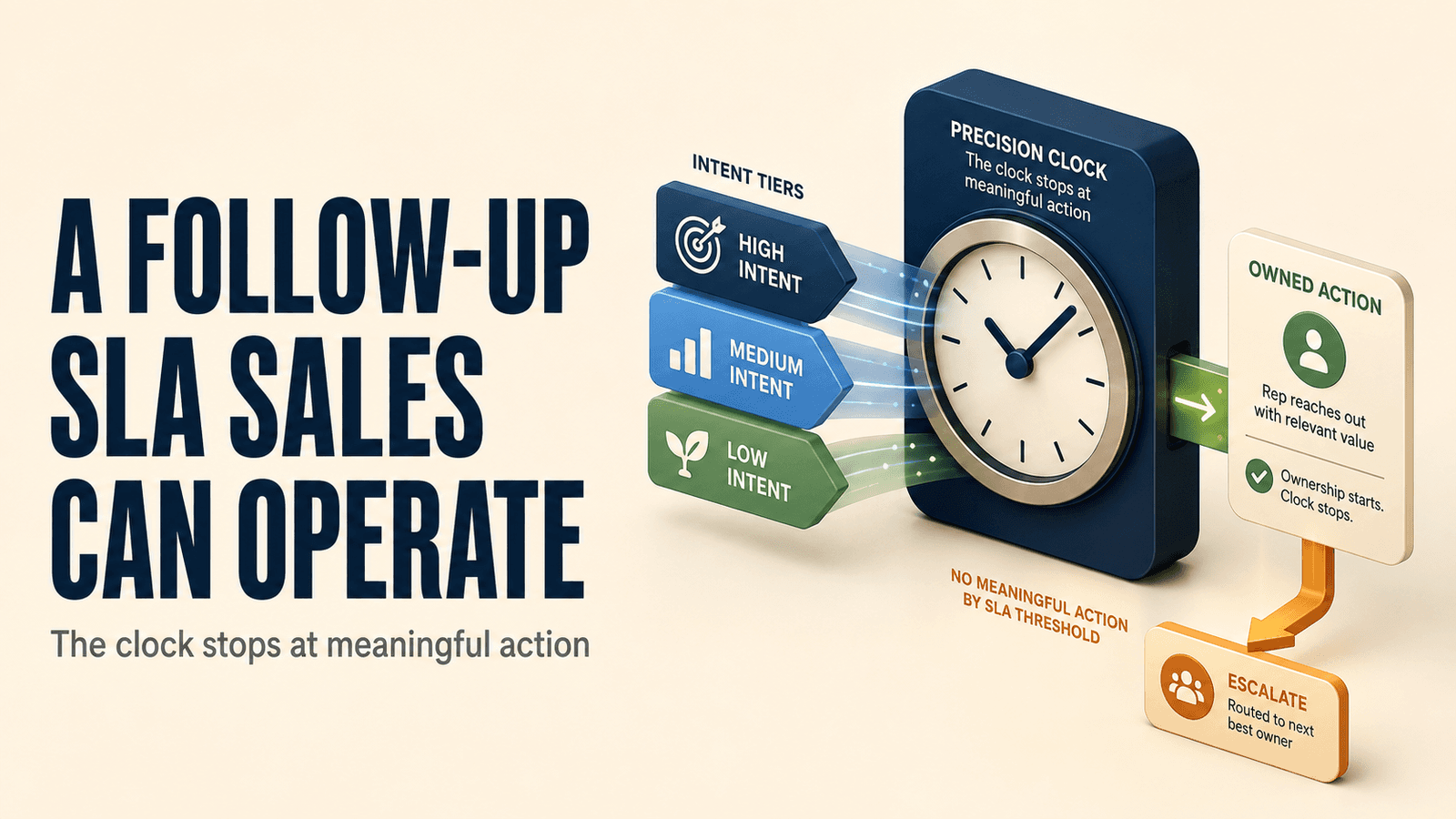
Most follow-up SLAs reward activity without defining relevance, ownership, escalation, or completion. The Meaningful Action Clock makes the promise operational.
At 5:25 on Friday, a sales manager asks why a high-intent lead waited six hours. The assigned rep points to three automated emails and says the lead was contacted. The buyer had asked for a phone call before lunch. The SLA was technically met and commercially missed.

The operational moment where the hidden cost becomes visible.
A usable sales follow-up SLA measures the Meaningful Action Clock. It defines the response that fits the customer's intent, the owner who must act, and the escalation that begins when the action does not happen.
The Touch Compliance Trap rewards motion without progress
Logging a call attempt or sending a generic message is easy to count. The Touch Compliance Trap lets those activities satisfy the SLA even when they ignore the requested channel, timing, or question.
The SLA should specify a meaningful response for each intent tier. A pricing request, complaint, callback request, brochure download, and dormant lead should not share one clock.
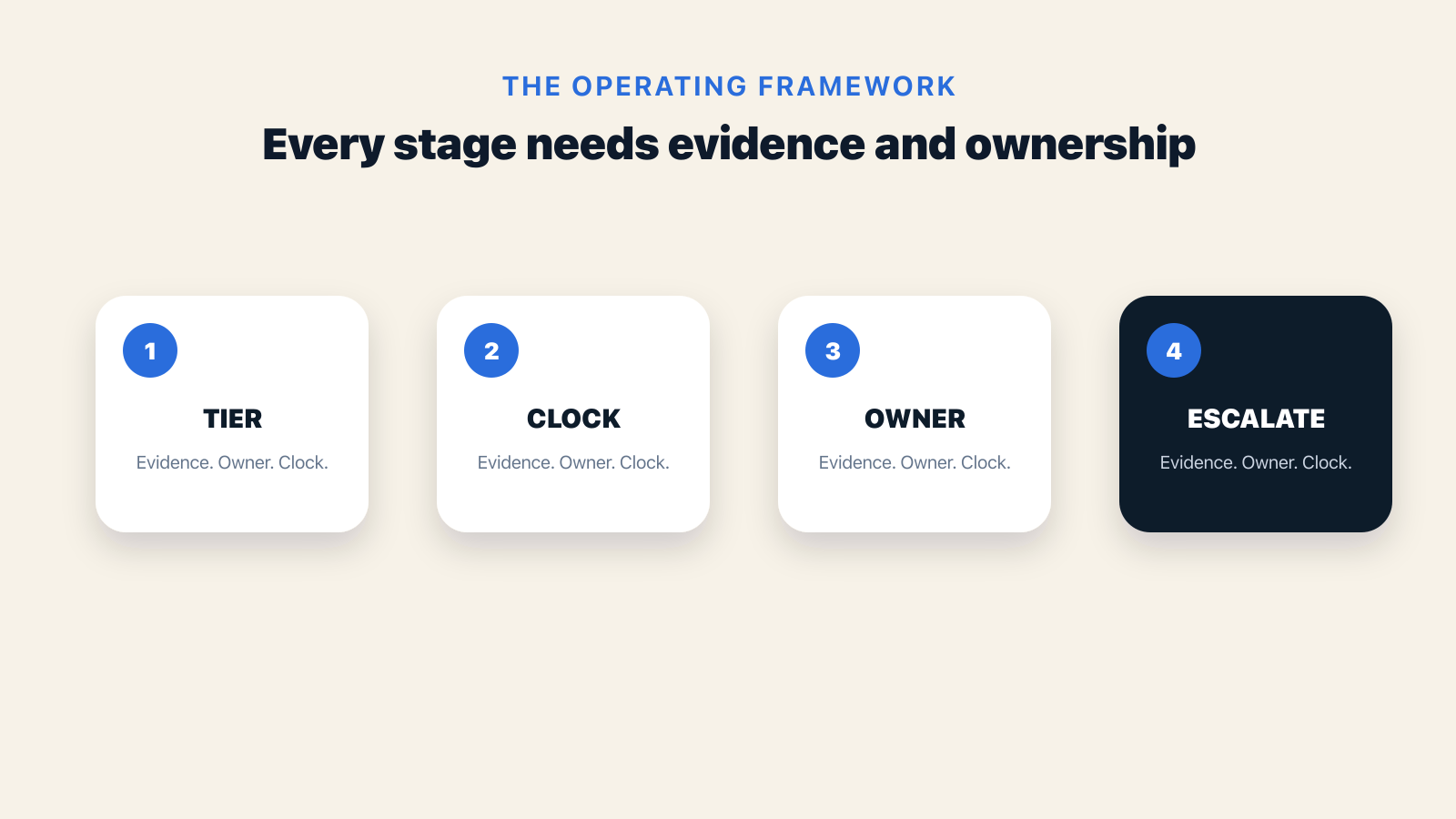
The workflow becomes manageable when causes, decisions, and owners are visible.
Start with intent tiers and required outcomes
Define a small number of tiers based on urgency, value, buying evidence, risk, and customer commitment.
For each tier, name the acceptable first action, completion condition, and evidence required to close the clock.
- Tier 1: urgent or high-intent human action
- Tier 2: qualified interest with timed follow-up
- Tier 3: early research with automated education
- Recovery: missed owner action or customer silence
Ownership must include acceptance and reclaim
A name in a CRM field does not prove anyone saw the assignment. Require acceptance for priority leads and automatically reclaim work when the deadline expires.
Escalation should move the customer forward without creating duplicate contact from several managers.
Channel and timing belong inside the SLA
A customer who says call tonight has supplied both channel and schedule. Treating that as a generic task throws away useful intent.
The SLA should retain language, timezone, consent, contact history, and the exact promise made.
The clock stops at meaningful action, not recorded activity
A compliant touch that ignores customer intent is still a missed response.
Brixi makes the SLA executable across channels
Brixi uses conversation context, buyer intent, CRM state, availability, and workflow rules to assign the right action and clock.
AI assistants can handle approved paths immediately, while missed deadlines and nuanced cases move to people with complete history.
- Intent-tier response clocks
- Acceptance, reclaim, and escalation
- Channel and schedule-aware actions
- SLA analytics tied to outcomes
After a quarter, audit the tail, not only the average
Median response time can improve while a valuable minority still waits too long. Review the slowest ten percent by source, intent, owner, and channel.
Measure meaningful responses, expired assignments, reclaims, duplicate contacts, attended outcomes, and conversion.
- Fewer high-intent SLA misses
- Clearer owner accountability
- Better channel adherence
- Less manager chasing
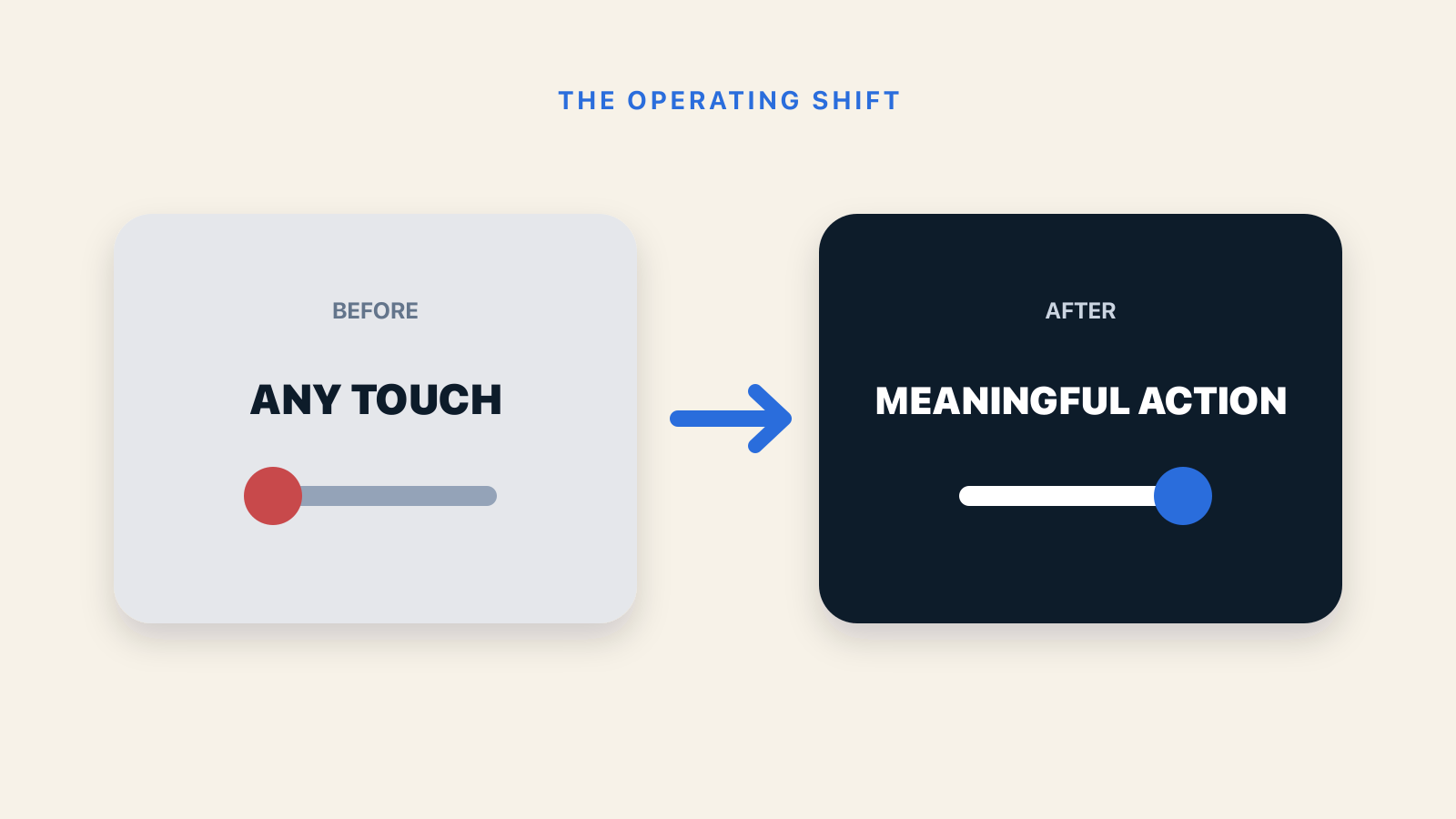
Better customer outcomes appear when the full loop is measured.
The deeper bet is that service levels become customer-aware
Static clocks were built for uniform queues. Customer conversations reveal enough context to make service levels adaptive without making them arbitrary.
The best teams will respond according to what the customer needs and prove why the system chose that path.
Turn your follow-up policy into an operating system
Build intent-aware clocks, ownership, routing, recovery, and measurement with Brixi.
Design your follow-up SLAFrequently Asked Questions
It defines the required action, owner, timing, channel, escalation, and completion condition for each class of lead or customer intent.
No. Response requirements should reflect urgency, readiness, value, risk, and the action the customer requested.
It should stop after a meaningful action or completed outcome, not after a generic automated touch.