The Resolution Gap: Why Fast Replies Still Produce Slow Revenue
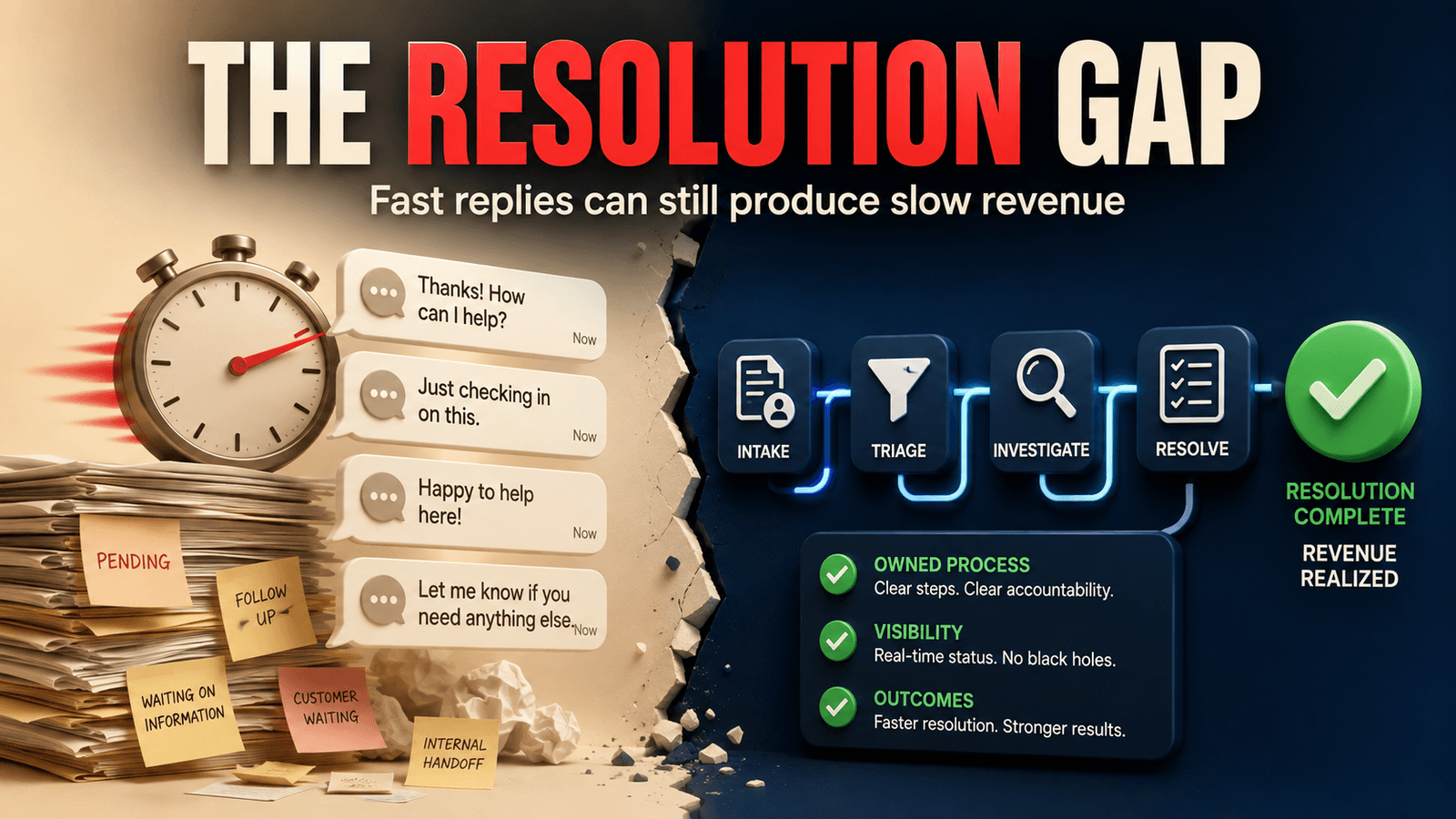
A response can arrive in seconds while the customer waits days for an actual decision. The Resolution Gap explains why reply speed and operating speed are different systems.
At 9:03 on Monday, an AI assistant answers a buyer in eight seconds. It confirms the request and promises that a specialist will share pricing. At 4:40, the buyer is still waiting because the request landed in a shared inbox without an owner. The response was instant. The resolution was not.

The operational moment where the hidden cost becomes visible.
The Resolution Gap is the distance between acknowledging a customer and completing the decision the customer needs. Closing it requires shared context, ownership, workflow action, escalation, and a measurable outcome.
Response speed hides the Resolution Gap
First-response time is easy to measure and easy to improve with automation. It can also create false confidence because a fast acknowledgement says nothing about qualification, decision authority, or completion.
The operating clock should stop only when the requested outcome is completed, explicitly handed off, or closed with a valid reason. Anything earlier measures activity.
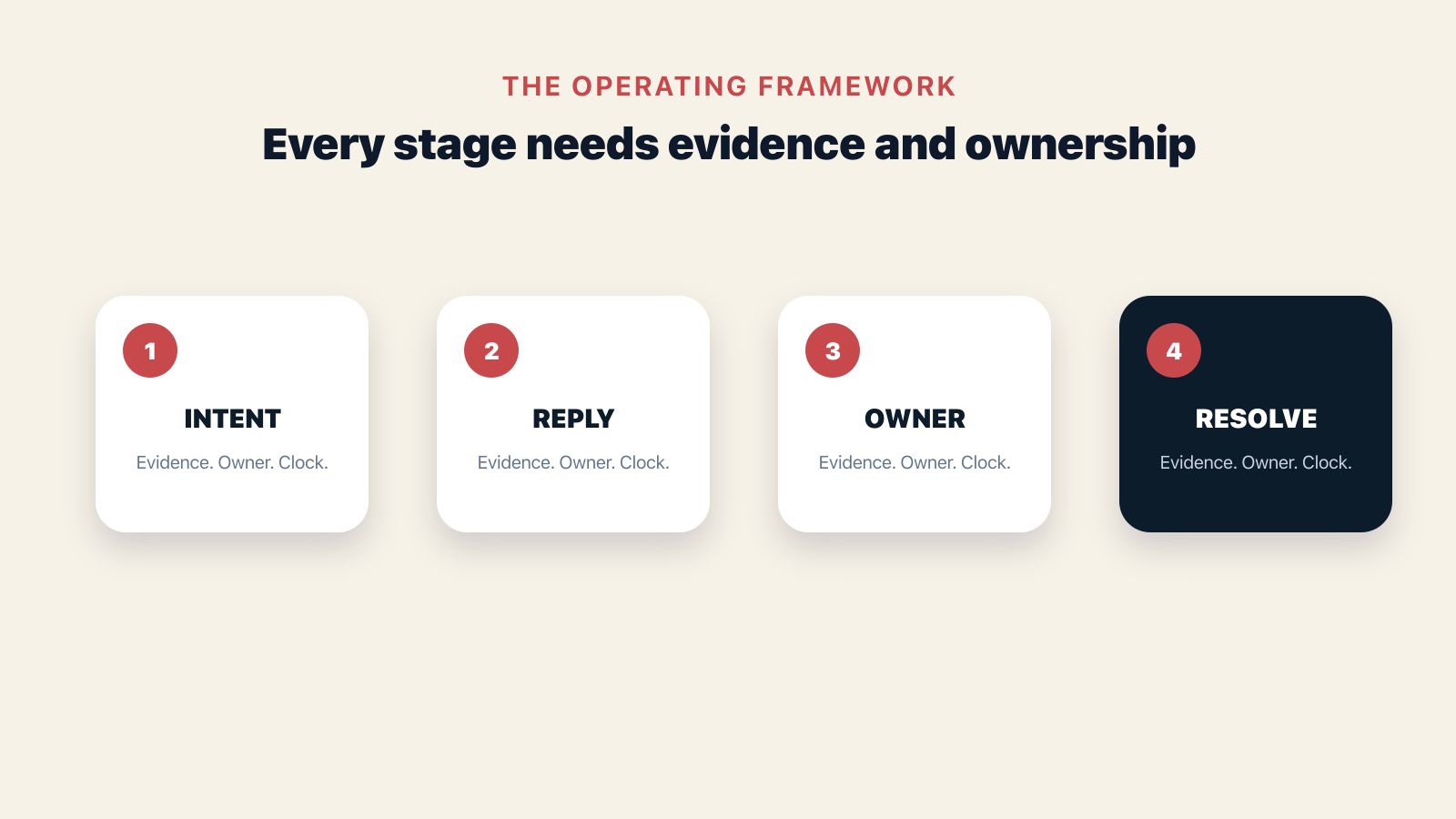
The workflow becomes manageable when causes, decisions, and owners are visible.
Every reply should change the operating state
A useful response captures new information, resolves a question, creates an action, changes ownership, schedules a next step, or closes the journey.
If the message only says that somebody will respond later, the system has created another promise to track.
- Interpret the request
- Update customer context
- Assign an accountable owner
- Set a response deadline
- Define escalation and completion
The slowest dependency controls customer speed
A quote may require finance approval. A visit may require inventory. A refund may require operations. The conversational layer cannot outrun disconnected internal work.
Map the dependencies behind the most common intents and give each one an owner, target time, and exception path.
Managers need resolution evidence, not inbox volume
Unread counts and response totals show workload. They do not show how many customers are waiting on a decision or which promises have expired.
A resolution view groups work by customer outcome, age, owner, risk, and blocking dependency.
Fast acknowledgement is not fast execution
Measure the time from customer intent to completed outcome, including every handoff and internal dependency.
Brixi turns conversations into owned operational work
Brixi connects AI assistants, CRM, Voice AI, WhatsApp, email, web chat, workflows, routing, and human teams in one customer timeline.
A request can be interpreted, assigned, acted on, escalated, and measured without losing the conversation that created it.
- Intent-to-action workflows
- Shared customer and conversation memory
- Timed ownership and escalation
- Resolution-level analytics
After a quarter, measure the waiting that disappeared
Track median and tail resolution time, expired promises, handoff delay, repeat contacts, reopened journeys, and completed outcomes.
The objective is not to automate every case. It is to make every unresolved case visible and owned.
- Shorter end-to-end resolution time
- Fewer expired promises
- Less repeated customer context
- Clearer exception ownership
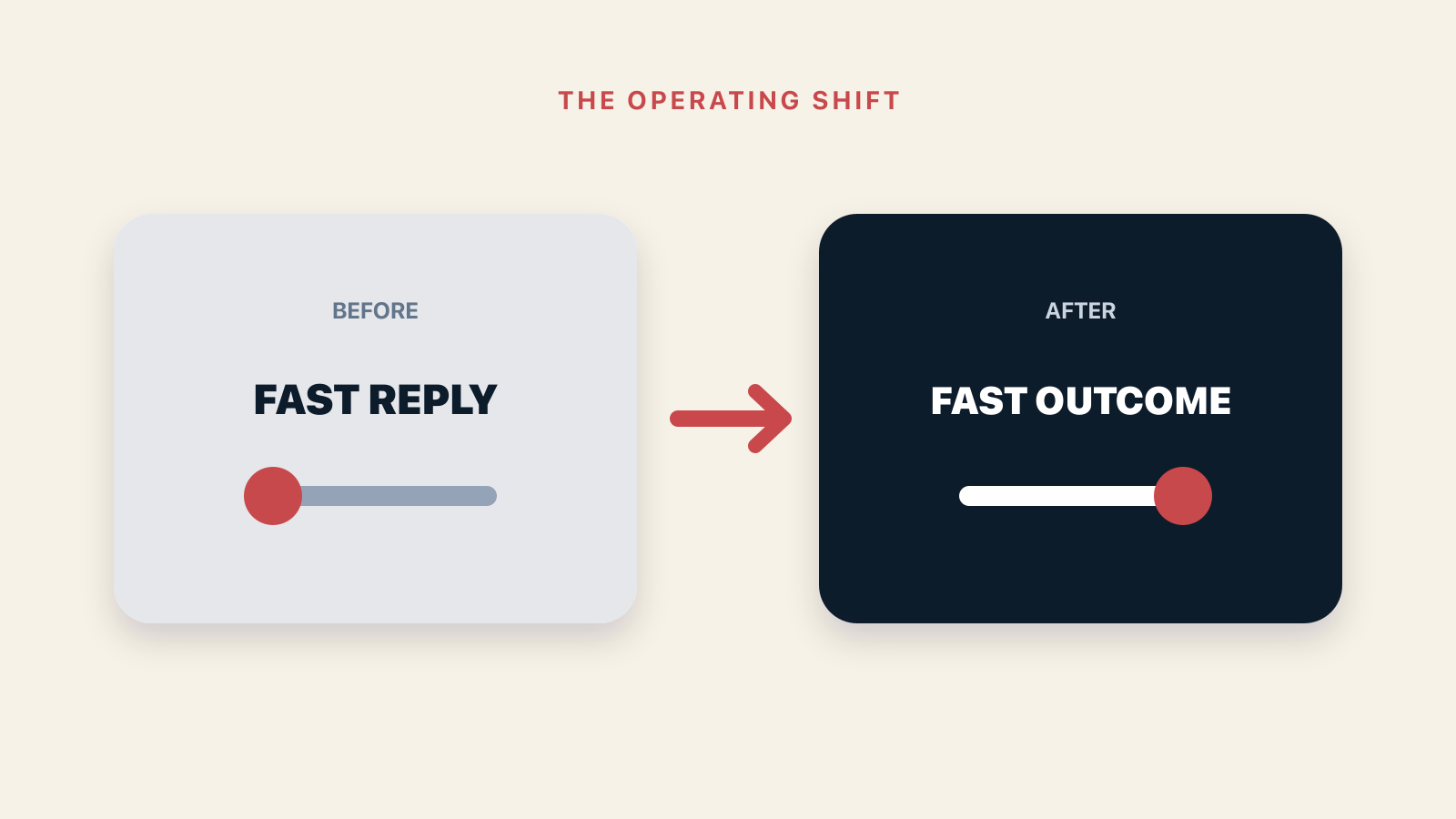
Better customer outcomes appear when the full loop is measured.
The deeper bet is that customer experience becomes operational design
Customers experience the company through the time and coherence of its decisions, not through the elegance of individual replies.
AI raises the standard for response. Connected customer platforms will raise the standard for resolution.
Close the gap between reply and resolution
See how Brixi connects customer intent with CRM context, workflows, ownership, and completed outcomes.
Map your Resolution GapFrequently Asked Questions
It is the delay and loss of context between acknowledging a customer request and completing the outcome that request requires.
It measures acknowledgement but not qualification, ownership, internal dependencies, handoffs, or completion.
Track end-to-end time, expired promises, repeat contacts, handoff delay, reopened cases, and completed outcomes.