The Orphaned Next Action: Where Customer Promises Die
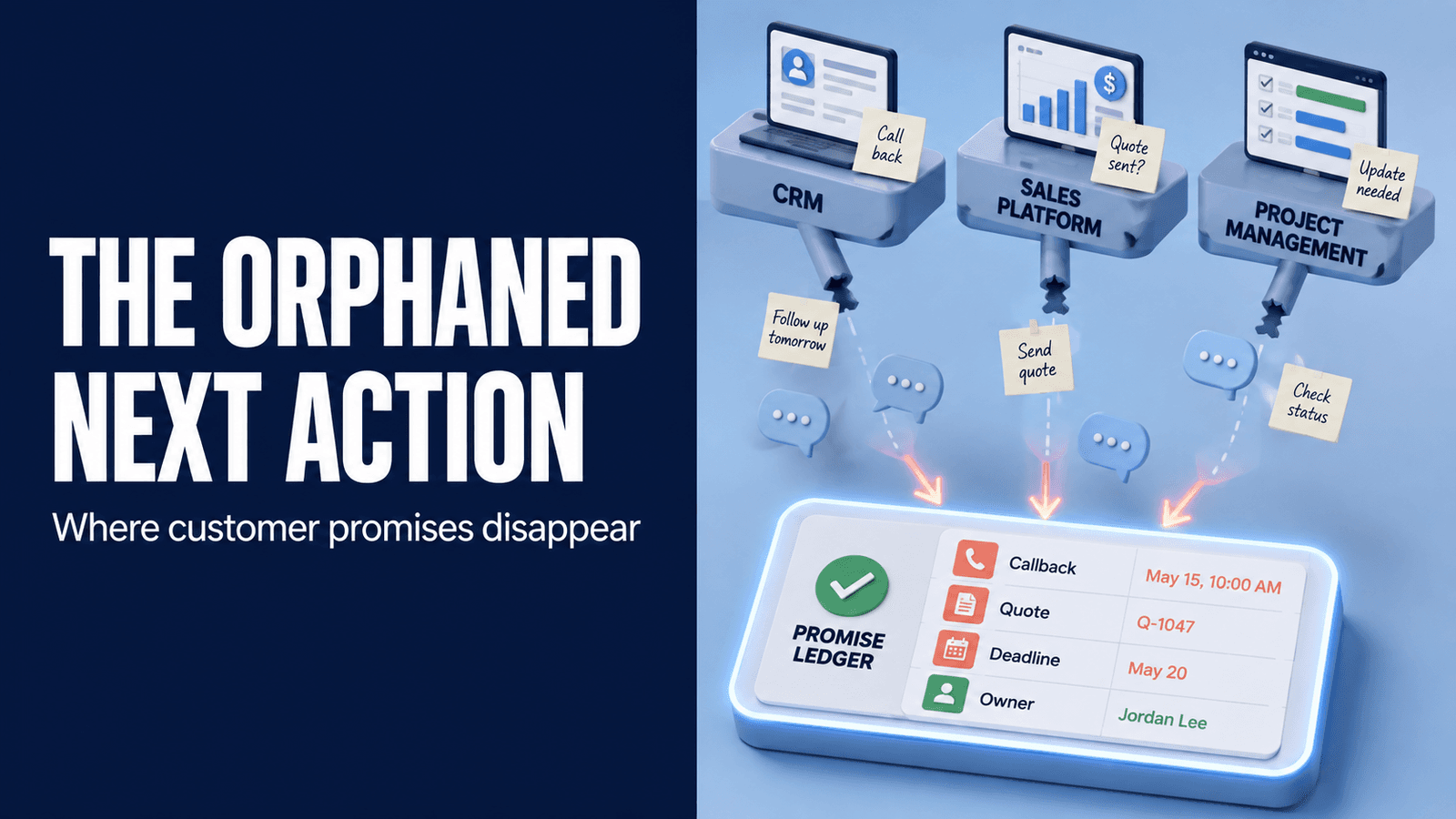
Callbacks, quotes, approvals, documents, and escalations often disappear between conversation and execution. The Promise Ledger gives every commitment an owner and completion state.
At 3:45 on Monday, a customer calls for an updated quote. The agent promises it by end of day, writes a note in the call summary, and moves to the next conversation. The quote depends on finance, nobody creates the task, and the customer calls again two days later.

The operational moment where the hidden cost becomes visible.
The Orphaned Next Action is a customer promise that exists in language but not in the operating system. A Promise Ledger turns that commitment into an owner, deadline, dependency, escalation path, and completion record.
Conversation summaries preserve words but can still lose obligations
Summarization makes conversations searchable, but a summary is not execution. Phrases such as send the quote, call tomorrow, confirm availability, and ask finance are operational commitments.
The system should extract them as proposed actions, validate the responsible owner, and keep them open until the customer outcome is complete.
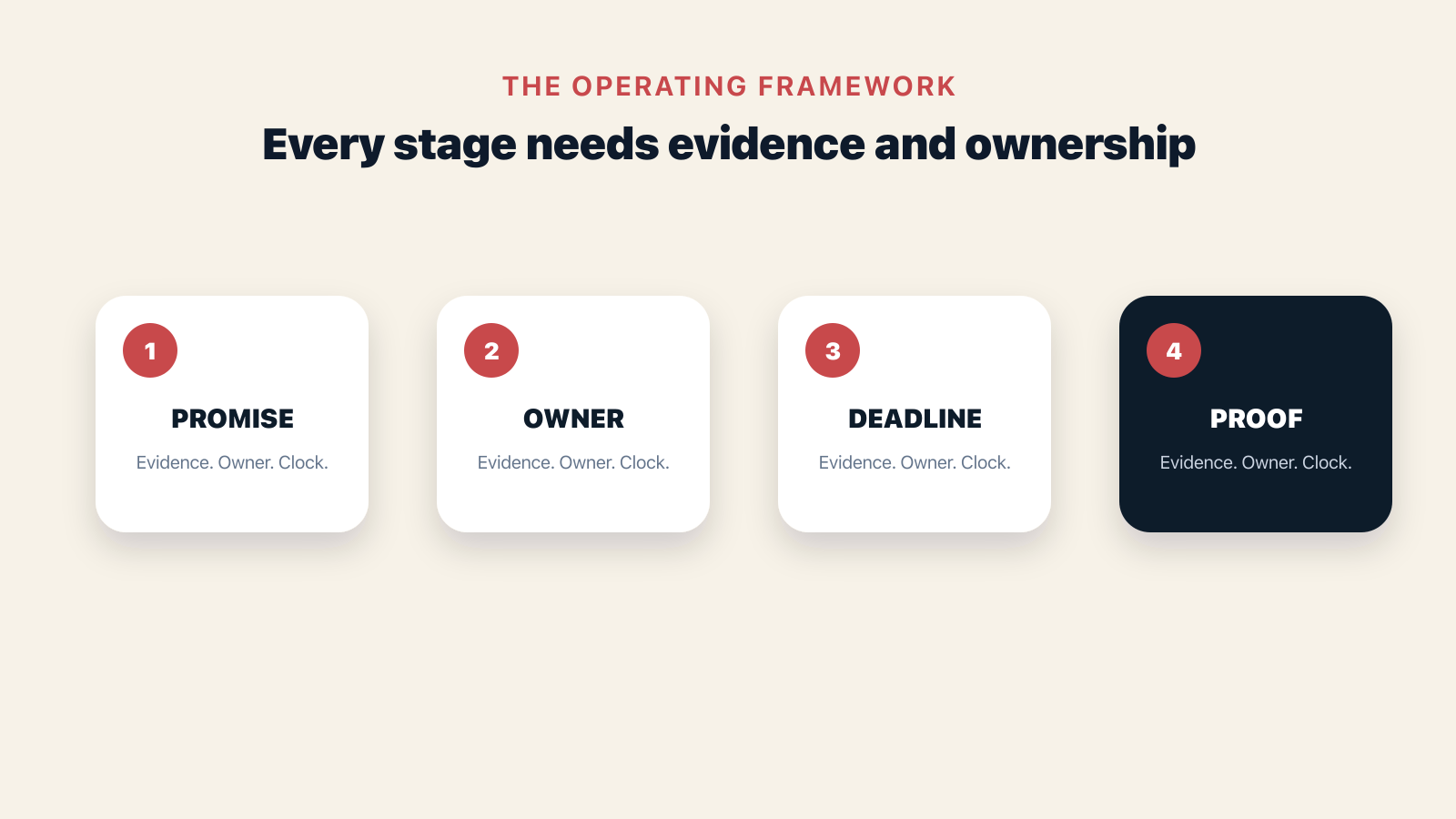
The workflow becomes manageable when causes, decisions, and owners are visible.
A promise needs five fields to survive
Every next action needs a customer, outcome, owner, deadline, and completion test. Dependencies and escalation rules make the record usable when work crosses teams.
The action should link back to the exact conversation evidence so the owner can understand nuance without replaying the full interaction.
- Requested customer outcome
- Accountable owner
- Deadline and timezone
- Blocking dependencies
- Evidence of completion
Handoffs create the highest orphan risk
Sales to finance, AI to human, support to operations, and marketing to sales all create boundaries where each team assumes another one has taken over.
Acceptance should be explicit for high-value or time-sensitive commitments. If it does not happen, the system should reclaim or escalate.
Completion must suppress obsolete follow-up
Sending the quote should stop the reminder to send it. A confirmed appointment should replace the pending scheduling task.
Without state synchronization, teams annoy customers and waste effort on work that is already complete.
Customers remember promises, not CRM notes
A commitment is complete only when the customer outcome is delivered and the operating state changes.
Brixi turns conversational commitments into coordinated action
Brixi can detect commitments across Voice AI, WhatsApp, email, web chat, and human conversations, then attach them to shared CRM context.
Workflows assign owners, track deadlines, escalate exceptions, and suppress obsolete actions after completion.
- Commitment extraction from conversations
- Owner and deadline orchestration
- Dependency and escalation tracking
- Completion-based workflow suppression
After a quarter, measure promise reliability
Track commitments created, accepted, completed on time, escalated, reopened, or discovered only after the customer followed up.
Sample completed actions for quality. A task can close while the customer still lacks the promised outcome.
- Fewer forgotten callbacks and documents
- Higher on-time promise completion
- Cleaner cross-team accountability
- Less customer chasing
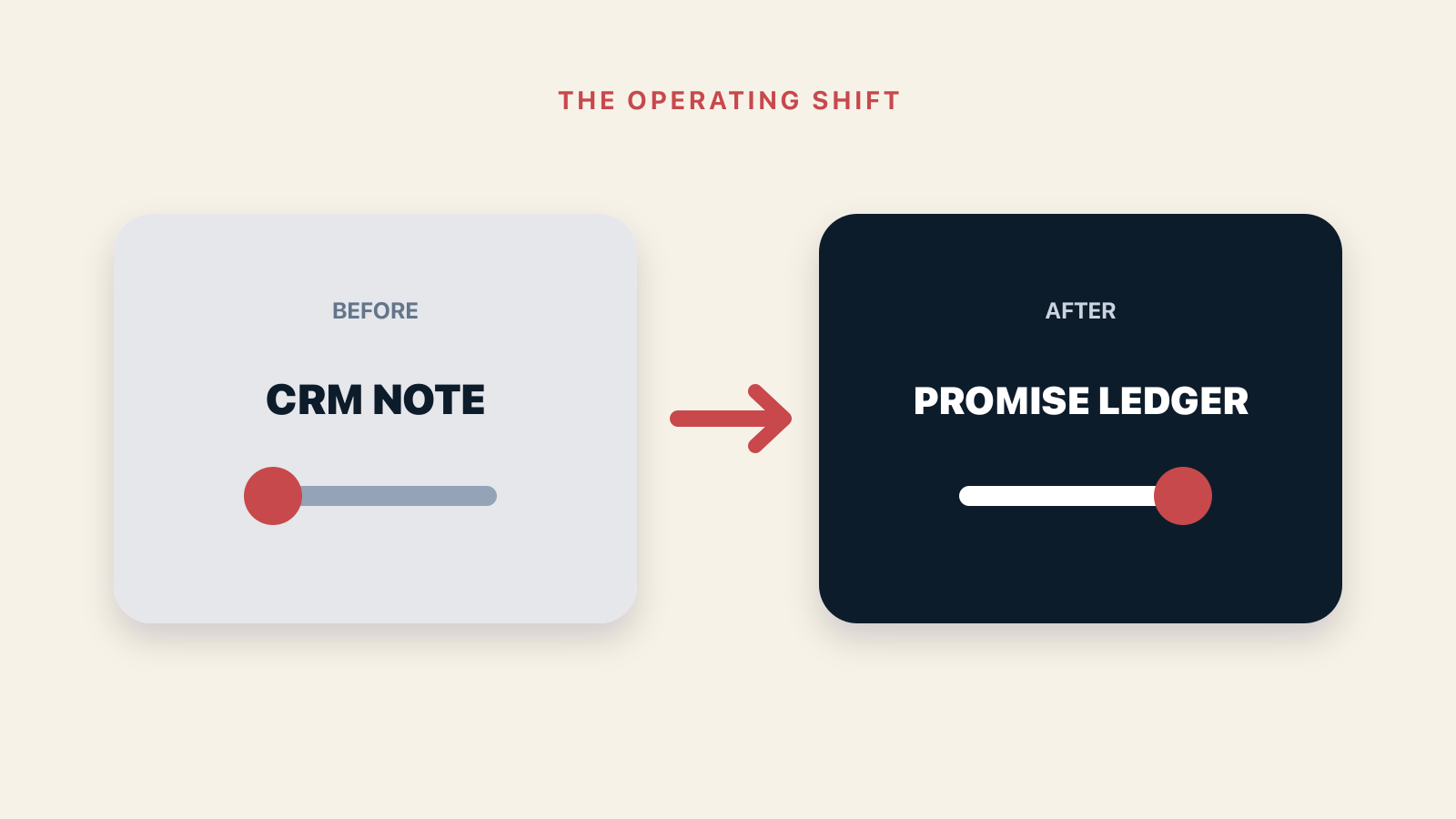
Better customer outcomes appear when the full loop is measured.
The deeper bet is that conversation becomes a contract with operations
AI will make it easier to understand what was said. The harder and more valuable step is ensuring the organization does what it promised.
Customer platforms will increasingly be judged by promise reliability, not by the number of conversations they automate.
Give every customer promise an owner
See how Brixi connects conversations, CRM context, workflows, deadlines, and completion evidence.
Map your Promise LedgerFrequently Asked Questions
It is a promised or required customer action that has no durable owner, deadline, workflow state, or completion evidence.
Yes. AI can identify proposed callbacks, documents, approvals, scheduling, and escalation, with human review for ambiguous or sensitive cases.
Track acceptance, on-time completion, escalation, reopening, customer chasing, and whether the promised outcome was actually delivered.