How to Route Leads Across WhatsApp, Voice, Email, and Chat
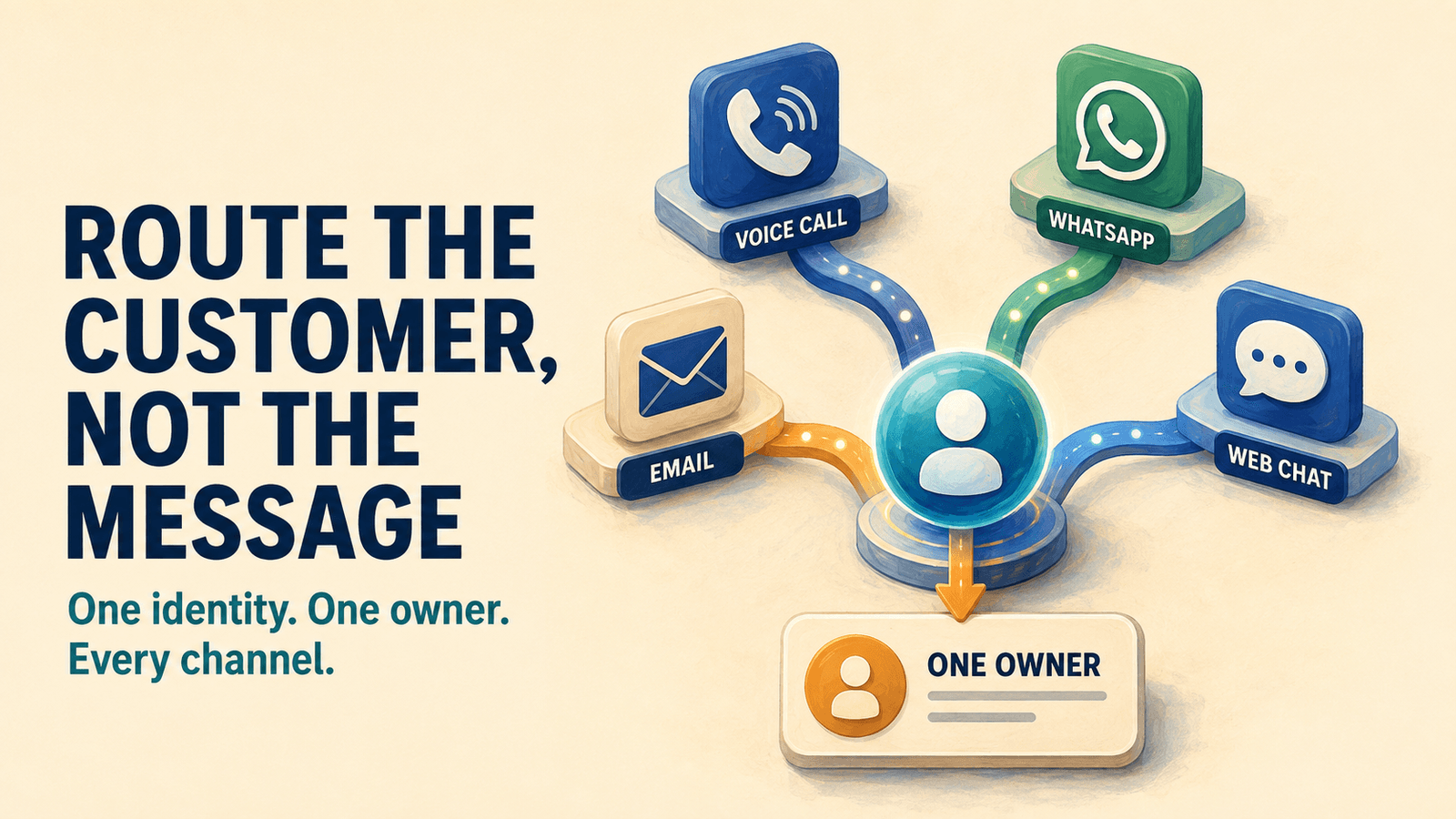
The same buyer can call, reply on WhatsApp, open an email, and start web chat in one afternoon. Customer-level routing prevents four channels from creating four conflicting journeys.
At 2:18 on Thursday, a property buyer sends a WhatsApp message, calls the published number, and opens web chat while waiting for a response. Three queues create three assignments. By evening, two agents have contacted the buyer with different offers and the third has marked the record unreachable.

The operational moment where the hidden cost becomes visible.
Omnichannel lead routing fails when software routes messages instead of customers. The Customer-Level Route unifies identity and conversation context before it decides ownership, urgency, channel, and next action.
The Channel Queue Collision creates duplicate work and contradictory promises
Every channel has a queue because queues are easy to build. The Channel Queue Collision happens when those queues cannot recognize that the same person is moving between them.
Routing should begin with identity resolution, then combine current intent with account history, existing ownership, urgency, language, geography, and team capacity.
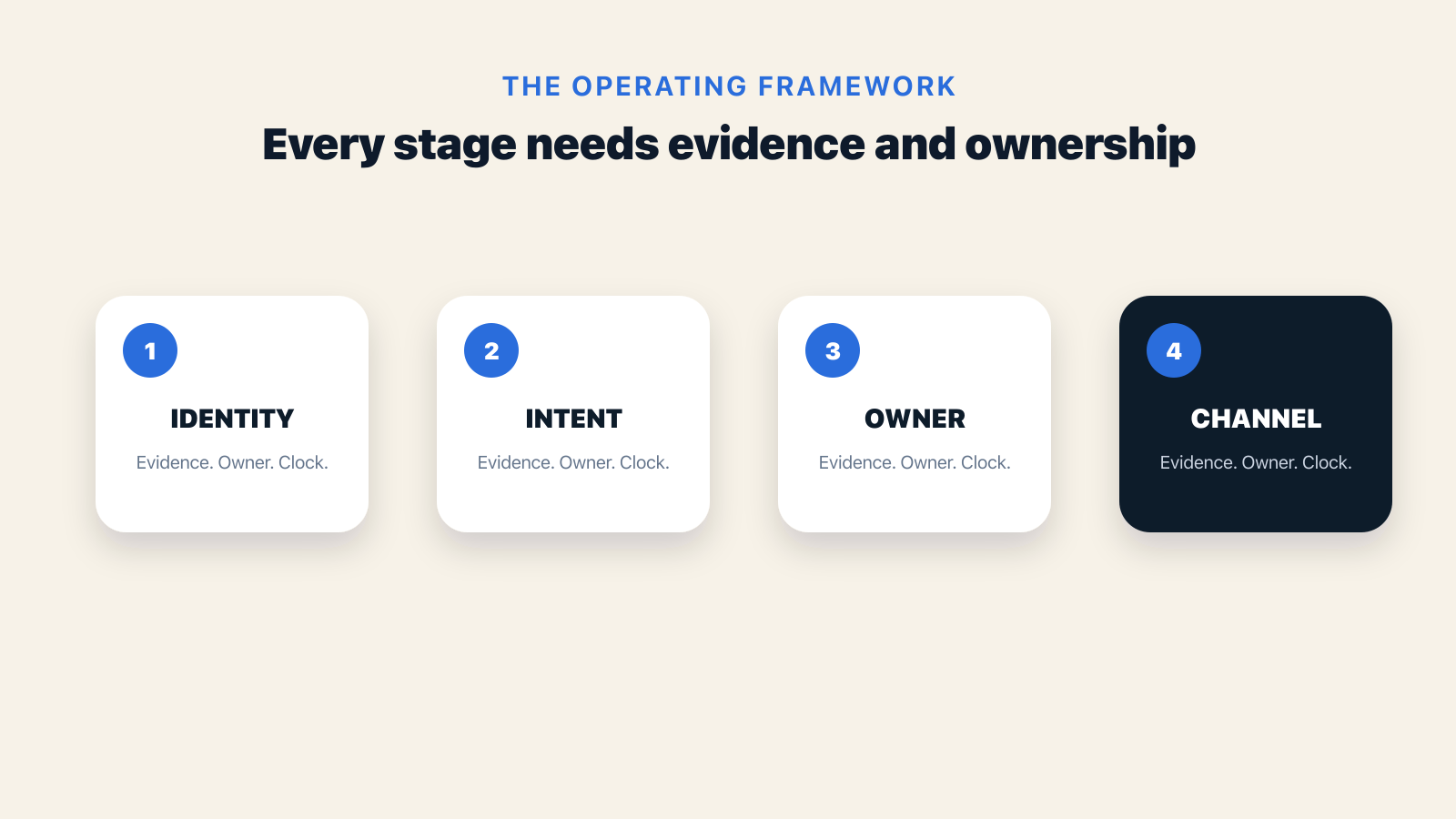
The workflow becomes manageable when causes, decisions, and owners are visible.
Identity must be resolved before assignment
Phone number, email, campaign identifier, device session, and declared details can all point to one customer. The system needs confidence rules for merging those signals without collapsing different people into one record.
When confidence is low, create a review path. A bad merge can be as damaging as a duplicate because it gives the agent the wrong history.
- Match deterministic identifiers first
- Use account and campaign context as supporting evidence
- Preserve source events after merging
- Route uncertain matches for review
The assignment decision needs more than round-robin
A valid route considers customer readiness and operational capacity together. Expertise, language, territory, existing relationship, availability, workload, and response performance all matter.
The system also needs a reclaim rule. Ownership without acceptance is only a name in a field.
Channel choice should remain part of the route
The customer may prefer WhatsApp, but urgency may require a call. A failed call may need a short message with a scheduling option. Routing should choose the action and channel together.
The next agent should see every previous attempt, promise, objection, and preference before responding.
Route the customer, not the message
One identity, one current owner, one next action, and a complete conversation history should govern every channel.
Brixi makes the customer timeline the routing surface
Brixi connects WhatsApp, Voice AI, email, web chat, CRM, buyer intent, and workflow state in one customer record. Routing decisions use the full journey instead of the latest channel event.
AI assistants can qualify and act immediately, while human owners receive context-rich handoffs for sensitive, valuable, or ambiguous cases.
- Cross-channel identity resolution
- Readiness and capacity-based routing
- Channel-aware next actions
- Automatic reclaim and escalation
After a quarter, duplicate ownership should be exceptional
Measure duplicate contacts, conflicting ownership, merge accuracy, time to acceptance, reassignments, missed service levels, and conversion by route.
Review exceptions weekly. The objective is not zero routing changes; it is fast, explainable correction when context changes.
- Fewer duplicate contacts
- Faster owner acceptance
- Cleaner cross-channel context
- More explainable routing decisions
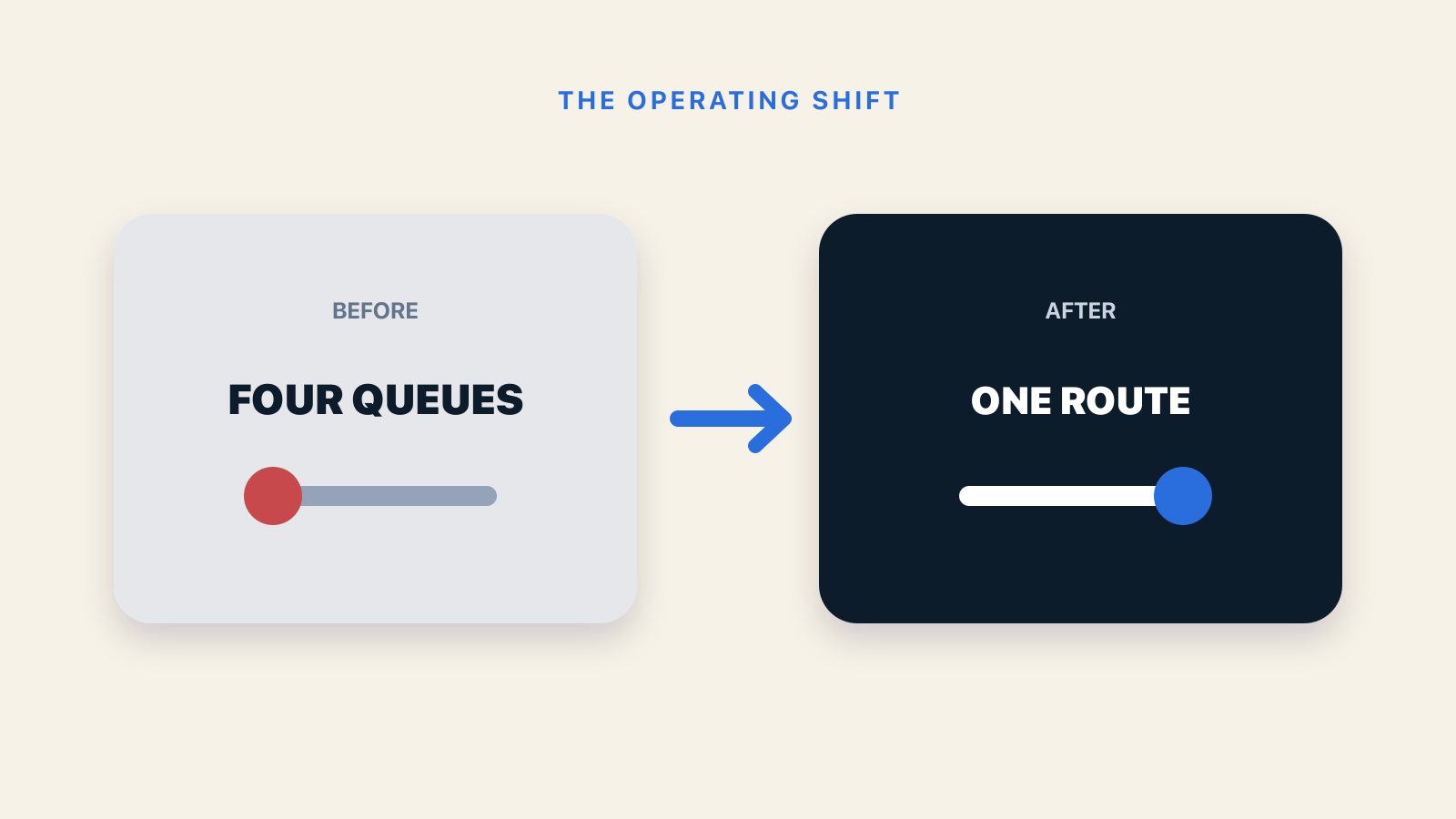
Better customer outcomes appear when the full loop is measured.
The deeper bet is that channels become interchangeable to the customer
Customers will continue moving between voice and messaging based on convenience. They will not accept repeating the journey each time they switch.
The platform must hold identity, memory, and ownership steady while the interface changes around the customer.
Create one route across every customer channel
See how Brixi combines customer identity, intent, ownership, capacity, and conversation memory.
Book an omnichannel demoFrequently Asked Questions
It assigns the customer and next action using identity, intent, history, urgency, capacity, and channel preference across every touchpoint.
It can create duplicate owners, contradictory follow-up, repeated questions, and fragmented reporting when one customer uses several channels.
Not always. Ownership should persist when useful, but the system needs reclaim and escalation rules when availability, expertise, or urgency changes.