Claim-Based Lead Assignment: The Under-5-Minute Playbook
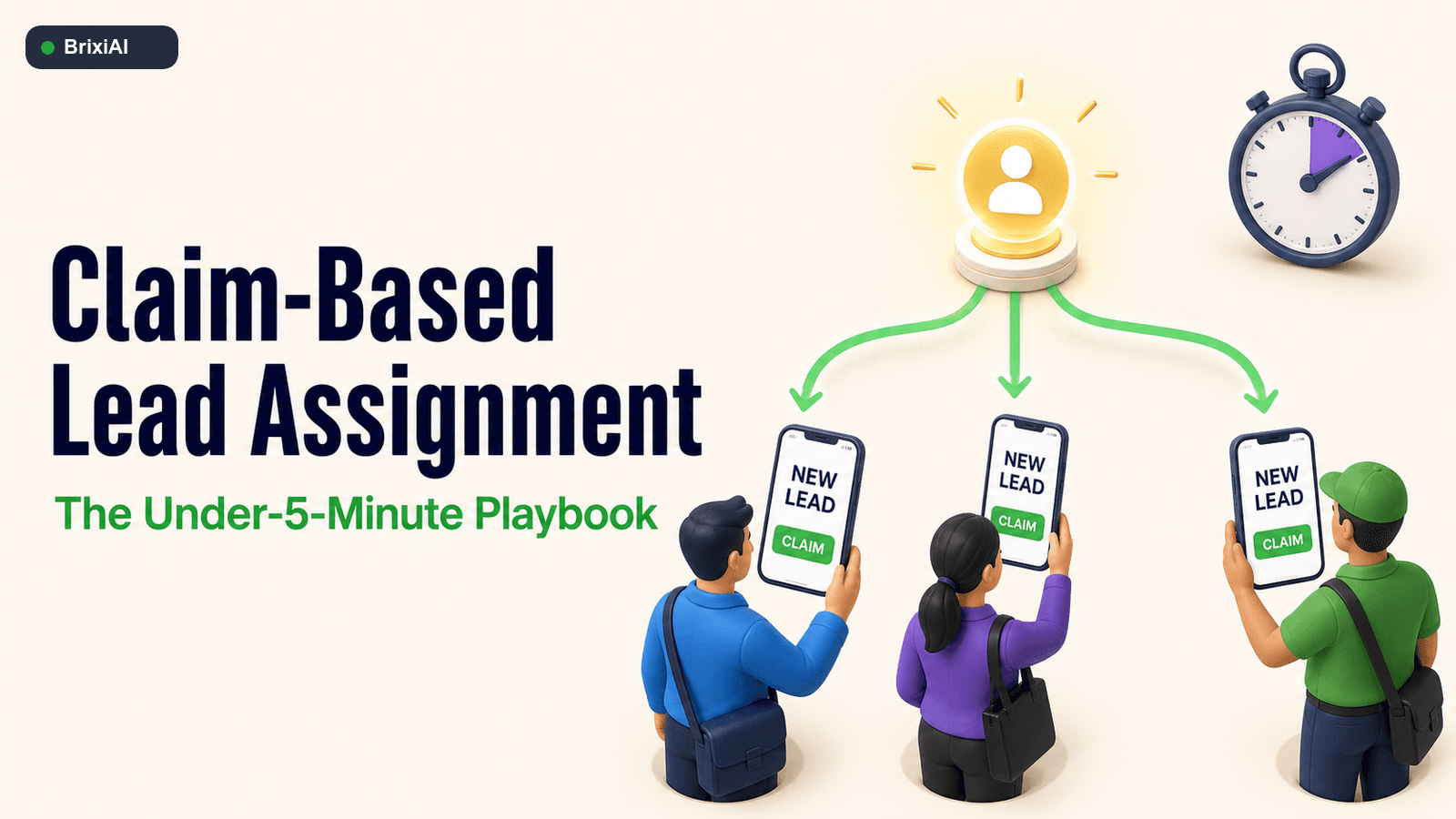
Most teams measure how quickly a rep calls after assignment. They ignore how long the lead waited to get an available owner. Claim-based routing removes that Assignment Wait.
It is 10:02 AM. A new lead submits a request for pricing. The CRM assigns it to a rep who is already on a customer call. At 10:06, a manager notices the untouched record and sends a message to the team group. Two people reply. One assumes the other has called. At 10:14, someone finally opens the lead. The team may still report a two-minute response after reassignment, but the customer has already waited twelve minutes. This is the hidden delay inside traditional lead assignment.

The response clock starts when the customer raises a hand, not when a rep finally opens the CRM.
The failure has a name: the Assignment Wait. It is the time between lead creation and accountable ownership by someone who can act. Most dashboards hide this interval inside a broad response-time average. Claim-based lead assignment makes it visible, then compresses it by inviting the right available people to take ownership in real time.
The claim model is familiar from ride-hailing and delivery networks. A relevant opportunity reaches an eligible pool, available operators receive the alert, and one person accepts responsibility. In sales, the purpose is not to make people race blindly. It is to replace passive assignment with active, measurable acceptance.
The Assignment Wait begins before the first call
A team can have disciplined reps and still respond slowly. The delay may sit in a webhook, a territory rule, a manager review, a spreadsheet, a branch group chat, or an assigned rep who is temporarily unavailable. None of those delays appears in the rep’s call log. The lead simply arrives late.
This distinction matters because lead response time contains at least three clocks. The first runs from lead creation to ownership. The second runs from ownership to the first valid contact attempt. The third runs from the attempt to a meaningful conversation. Improving only the second clock leaves the Assignment Wait untouched.
- Creation-to-alert time shows how quickly the system recognized and routed the lead.
- Alert-to-claim time shows whether an available team member accepted ownership.
- Claim-to-first-attempt time shows whether the owner acted after accepting.
- First-attempt-to-conversation time shows whether the channel and timing worked.
- Conversation-to-next-task time shows whether speed produced an accountable follow-up.
Rule A claim is a commitment, not a click
The claim event should establish ownership, start the action timer, close competing claim options, and make the next required step visible.
Round-robin routing fails when real capacity changes
Round robin looks fair because every rep receives a similar number of leads. It assumes each person has similar capacity at the moment of assignment. That assumption breaks during customer calls, meetings, leave, travel, branch rushes, and shift changes. Fair distribution on a spreadsheet can create unfair waiting for the customer.
Managers often repair this manually. They check availability, message the assigned person, wait for a reply, and reassign the record. The manager becomes a human router. That workaround feels controlled, but it adds a decision queue precisely when the customer expects momentum.
Claim-based assignment starts from a different question. Instead of asking who should receive the next lead in theory, it asks which eligible person can own this lead now. Fairness still matters, but it can be enforced through eligibility, claim limits, workload caps, cooldown rules, and reporting rather than passive assignment.
One real-time claim alert can remove four separate waits
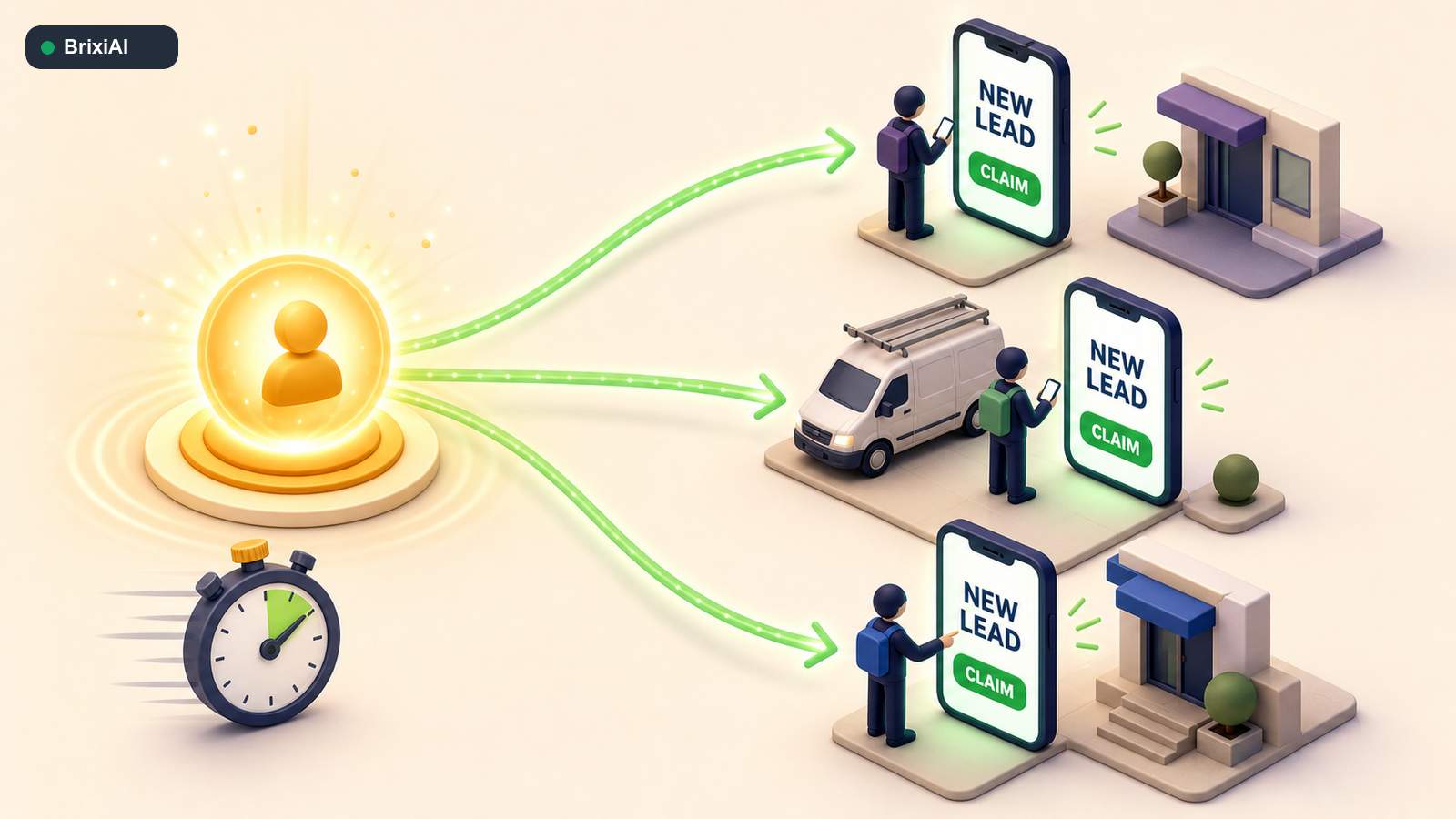
Multiple eligible users receive the opportunity at once, while the first valid claim creates one accountable owner.
A well-designed claim workflow compresses several handoffs into one event. The system evaluates the lead, finds eligible users, sends simultaneous mobile alerts, and records the first valid claim. The remaining alerts close or show that the lead has already been claimed. No manager has to ask who is free.
The workflow removes the queue wait, the manager wait, the availability-check wait, and the reassignment wait. The rep sees enough context to decide quickly: source, geography, language, product interest, priority, and any known customer history. A claim made without context is fast but careless. A claim with the right context creates informed speed.
- Filter the eligible pool by branch, territory, product, language, shift, skill, or team.
- Exclude people who are on leave, outside their shift, at workload capacity, or temporarily unavailable.
- Show a concise lead summary in the alert without exposing unnecessary personal information.
- Use one atomic claim so two users cannot become owners of the same lead.
- Close the remaining claim actions immediately after successful ownership.
- Reopen, expand, or escalate the pool if nobody claims within the configured window.
A sub-five-minute response is a workflow design target
Teams sometimes treat a first response in under five minutes as a motivation problem. They tell reps to move faster. That instruction cannot fix a lead that spends four minutes waiting for assignment or reaches someone who cannot answer. The target must be designed backward from the customer moment.
A practical five-minute operating budget might reserve the first minute for lead capture, validation, enrichment, and alert delivery. The second minute is for an eligible rep to claim. The remaining three minutes are for reviewing context and making the first valid attempt. These are operating thresholds, not universal guarantees. Each team should configure them around lead source, customer expectation, compliance rules, working hours, and channel.
The important move is to give every minute an owner. Automation owns recognition and alerting. The eligible pool owns acceptance. The claiming rep owns the first attempt. The platform owns timeout, rerouting, and escalation. When a target is missed, the team can see which clock failed instead of blaming the entire sales floor.
Speed without routing discipline creates a different problem
An unrestricted claim pool can reward the fastest thumb instead of the best customer match. A small number of reps may collect too many leads, cherry-pick attractive records, or claim work they cannot complete. Customers may receive fast but poorly informed calls. That is not responsive routing. It is queue competition.
The answer is not to abandon claiming. It is to establish a Claim Contract. The contract defines who may receive the alert, what information they see, how many active claims they may hold, how quickly they must attempt contact, when ownership expires, and what happens when the customer asks for another specialist.
- Set active-lead or workload limits so claiming reflects real capacity.
- Use priority tiers so urgent or high-intent leads reach the right pool first.
- Apply cooldowns or rotation rules when equitable access matters.
- Require a first action within the agreed claim-to-attempt window.
- Return inactive claims to the pool instead of leaving them silently owned.
- Keep a complete audit trail for alerts, claims, attempts, transfers, expiries, and escalations.
The first attempt must carry customer context
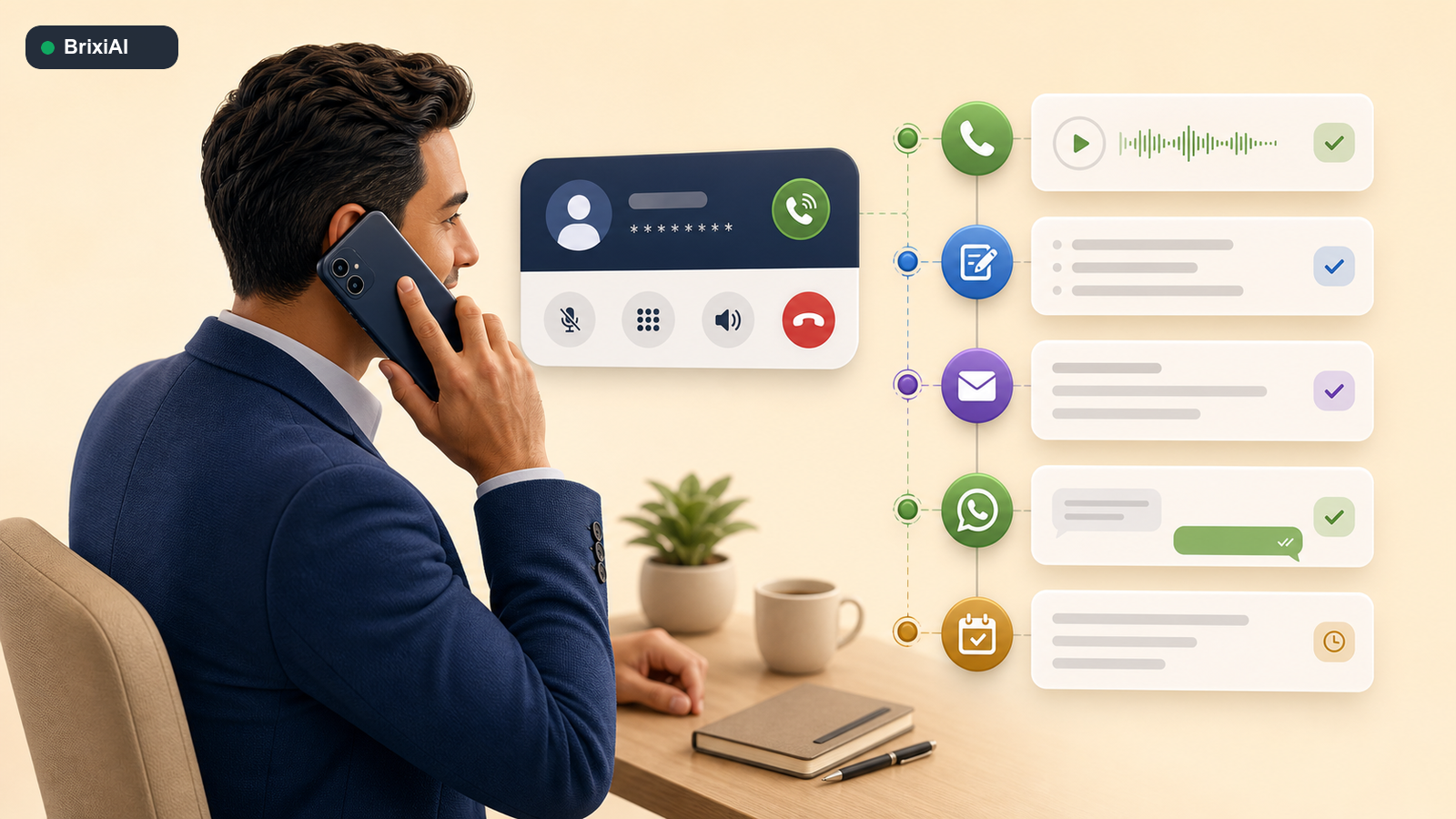
Fast ownership matters more when the first conversation can continue with context and create the next action.
Fast dialing alone does not create a strong response. The rep needs to know what the customer asked for, which campaign or channel produced the lead, whether the person has contacted the business before, and what product, service, project, or location is relevant. Otherwise the customer answers quickly and still has to restart the conversation.
Brixi connects the claim event to the same customer record used for calls, recordings, email, WhatsApp, meetings, notes, tasks, and opportunities. The claiming rep can move from alert to context to action without rebuilding the lead in another tool. The response becomes part of shared customer memory instead of disappearing inside a personal phone.
This is where claim-based assignment becomes more than a routing feature. The system can interpret the outcome, update qualification, schedule a callback, create the next task, trigger a confirmation message, or escalate the conversation. Speed wins attention. Connected execution preserves it.
Measure the customer clock, not only rep activity
A dashboard that counts calls without preserving timestamps cannot explain response performance. The operational record should begin when the lead enters the platform and continue through alert delivery, claim, first attempt, connection, qualification, and next action. Every stage needs a timestamp, an owner, and an outcome.
Managers should review distributions, not only averages. A three-minute average can hide a long tail of leads waiting thirty minutes. Break results down by source, hour, branch, team, product, territory, language, and outcome. The goal is to identify where the Claim Contract needs adjustment, not to publish a leaderboard without context.
- Median and upper-percentile creation-to-alert time.
- Median and upper-percentile alert-to-claim time.
- Claim rate by eligible pool and time of day.
- Claim-to-first-attempt time and first-attempt completion rate.
- Unclaimed, expired, reopened, transferred, and escalated leads.
- Connection, qualification, meeting, and opportunity outcomes by response-time band.
What changes after one quarter of claim-based routing?
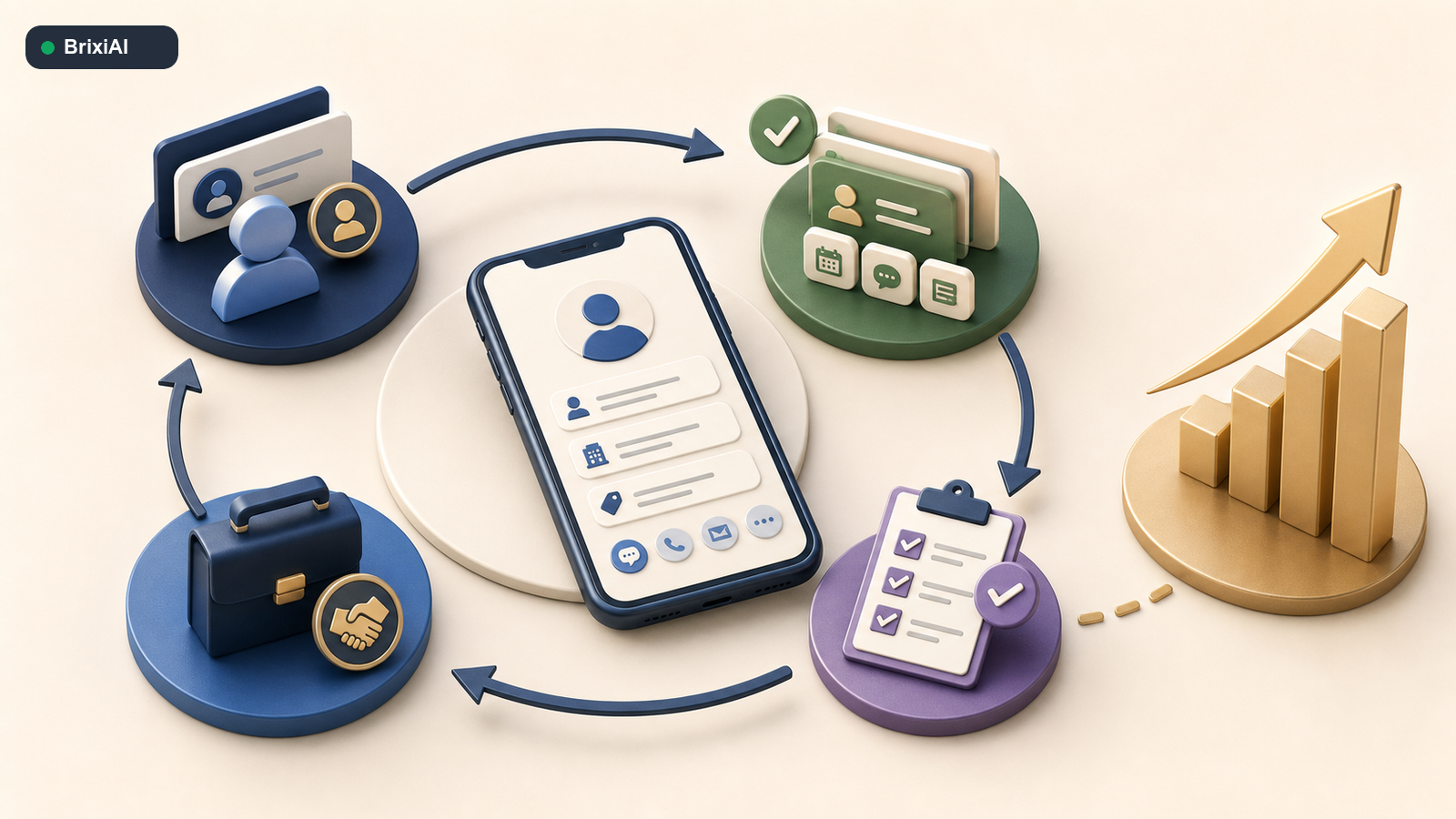
A quarter of claim data reveals whether delays come from routing, capacity, action, or customer availability.
The first change is diagnostic clarity. Teams can separate slow system delivery from slow acceptance and slow action. If alerts reach people quickly but claims wait, the eligible pool or notification design needs work. If claims happen quickly but attempts wait, workload rules or follow-up discipline need work.
The second change is more honest capacity planning. Leaders see which hours create unclaimed demand, which teams operate near their claim limits, and where language, territory, or specialist coverage is thin. Headcount conversations move from anecdote to observable demand windows.
The third change is customer continuity. Because the first response, recording, message, qualification, and next task share one timeline, managers can inspect whether faster response produced better execution. The team stops celebrating speed in isolation and starts measuring whether speed created a useful customer outcome.
The deeper bet: ownership becomes a live operating state
Traditional CRM treats ownership as a field. Modern customer operations need ownership to behave like a live state. It should consider availability, skill, workload, urgency, customer preference, and the action already underway. It should expire or change when the conditions change.
Brixi brings that live ownership model into a complete AI-native customer platform. Lead capture, routing, mobile alerts, calls, Voice AI, WhatsApp, email, meetings, tasks, opportunities, workflows, conversation intelligence, and manager visibility operate from the same customer context. The claim is only the first accountable action in a connected journey.
Download Brixi Mobile from the Apple App Store or Google Play.
Turn lead arrival into accountable action
See how Brixi helps eligible team members claim leads in real time, respond with context, and keep every next step connected to the customer record.