The Human Handoff Scorecard: Six Metrics That Matter

Most teams count escalations but cannot tell whether the handoff worked. These six metrics reveal whether AI and human teams actually operate as one system.
At 1:17 on Friday, an AI assistant escalates an angry customer to support. The dashboard records a successful handoff. The agent opens a ticket with no summary, asks the customer to repeat the issue, and discovers that the promised refund needs finance approval.

The operational moment where the hidden cost becomes visible.
The Human Handoff Scorecard measures whether the next owner received the case, understood it, acted correctly, and reached resolution. Escalation volume alone cannot answer any of those questions.
The Transfer Success Illusion ends at ticket creation
Many systems mark success when they create a ticket or route a chat. The Transfer Success Illusion ignores acceptance delay, missing context, repeated questions, wrong destinations, and dropped ownership.
A handoff is an operating transition. It needs an explicit contract for reason, evidence, destination, urgency, permitted actions, and completion.
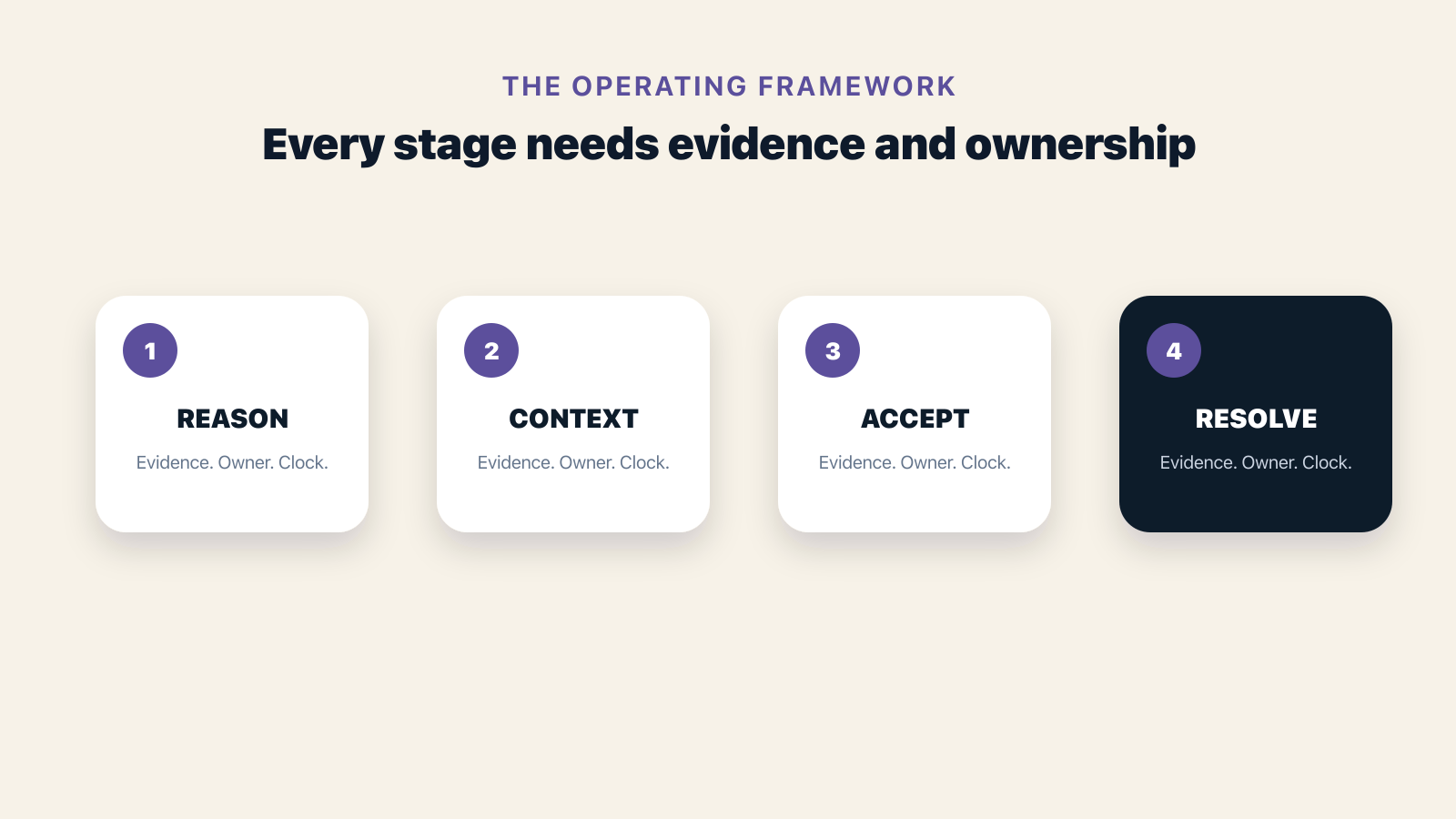
The workflow becomes manageable when causes, decisions, and owners are visible.
Six metrics reveal whether the handoff worked
The scorecard should connect transition quality with customer outcome. No single metric is sufficient because a fast but context-free transfer can still produce a poor result.
Review the distribution and the worst cases, not only monthly averages.
- Acceptance time
- Context completeness
- Customer repeat-question rate
- Escalation accuracy
- Time from handoff to resolution
- Dropped or reopened handoffs
Context completeness should be tested, not assumed
Define the fields required for each escalation type, then sample whether the receiving person could act without reopening the full conversation.
Include customer identity, intent, recent actions, sentiment or risk, promises, attempted resolution, and the precise decision needed.
False escalation and missed escalation need separate measures
Over-escalation wastes expert capacity. Under-escalation exposes customers and the business to risk. Combining them into one accuracy number hides the tradeoff.
Calibrate thresholds by intent, consequence, value, and the availability of a safe recovery path.
A transfer is complete when the next owner can act
Ticket creation proves movement. Context, acceptance, and resolution prove a handoff.
Brixi keeps AI and human work on one customer timeline
Brixi routes escalations with conversation evidence, CRM context, urgency, recommended next action, and existing promises.
Managers can inspect why AI escalated, whether the human accepted, what happened next, and where the transition failed.
- Context-rich escalation packets
- Timed acceptance and reclaim
- Conversation QA and outcome tracking
- Threshold tuning from resolved cases
After a quarter, handoff reviews should change the system
Review false positives, missed escalations, slow acceptance, repeat questions, and reopened cases by intent and team.
Use the evidence to improve routing, required context, autonomy boundaries, staffing, and training.
- Faster handoff acceptance
- Fewer repeated questions
- Higher routing accuracy
- Lower dropped-case rate
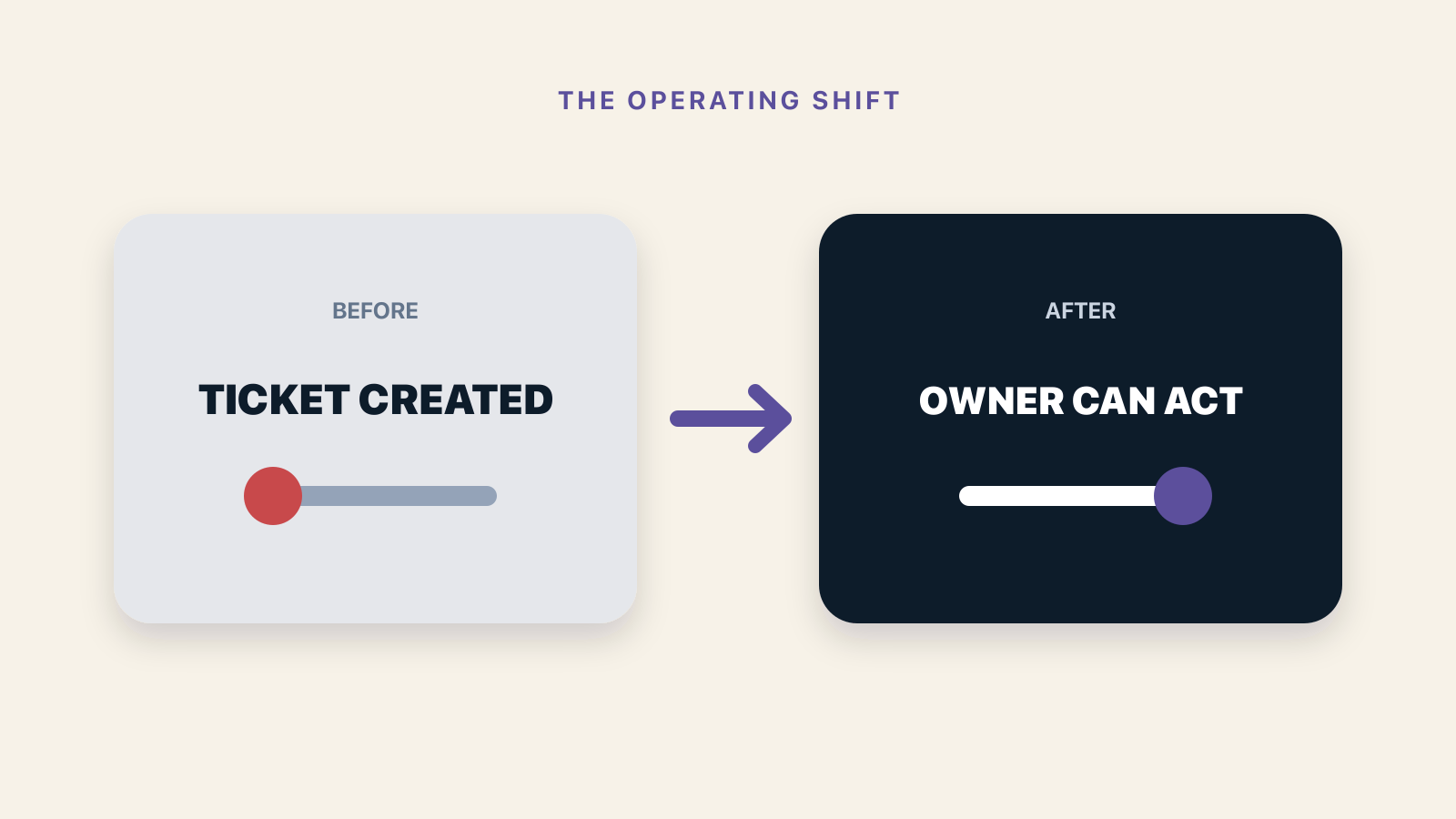
Better customer outcomes appear when the full loop is measured.
The deeper bet is that hybrid teams become measurable systems
AI and people will share more customer journeys. The competitive advantage will come from designing the boundary between them, not arguing about which side should own everything.
Teams that instrument the transition will improve both AI autonomy and human effectiveness with every resolved case.
Measure the boundary between AI and people
Use Brixi to connect escalation evidence, ownership, acceptance, action, and resolution.
Build your handoff scorecardFrequently Asked Questions
It is the transfer of a customer journey from an AI system to a person with the context, authority, urgency, and next action required to continue.
Context completeness is foundational, but it should be read alongside acceptance time and final resolution.
Send structured intent, history, attempted actions, promises, and the required decision to the receiving owner before contact resumes.