Conversational CRM vs Traditional CRM: What Changes?
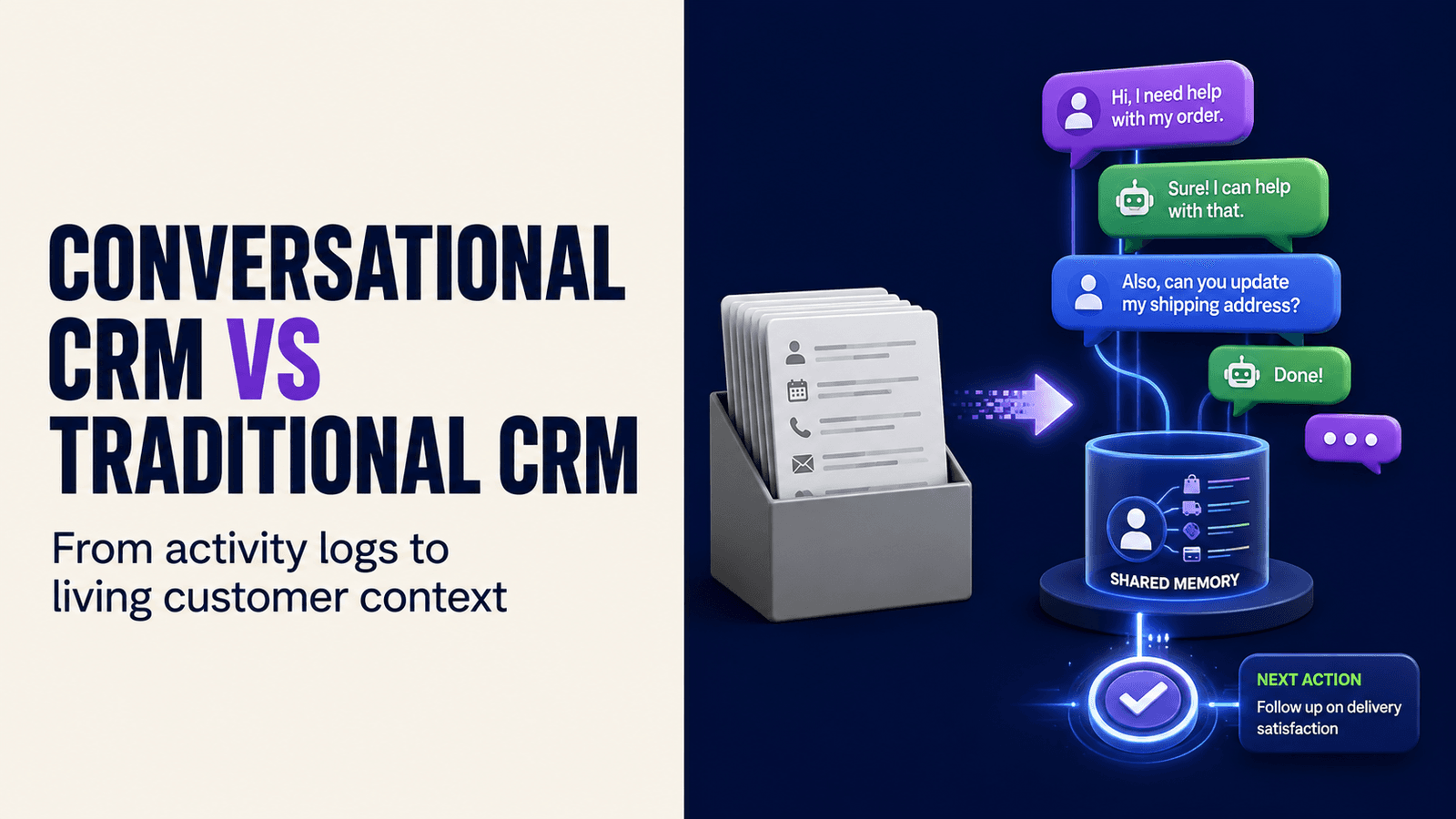
The meaningful difference is not a chat window inside CRM. A conversational CRM turns customer language into memory, intent, ownership, and workflow action.
At 11:20 on Wednesday, a sales rep opens a lead record before calling. The CRM shows a stage, source, and last activity date. It does not show that the buyer asked about financing on WhatsApp, requested a callback after 6 PM, and rejected one product configuration on a voice call.

The operational moment where the hidden cost becomes visible.
Conversational CRM begins where the activity log stops. It treats customer language as operating data that can change qualification, priority, ownership, and the next action.
The Record-to-Decision Gap separates the two systems
Traditional CRM is optimized to store structured fields and reported activities. Conversational CRM interprets unstructured voice and message content, then connects it to the customer record and workflow.
Adding a chatbot panel does not close the gap. The conversation must update the operating state and remain available to every channel and human owner.
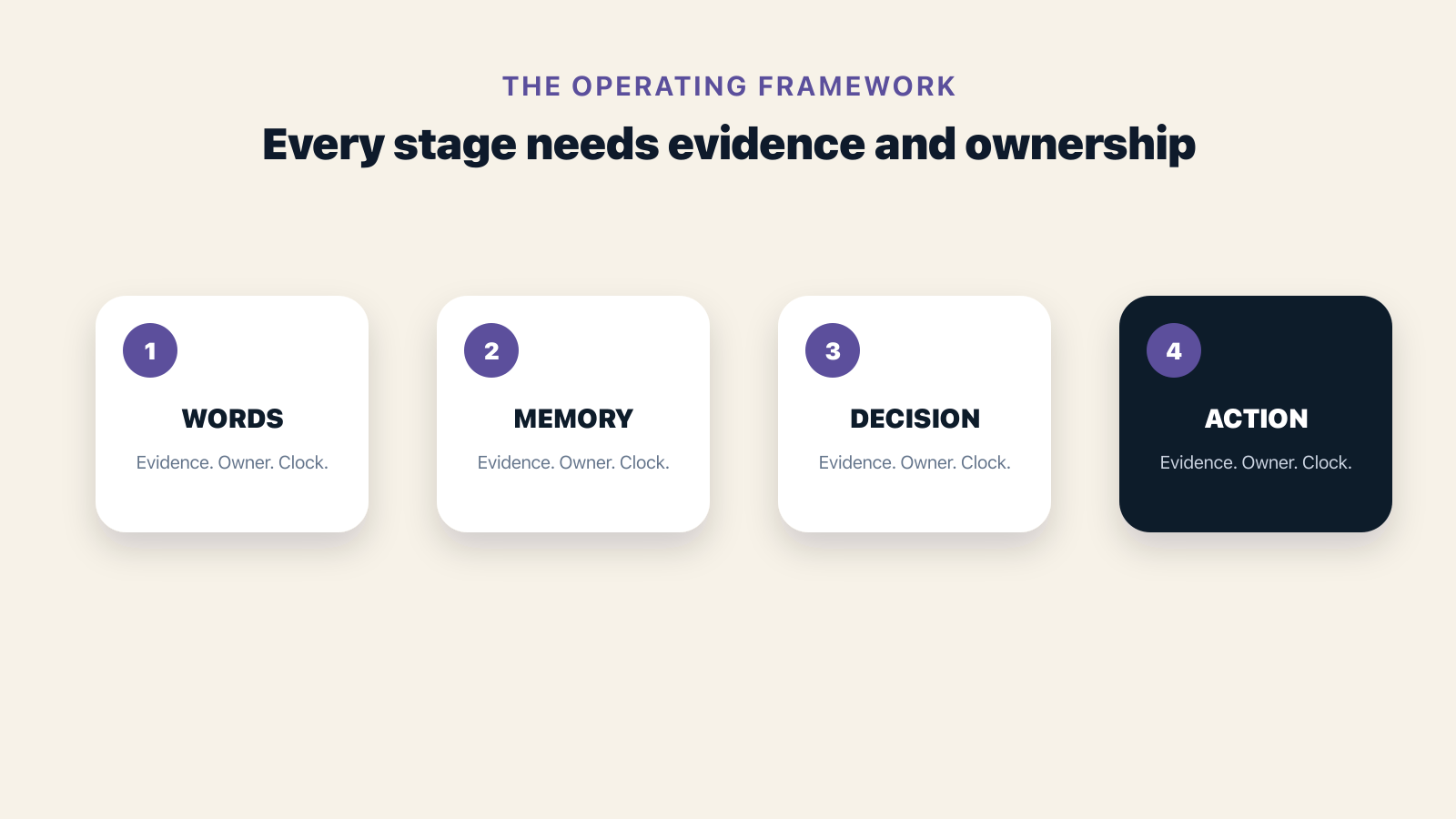
The workflow becomes manageable when causes, decisions, and owners are visible.
Traditional CRM depends on manual translation
A rep hears an objection, decides what it means, chooses a field, and remembers to update it. Each step can lose nuance or arrive too late.
Conversational CRM extracts intent, urgency, objections, preferences, commitments, and next steps while preserving the underlying evidence.
- Customer words remain attached to the record
- Structured signals update without manual re-entry
- Every score can be inspected against evidence
- Workflows react to changing intent
Memory must travel across channels
A buyer should not restart after moving from web chat to WhatsApp or from an AI call to a sales rep.
The CRM becomes useful when it carries the active question, recent promise, preferred channel, and unresolved task into the next interaction.
The buying test is whether the system can act
Ask whether a financing question can trigger document collection, assign a specialist, pause irrelevant nurturing, and schedule a callback.
If the answer requires exports and manual coordination, the platform is recording conversation data without operating it.
A conversation is not another activity type
It is evidence about intent, risk, preference, and the next action the customer journey requires.
Brixi makes CRM the memory and action layer
Brixi combines CRM, AI assistants, Voice AI, WhatsApp, email, web chat, buyer intent, workflows, and human tasks.
The platform keeps customer language connected to structured context and uses it to coordinate the next step.
- Conversation-derived CRM updates
- Shared memory across channels
- Intent and risk detection
- Workflow and human action from customer language
After a quarter, inspect what reps stopped re-entering
Measure manual updates, missing next steps, repeated questions, stale stages, response consistency, and conversion after context-rich handoffs.
The win is not more captured text. It is fewer decisions made with incomplete customer evidence.
- Less manual CRM entry
- More complete customer context
- Fewer repeated questions
- Faster intent-driven actions
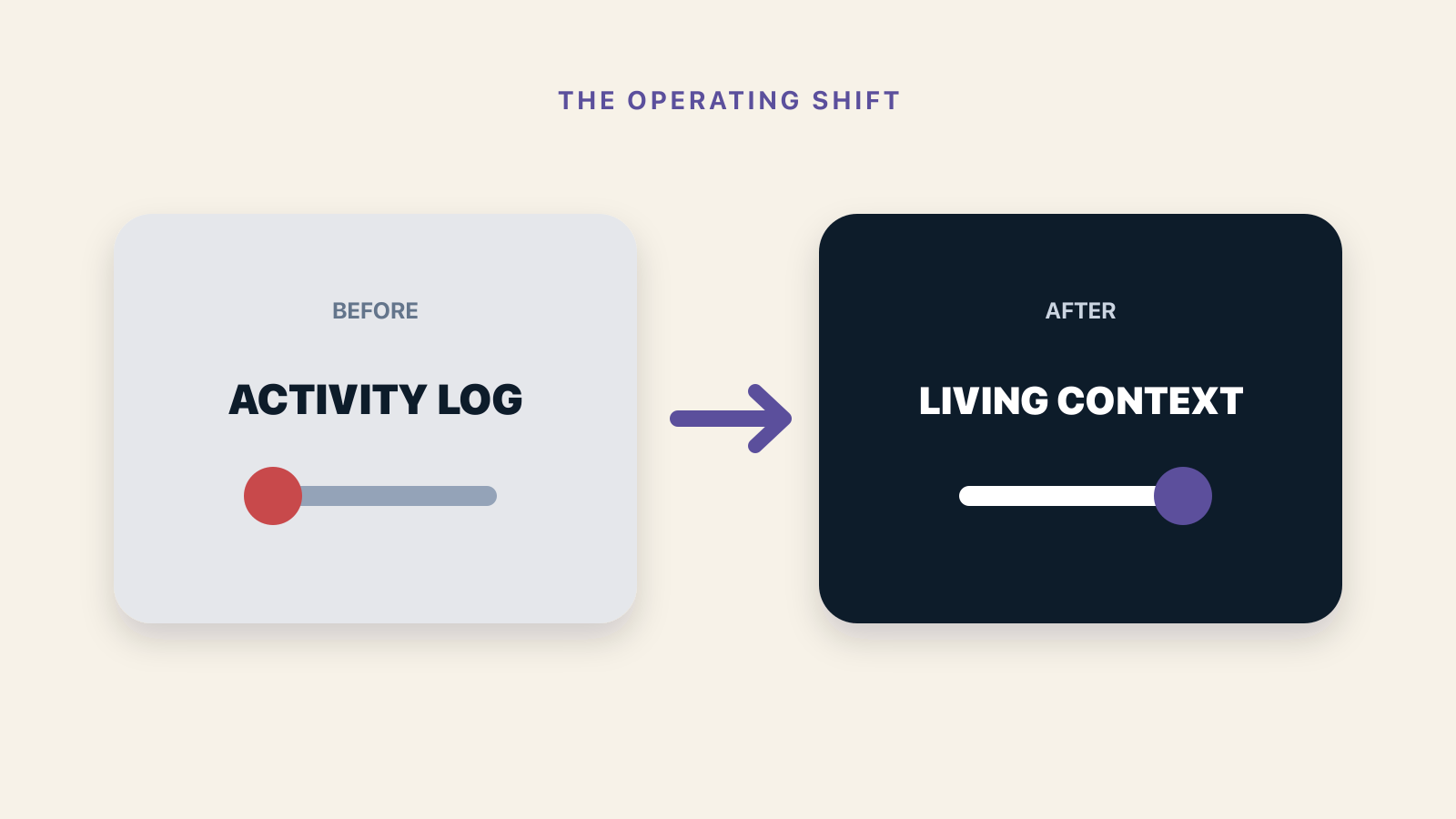
Better customer outcomes appear when the full loop is measured.
The deeper bet is that CRM becomes a living interpretation layer
Customer records will no longer be snapshots assembled after the work. They will update as the customer reveals new intent and as the business acts.
The durable advantage belongs to teams whose systems remember the conversation and coordinate execution without waiting for a weekly cleanup.
Move from activity records to customer decisions
See how Brixi turns conversations into CRM context, buyer intelligence, workflows, and owned actions.
See conversational CRMFrequently Asked Questions
It is a CRM approach that interprets customer conversations and turns them into structured context, workflow decisions, and next actions.
No. A chatbot is one interface. Conversational CRM connects every channel and human interaction to shared memory and operations.
Yes. Its main value is giving people better context, reducing manual updates, and routing the right decisions to them.