WhatsApp Business API Pricing October 2026: Meta's New Service Message Charges
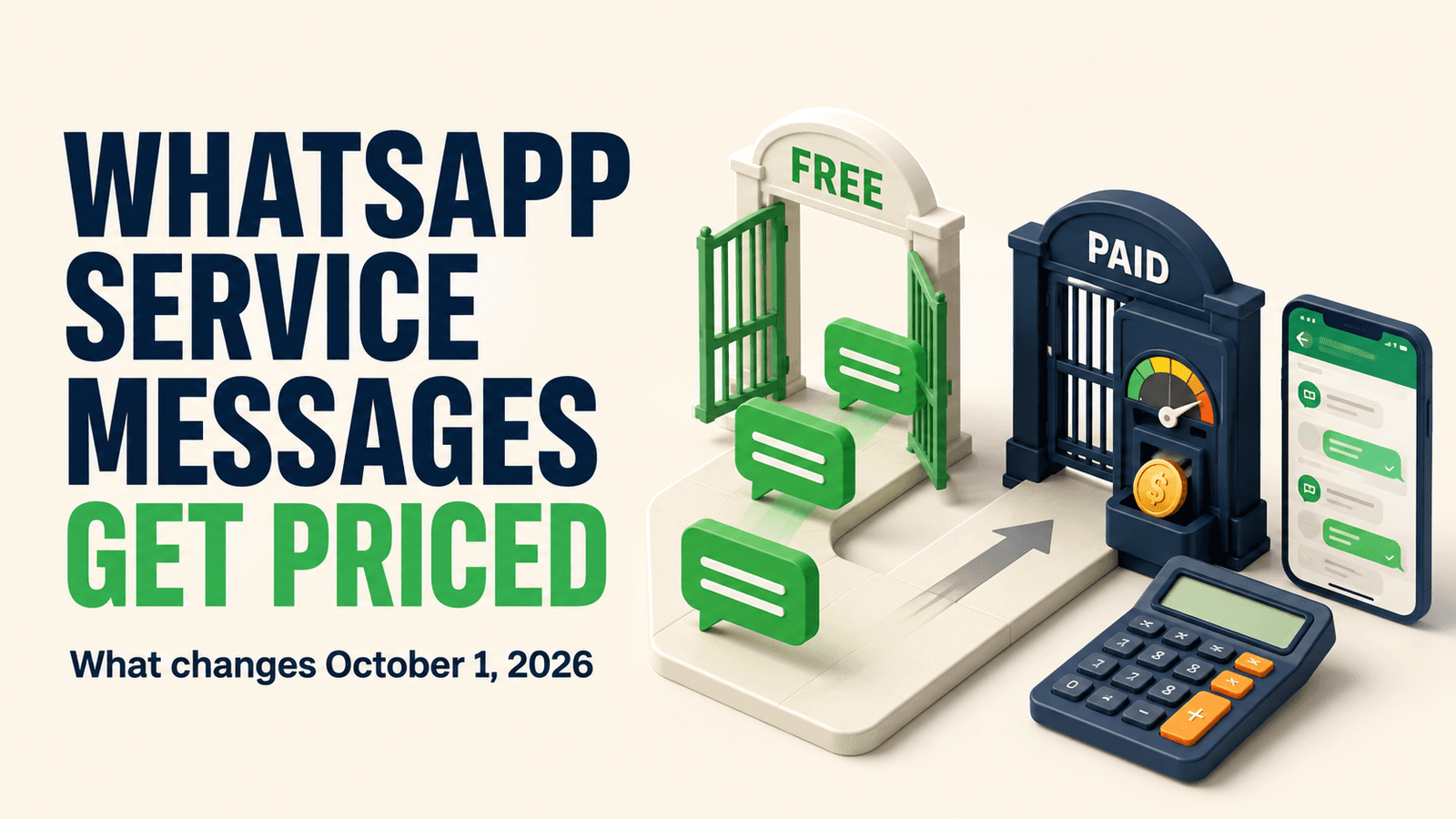
From October 1, 2026, Meta will charge for delivered service replies after a monthly free tier and will bill utility templates inside the open service window. The Resolution Cost changes how teams should design WhatsApp support.
At 8:30 on Friday, a support leader exports the August WhatsApp volume report. The team handled thousands of customer-initiated conversations inside the 24-hour service window and treated every free-form reply as free platform traffic. On October 1, that assumption stops working.

The operational moment where the hidden cost becomes visible.
WhatsApp Business API pricing is adding a Resolution Cost. Meta will charge service messages on a per-delivered-message basis after a monthly free allowance, so chat length, automation design, and handoff quality become budget questions.
The free service window becomes a paid messaging window
The 24-hour customer service window remains operationally important because it determines when a business can send free-form messages without an approved template. What changes is the price attached to those replies.
From October 1, 2026, delivered service messages become billable after the free monthly tier. Utility templates sent in response to users inside the open window also become billable. The change applies whether the reply comes from a human agent, a rules-based bot, or an AI assistant.
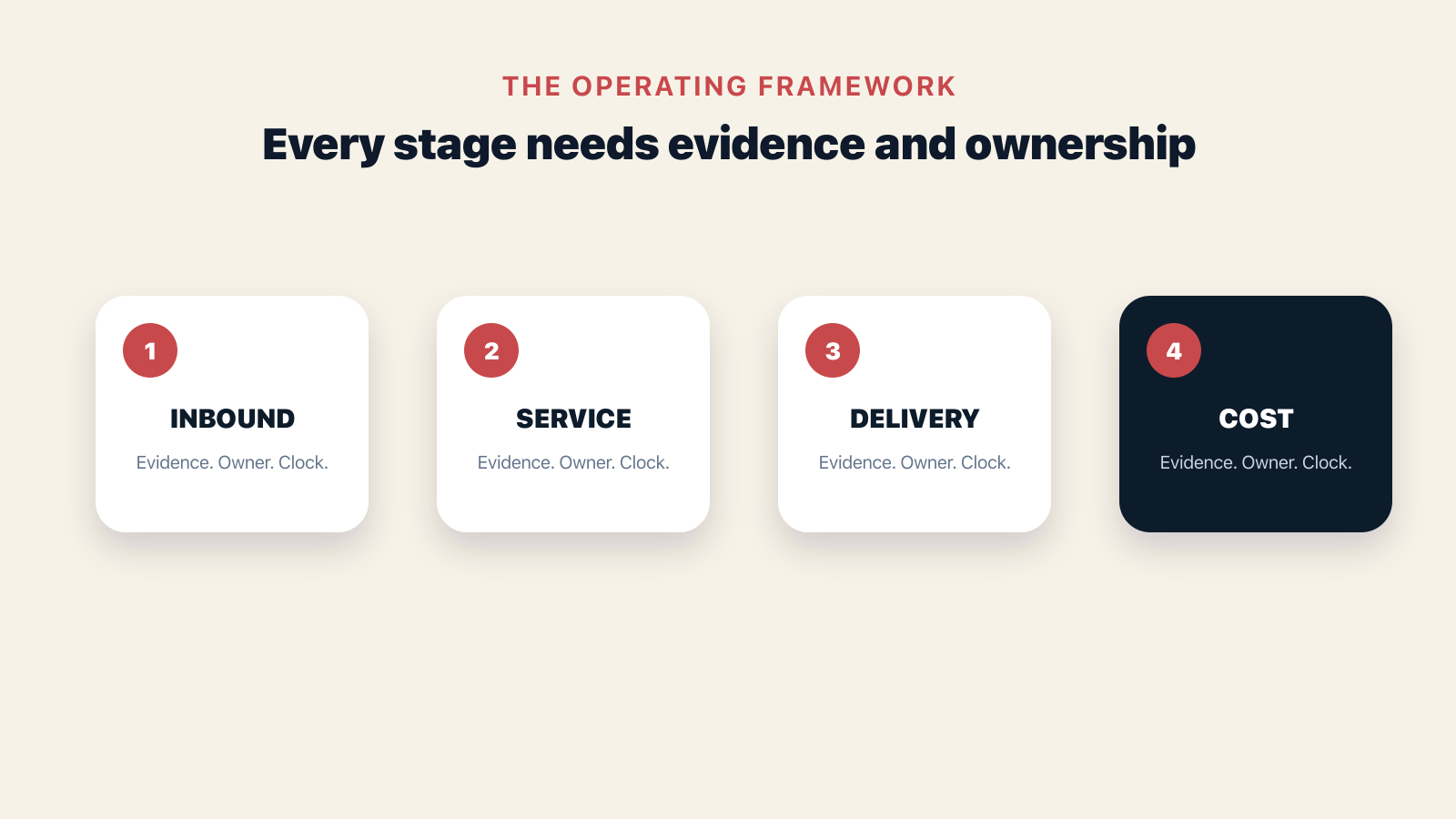
The workflow becomes manageable when causes, decisions, and owners are visible.
What changes in WhatsApp API pricing on October 1, 2026
Each business phone number receives 1,000 free service messages per month. After that allowance, each delivered service message is charged at the applicable market service rate. Meta rate cards vary by recipient market and should be checked when budgets are prepared.
Utility templates inside an open 24-hour service window also lose their free treatment. Marketing, utility, authentication, and service remain distinct categories, and free entry-point rules should be validated against Meta documentation for the exact customer journey.
- Inbound customer messages remain free
- The first 1,000 service messages per phone number each month are free
- Additional service messages are billed per delivery
- Utility templates inside the open service window become billable
- The 24-hour window remains a permission rule, not a blanket free-price rule
The new unit of efficiency is messages per resolution
Teams have traditionally optimized first-response time and agent concurrency. Those metrics remain useful, but they do not show how many paid replies it takes to solve a request.
A bot that sends four acknowledgements before asking the useful question can be more expensive than a concise assistant that resolves intent in two messages. The same is true of human macros, fragmented handoffs, and repeated verification.
Build a cost model before October traffic arrives
Separate monthly inbound messages, outbound service replies, utility templates, marketing templates, authentication messages, free allowances, provider fees, and internal handling cost. Then segment by journey.
Calculate cost per resolved enquiry, booked appointment, confirmed order, collected payment, and recovered opportunity. A single average per chat will hide the workflows that generate avoidable message volume.
The 24-hour window still exists, but free is no longer its default price
From October 1, access rules and billing rules must be modeled separately.
Brixi reduces message waste by connecting intent with action
Brixi connects WhatsApp conversations with CRM context, AI assistants, Voice AI, workflow state, buyer intent, and human ownership. The assistant can ask the next useful question instead of replaying information the customer already supplied elsewhere.
Workflows can suppress duplicates, stop completed journeys, route exceptions with full context, and measure message cost against the business outcome.
- Journey-level message and outcome measurement
- Shared context that reduces repeated questions
- Suppression and completion rules
- Human handoff without conversation restart
After one quarter, finance should see cost by resolved journey
The useful dashboard separates free allowance consumption, paid service messages, template categories, provider charges, agent cost, automation cost, and completed outcomes.
Operations should review the longest conversations and highest-cost unresolved cases. Those are often symptoms of missing context, weak decision design, or unnecessary handoffs.
- Known cost per service journey
- Lower replies per resolution
- Fewer duplicate and obsolete messages
- Clearer automation versus human economics
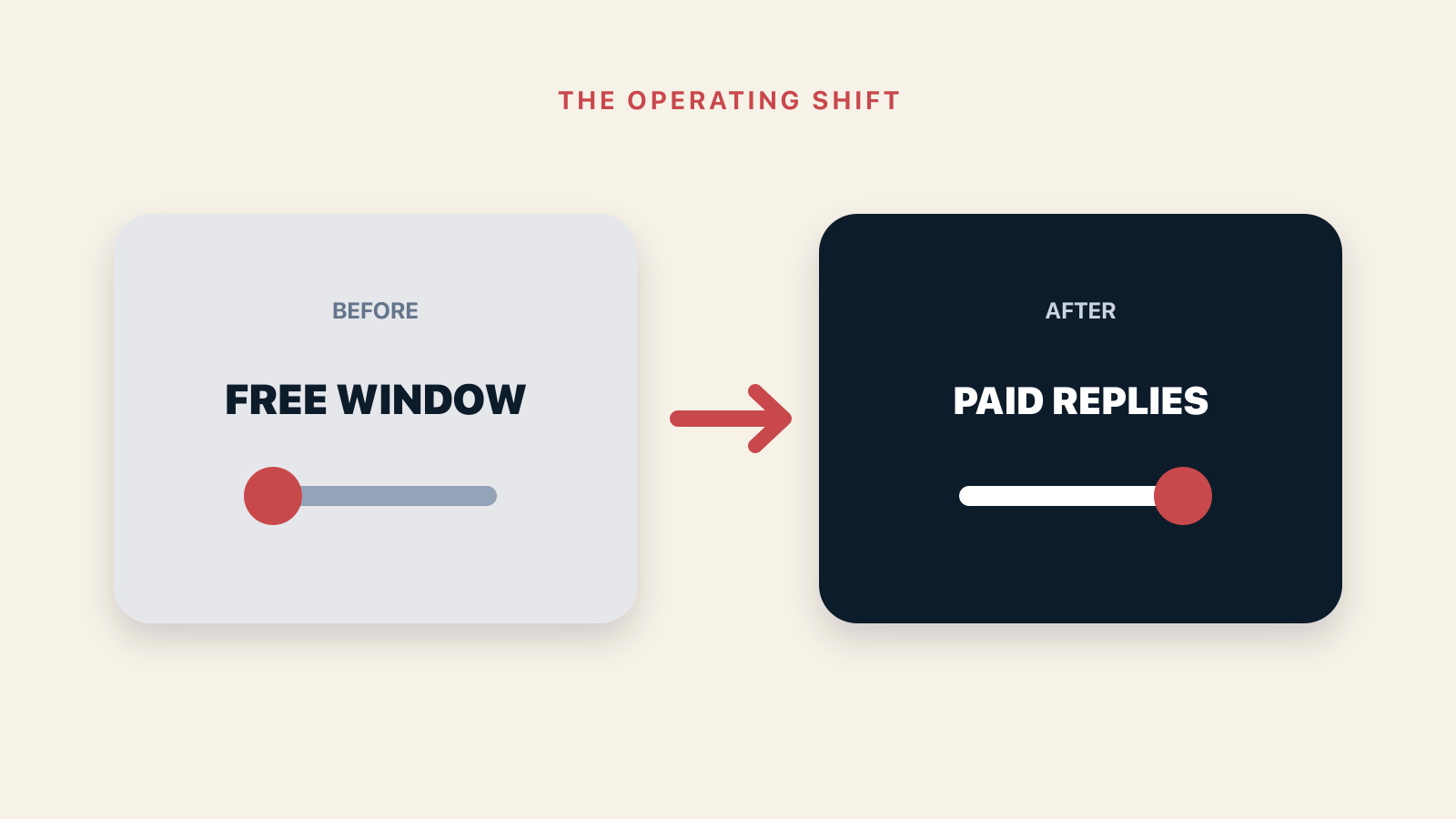
Better customer outcomes appear when the full loop is measured.
The deeper bet is that concise context becomes a financial advantage
Per-message service pricing rewards systems that remember, interpret, and act. It exposes systems that use repeated messages to compensate for fragmented data and weak workflow design.
The lowest-cost operation will not necessarily have the cheapest provider rate. It will resolve the customer need with fewer, better-informed interactions.
Prepare your WhatsApp operation for October pricing
Audit service volume, repeated replies, handoffs, and cost per resolution with one connected customer platform.
Plan your WhatsApp cost auditFrequently Asked Questions
Meta states that service messages will be charged per delivered message from October 1, 2026, after the applicable monthly free allowance.
No. It still determines when free-form replies are allowed, but it no longer makes every service reply free.
Each business phone number receives a monthly allowance of 1,000 free service messages under the announced October 2026 model.
The service-message charge is based on delivered messages, not whether the reply was written by a human agent, rules-based bot, or AI assistant.