The Inventory-Match Gap: Why Property Leads Get the Wrong Follow-Up
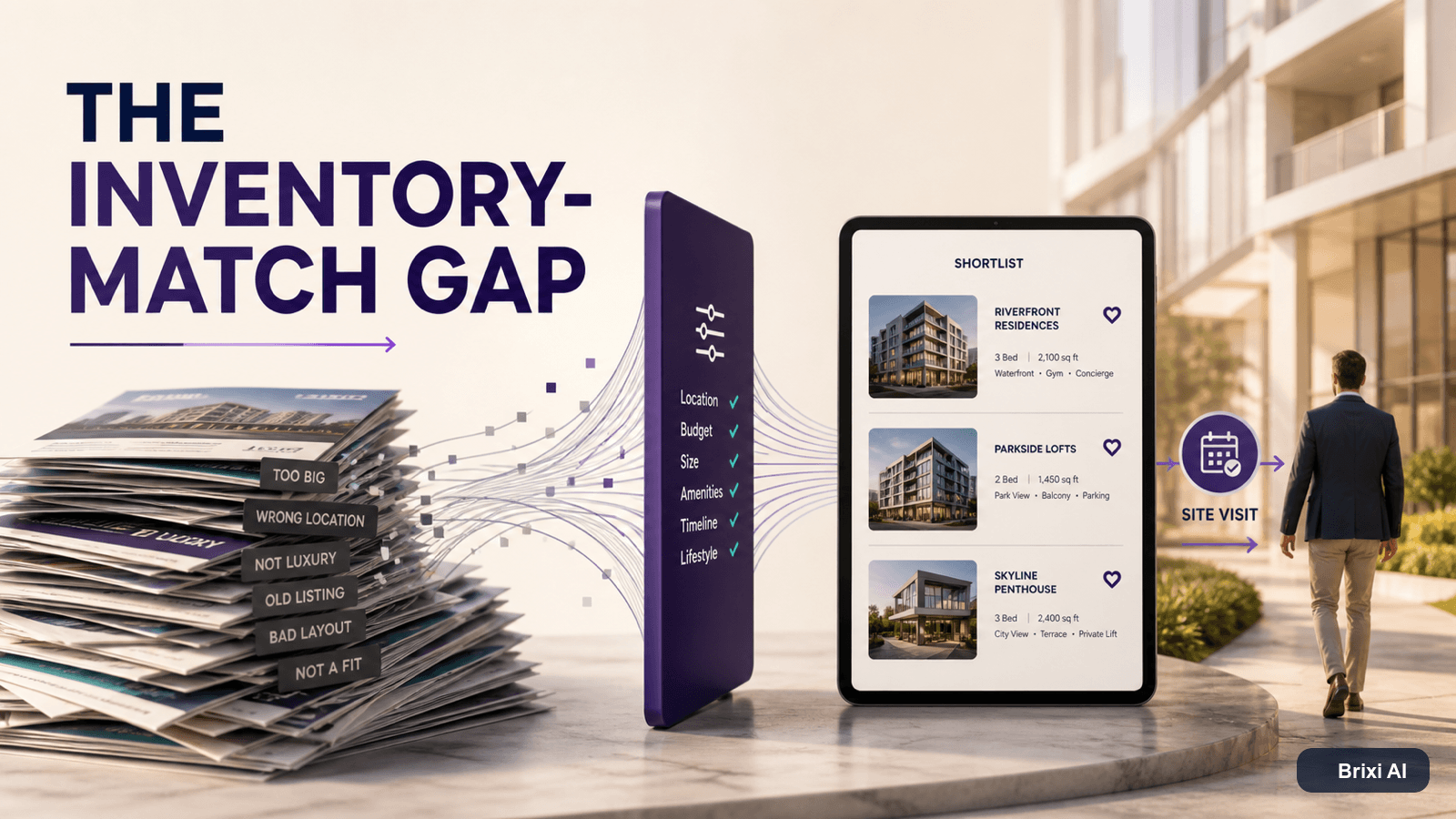
A buyer asks for a two-bedroom home under a specific budget and receives the full project brochure. The Inventory-Match Gap turns available choice into irrelevant follow-up.
At 12:10 on Tuesday, a buyer asks for a ready-to-move two-bedroom unit below a defined budget. The agent sends a brochure containing four towers, seven layouts, and prices that changed last week. The buyer replies with one line: which option is actually for me?
The company has inventory and buyer data. The systems do not connect them at the moment of follow-up. That is the Inventory-Match Gap.
The Brochure Default replaces relevance with volume
When inventory lives in sheets and preferences live in calls, the easiest response is to send everything. The Brochure Default pushes evaluation work back to the buyer.
A useful match combines configuration, budget, availability, possession, location, floor, financing, family needs, and stated trade-offs. It also explains why the suggested option fits.
Inventory freshness is part of customer trust
An attractive recommendation becomes harmful when the unit is blocked, repriced, or unavailable. Sales teams need governed availability rather than personal copies of a sheet.
Every share should reference current inventory and record what the buyer saw.
Preferences evolve during conversation
A buyer may begin with budget, then reveal commute, school, view, possession, or family constraints. Static form fields capture only the opening hypothesis.
Conversation context should update the match and rank alternatives rather than overwrite nuance with one score.
- Hard constraints that cannot be violated
- Soft preferences with trade-offs
- Current availability and price
- Reason each recommended option fits
The match should create the next physical action
A property recommendation is useful when it advances comparison, site visit, financing, or decision-maker involvement. Sending a link without a next step creates another dead end.
The workflow should ask for feedback, refine the shortlist, and prepare the field agent with the buyer's decision context.
Inventory is not a catalogue
The useful product is a current, explainable shortlist connected to the next customer action.
Brixi connects live buyer context with real estate execution
Brixi brings CRM, conversations, buyer intent, mobile field workflows, property sharing, routing, and follow-up into one platform.
Agents can work from current context, share relevant options, coordinate site visits, and return field outcomes to the same buyer record.
- Conversation-enriched buyer preferences
- Current inventory context
- Explainable shortlist and sharing
- Site-visit and field follow-up workflows
After a quarter, measure match quality through action
Track shortlist engagement, buyer feedback, site-visit booking, attendance, rematching, stale-share incidents, and conversion.
The objective is not fewer options at any cost. It is more relevant options that produce clearer buyer decisions.
- Fewer irrelevant brochure sends
- Lower stale-inventory risk
- Higher shortlist-to-visit progression
- Better field-agent preparation
The deeper bet is conversational inventory
Property discovery will move from static filtering to a continuous conversation between buyer preferences and live availability.
The winning real estate platform will connect that conversation to ownership, visits, documents, and follow-up instead of stopping at recommendation.
Turn inventory into relevant buyer action
See how Brixi connects buyer conversations, current property context, site visits, and team execution.
Explore Brixi for Real EstateFrequently Asked Questions
Disconnected buyer conversations, stale inventory, incomplete constraints, and follow-up that sends catalogues instead of explainable shortlists.
AI can rank and explain options within current data and rules. Agents and buyers should handle trade-offs, exceptions, and final judgment.
Track engagement, feedback, rematching, visit booking, attendance, stale-share incidents, and eventual conversion.