Brixi Mobile CRM for Real Estate: Lead to Site Visit
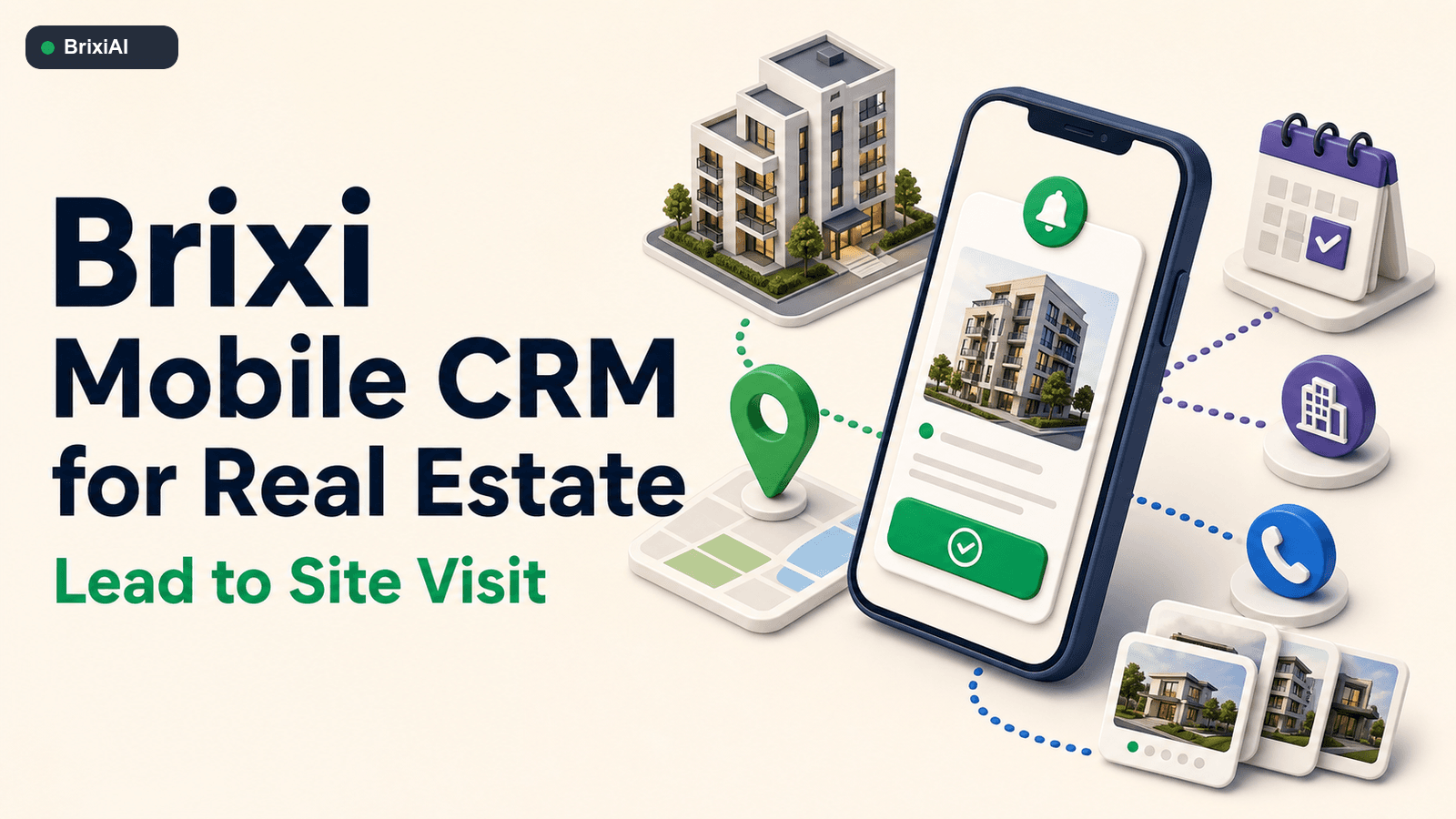
A property lead rarely waits for an agent to return to a desk. Brixi Mobile closes the Field Execution Gap by helping brokers and agents claim inquiries, respond in minutes, coordinate visits, share live inventory, and keep every action on one buyer timeline.
It is 11:18 AM on a Saturday. A channel partner has just finished showing one project in Noida and is driving to another. A new portal inquiry arrives for a 3BHK. The buyer has also contacted two competing developers. The broker sees the notification, but the project brochure is in WhatsApp, availability is in a spreadsheet, the lead record is in a desktop CRM, and the sales manager still has to decide who owns the inquiry. By the time someone calls, the buyer may already have booked another site visit. This is the moment a mobile CRM for real estate must be built to handle.
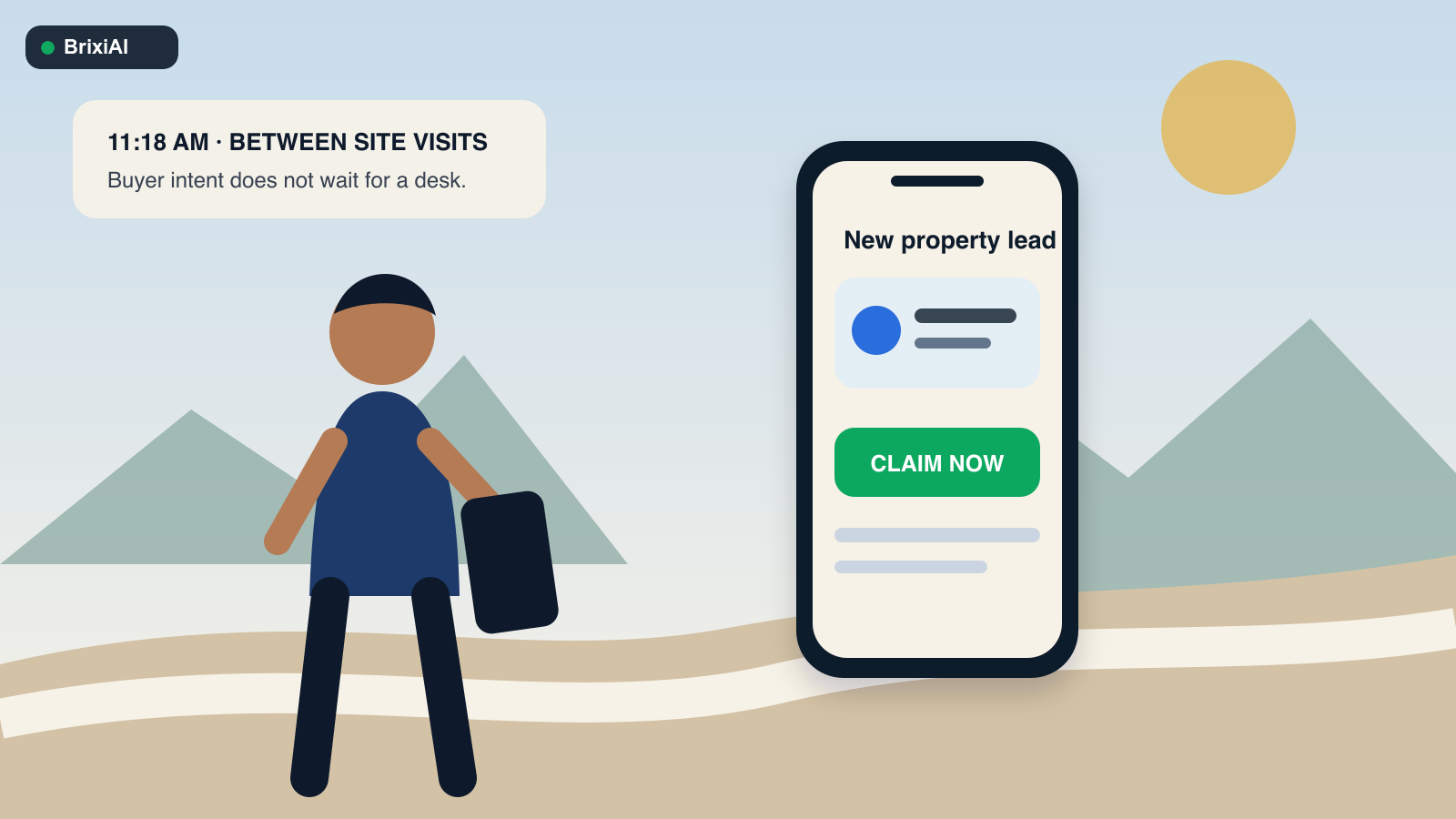
The buyer is ready now, even when the agent is nowhere near a desk.
This is the Field Execution Gap. It is the distance between what the CRM knows and what the field team can do in the moment. Traditional CRMs were built around a desk, a keyboard, and an end-of-day update. Real estate sales happens in cars, project offices, sample flats, broker meetings, and WhatsApp threads. A real estate CRM mobile app should not be a smaller dashboard. It should be the operating workspace for the next action.
A mobile CRM succeeds only when agents use it voluntarily
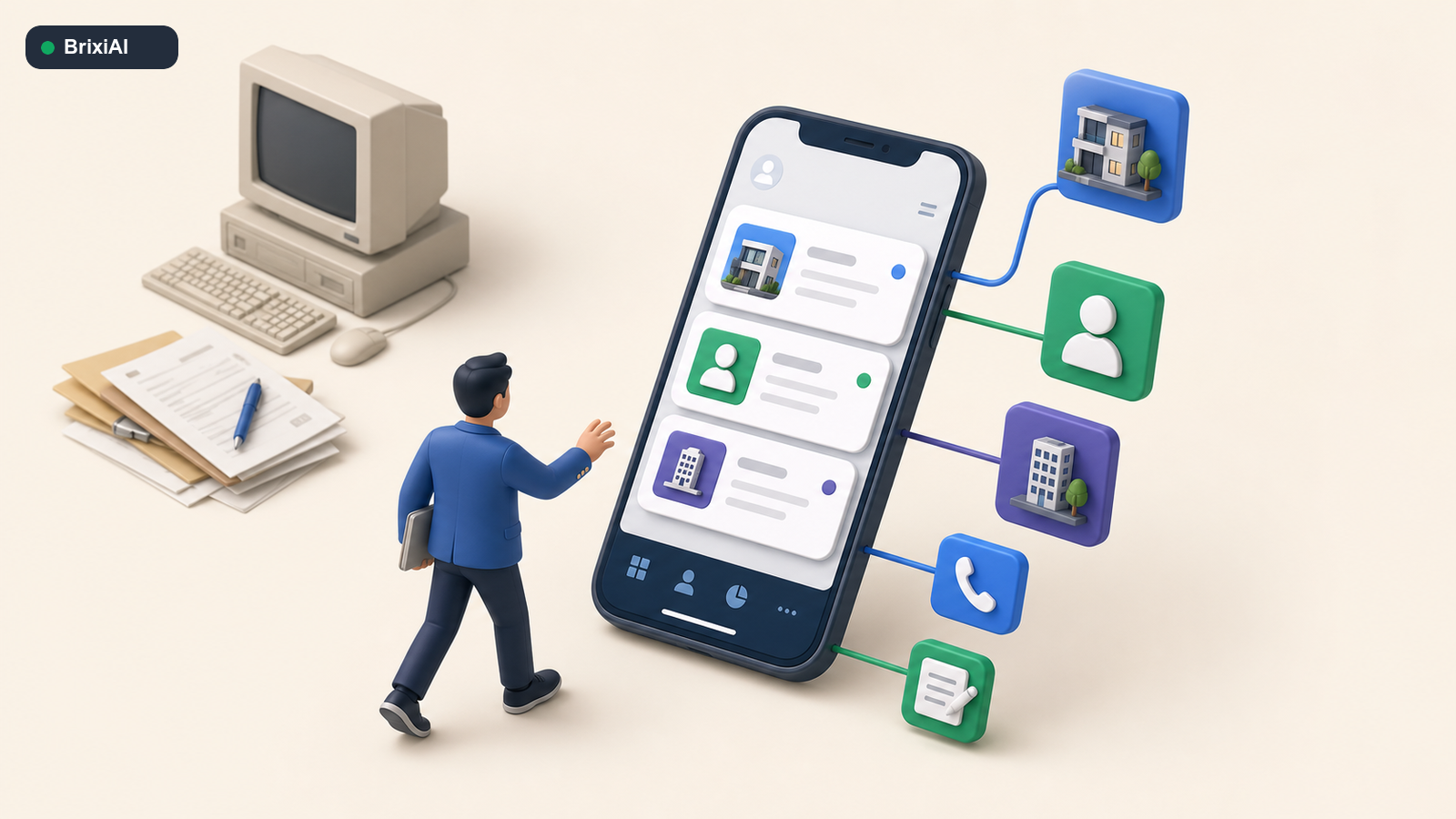
The useful CRM is the one agents reach for while the buyer is still active.
Most field adoption problems are blamed on training. The deeper problem is friction. If an agent needs six taps to find a lead, another app to make the call, a third app to message the buyer, and a spreadsheet to confirm inventory, the CRM becomes a reporting obligation. Reps update it late because it slows down the work they are trying to complete.
Brixi Mobile is designed around the actions a broker, channel partner, or field agent repeats throughout the day. Leads, contacts, opportunities, calls, WhatsApp conversations, meetings, and site visits are reachable from one modern interface. The experience is optimized for quick, one-handed use, so an agent can act between appointments instead of postponing every update until evening.
- Open a new inquiry and see the buyer, source, project interest, owner, and next action.
- Move a qualified buyer into an opportunity without recreating the contact.
- Call, email, or send a WhatsApp message from the same customer record.
- Add a note or activity immediately after a conversation or site visit.
- Continue capturing field information when connectivity is unreliable and sync the work when the connection is available.
Rule Adoption is the first mobile CRM metric
A feature-rich CRM that agents update at night is still operating hours behind the buyer. The useful system is the one that helps the rep complete the next action now.
Claim-based lead assignment turns routing into action
Real estate leads are perishable. A buyer who submits an inquiry at 11:18 AM may speak to three projects before lunch. Yet many teams still route that inquiry through a manager, a spreadsheet, or a round-robin queue that assigns it to someone who is already inside a site visit. The lead has an owner on paper, but no one is available to act.
Brixi can surface a new inquiry to eligible agents as a real-time claim alert, similar to the way a ride request is offered to nearby drivers. An available rep claims the lead, ownership becomes visible, and the buyer can be contacted immediately. If the claim window expires, the workflow can escalate or reopen the lead instead of letting it sit silently in one person’s queue.
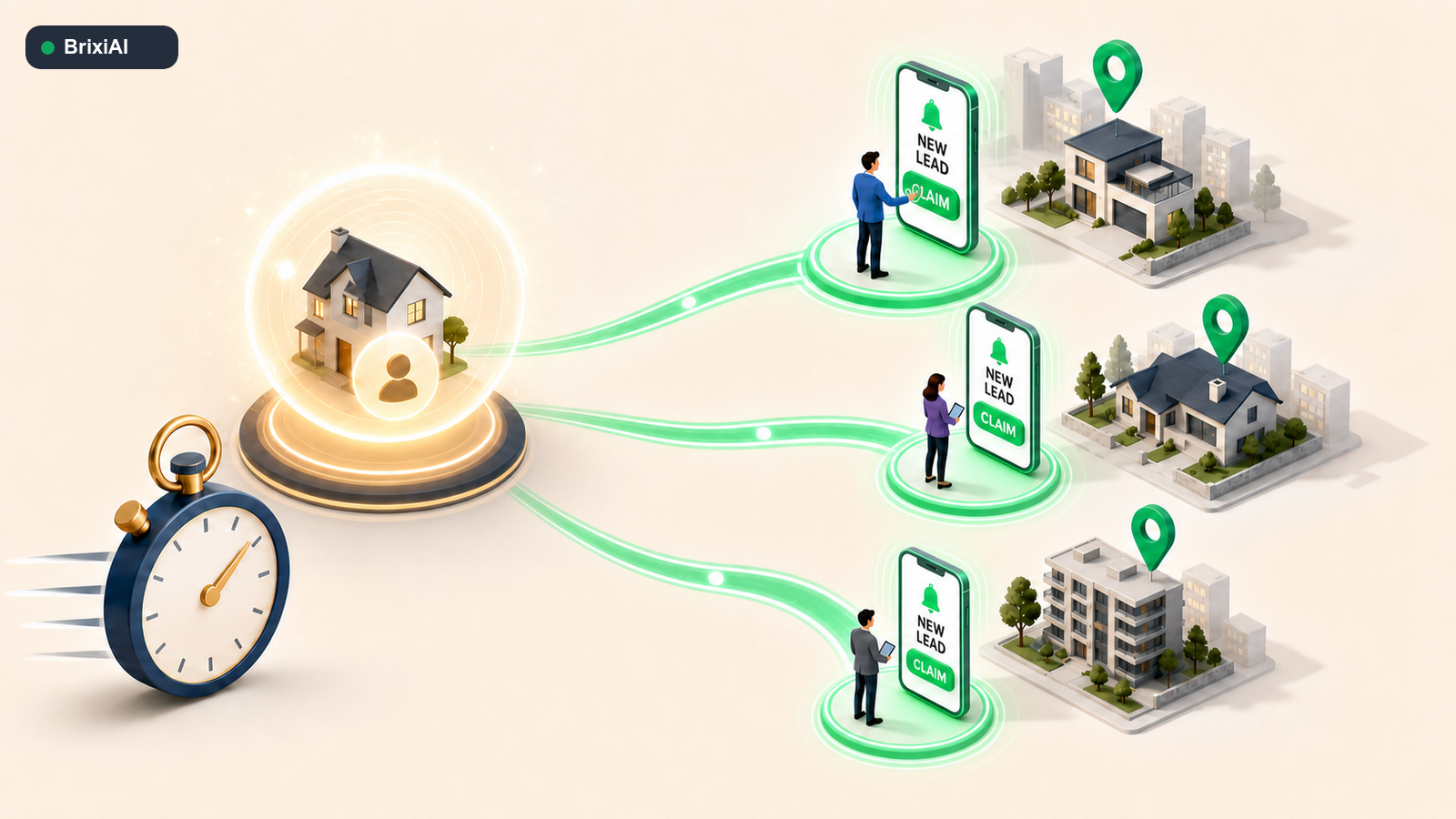
Every available agent sees the opportunity at once. The first valid claim establishes ownership.
The goal is not speed without control. Eligibility can still reflect project, location, language, team, shift, or performance rules. The claim model simply adds live availability to the routing decision. That helps developers and brokerages target a response time below five minutes while preventing duplicate calls and unclear ownership.
Every buyer conversation belongs on one timeline
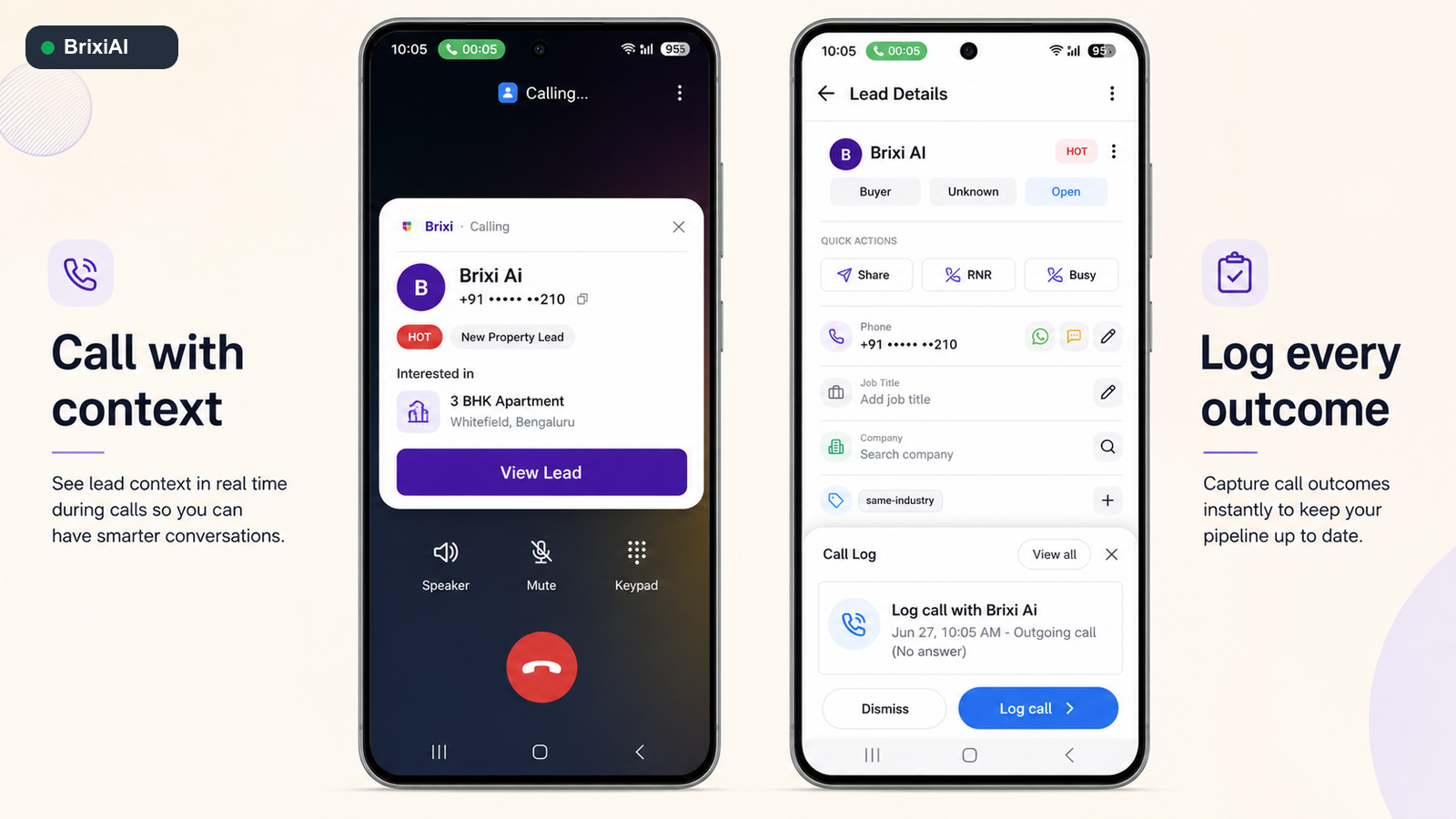
Lead context appears during the call, and the outcome returns to the same customer record.
The buyer does not experience calls, WhatsApp, email, and meetings as separate channels. They experience one relationship. The CRM should remember it the same way. When those activities live in separate apps, agents repeat questions, managers miss promises, and the next rep begins the conversation without context.
From Brixi Mobile, an agent can make a call, send an email, start a WhatsApp conversation, or schedule the next interaction. Call recordings and outcomes stay connected to the lead record. Online demos, office meetings, and in-person site visits can be scheduled against the same opportunity. Notes, messages, meeting history, and next steps form one chronological buyer timeline.
- Call the buyer and keep the recording associated with the lead.
- Send a WhatsApp follow-up without losing the earlier conversation context.
- Email a cost sheet or requested document from the customer record.
- Schedule an online meeting, office appointment, or physical site visit.
- Log the outcome and create the next follow-up while the details are still fresh.
Logging should be the result of doing the work, not a second job after the work. That distinction is what turns the CRM from a manager’s reporting system into the shared memory of the sales team.
The site visit should be part of the sales system
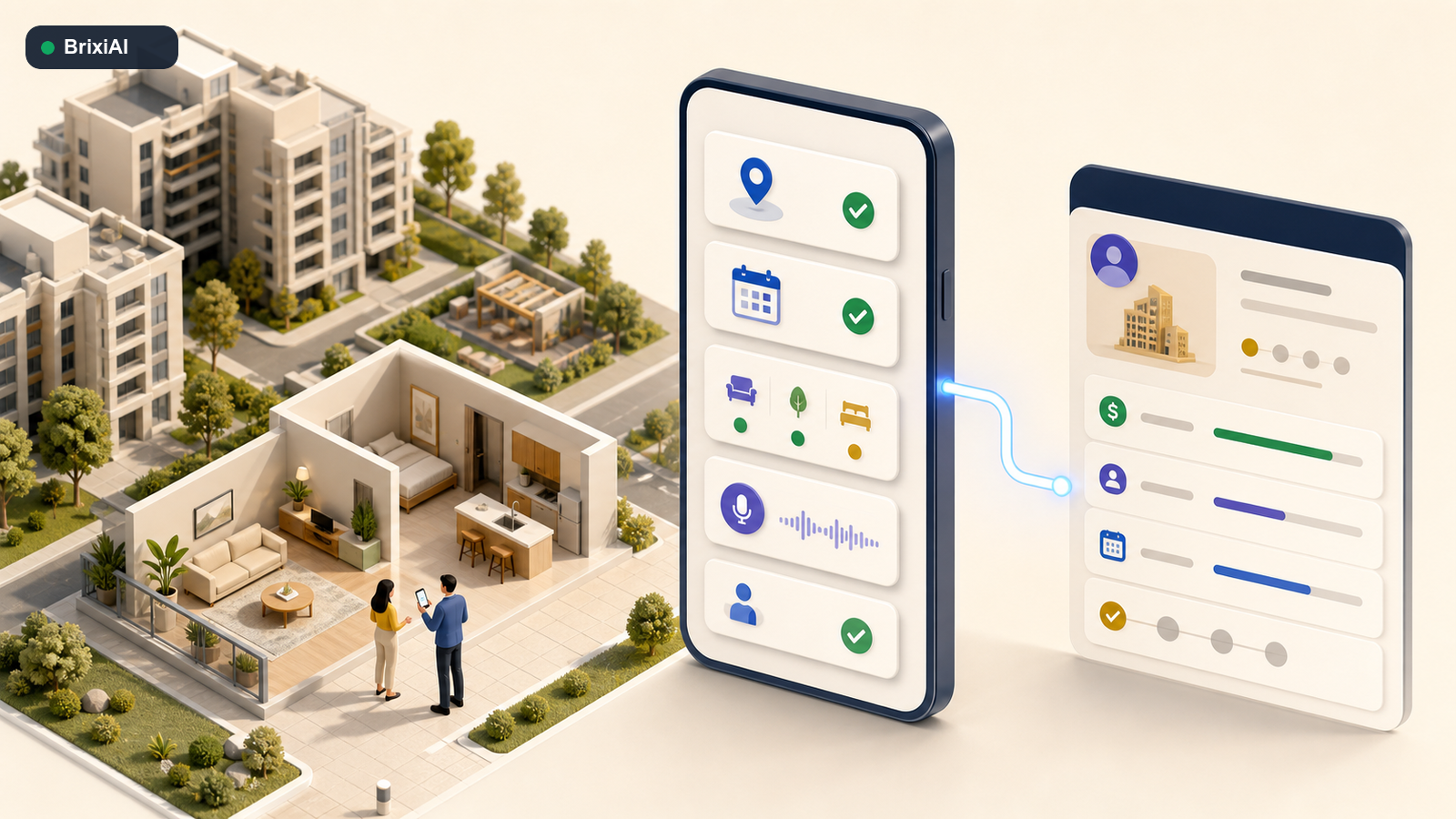
The physical visit becomes structured context for the next sales action.
A site visit is often the richest event in a property funnel. The agent learns which tower the buyer prefers, whether a parent or spouse influences the decision, what budget concern is unresolved, and which competing project is being considered. Yet many teams reduce that visit to a calendar entry followed by the status “visited.” The most useful context disappears.
Brixi Mobile lets the field rep work with the visit while it is happening. The agent can check the appointment, confirm arrival, record availability, add notes, schedule a revisit, and set the follow-up before leaving the property. If a buyer changes the preferred date or asks to meet another decision-maker, the plan can be updated while both parties are present.
This closes the Field Execution Gap at the moment it matters most. The office does not have to wait for an evening debrief. Managers can see which visits happened, which were missed, what the buyer asked for, and what action is due next.
Live inventory turns the phone into a selling tool
Inventory questions rarely arrive at a convenient time. A buyer standing in a sample flat asks whether a west-facing unit is available on a lower floor. A channel partner wants the current price for a different project. A broker needs to share two alternatives before the buyer gets into the car. Calling the office or searching yesterday’s spreadsheet breaks momentum and creates the risk of quoting stale information.
With project, property, product, and inventory information available in Brixi Mobile, the agent can check relevant options while the conversation is live. Property details, project information, brochures, price context, and product material can be shared directly with the buyer. The opportunity record preserves what was shared, giving the next follow-up a clear starting point.
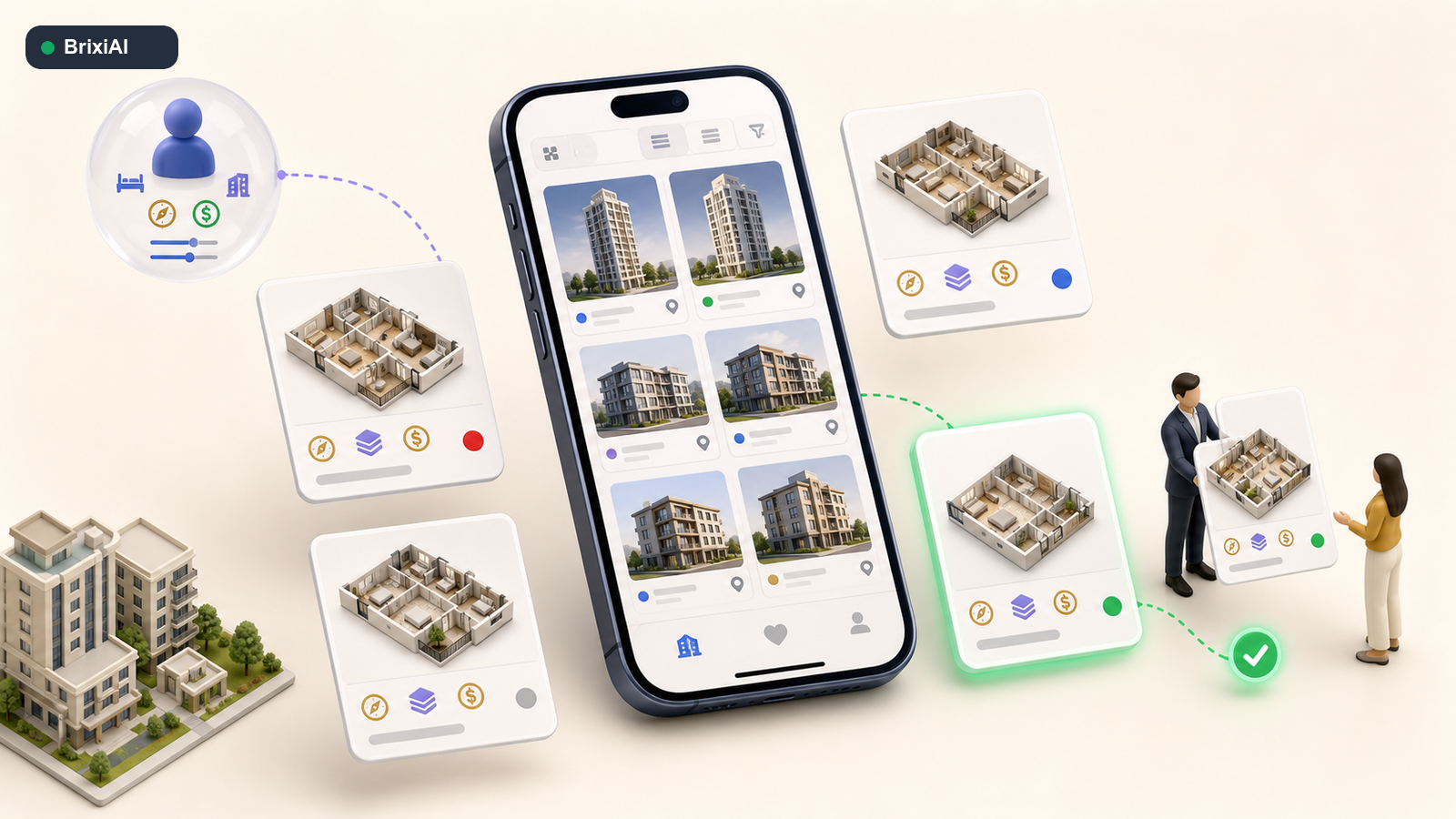
Live buyer context helps the agent share the relevant available property, not a generic catalogue.
This is more than mobile inventory access. It connects the buyer’s stated need to the available product. When the same platform knows the budget, preferred configuration, prior objections, visit history, and current inventory, the rep can share a relevant option instead of forwarding a generic catalogue.
Field accountability should not require constant manager follow-up
Sales managers often reconstruct the field day from attendance messages, expense photos, call logs, and verbal updates. That work produces a partial picture and consumes the time that should go into coaching. Brixi Mobile brings operational records closer to the customer activity that created them.
- Attendance and field presence can be recorded from the mobile app.
- Leave requests remain visible alongside team availability.
- Travel and site-related expenses can be submitted and tracked.
- Calls, messages, meetings, notes, site visits, and stage changes build an activity history.
- Managers can review response time, follow-up discipline, site-visit execution, and opportunity movement without chasing separate updates.
The point is not surveillance. It is operational clarity. An agent should not have to prove the same work in four different places, and a manager should not need a Friday spreadsheet to understand whether high-intent buyers received timely attention.
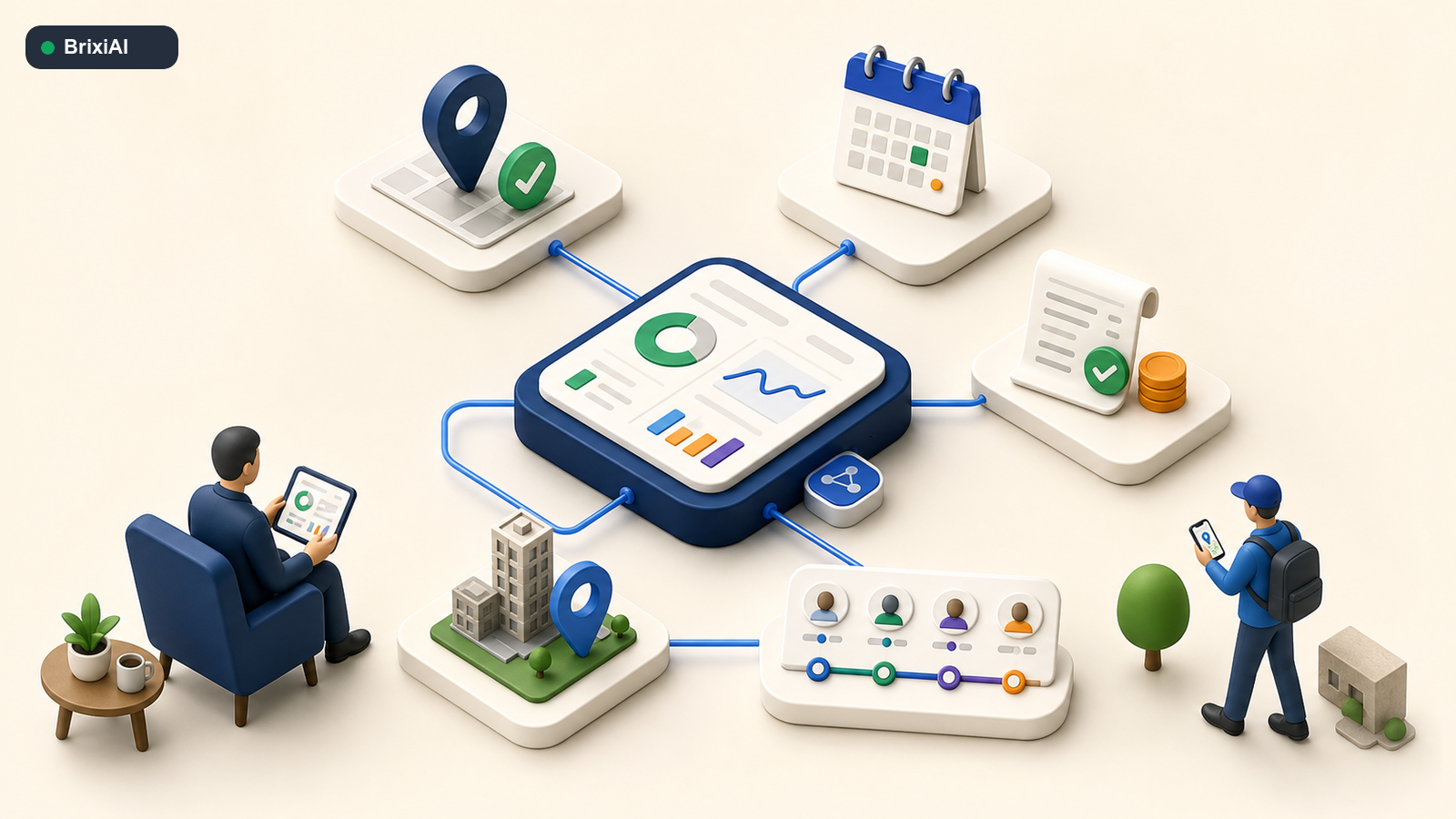
Field activity creates manager visibility without asking the agent to report the same work twice.
What changes after one quarter of mobile-first execution?
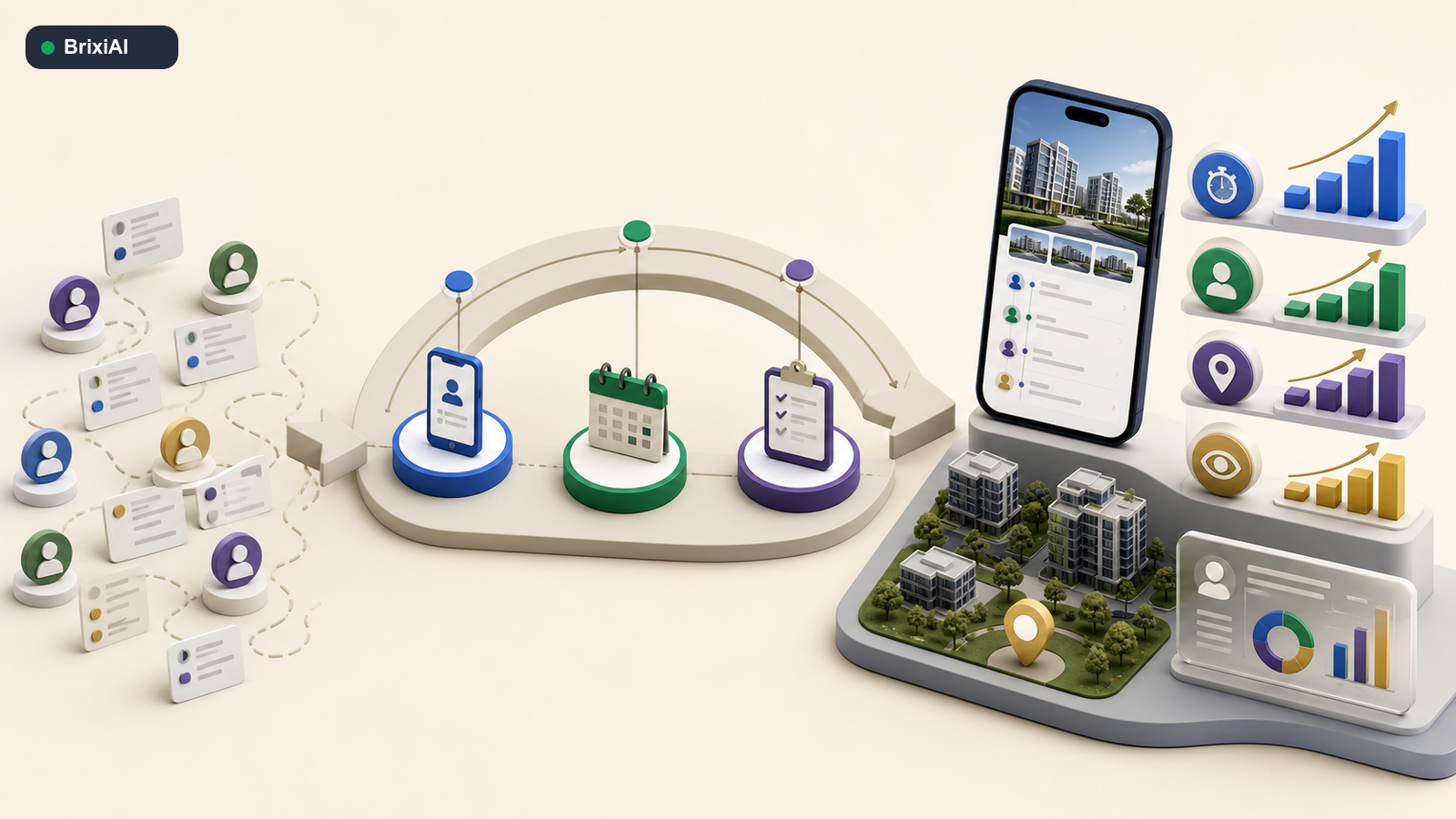
A quarter of mobile-first discipline makes response, visits, and ownership easier to inspect.
The first change is response discipline. New leads do not wait for a manager to notice an unworked queue. Claim alerts create visible ownership, and escalation rules reveal the leads nobody accepted. Teams can measure the time between inquiry, claim, first attempt, and first meaningful conversation instead of relying on a monthly average.
The second change is cleaner customer memory. Call recordings, WhatsApp messages, emails, meetings, site visits, shared properties, and notes live against the same record. A manager can coach from evidence. A colleague can take over without asking the buyer to start again. A follow-up workflow can act on what actually happened.
The third change is field visibility without extra reporting. Attendance, leave, expenses, activities, visit outcomes, and opportunity movement are captured closer to the moment of work. The system gives something back to the agent: faster access, clearer next steps, and less repeated admin. That value exchange is what sustains adoption.
The deeper bet: the real estate CRM will live where selling happens
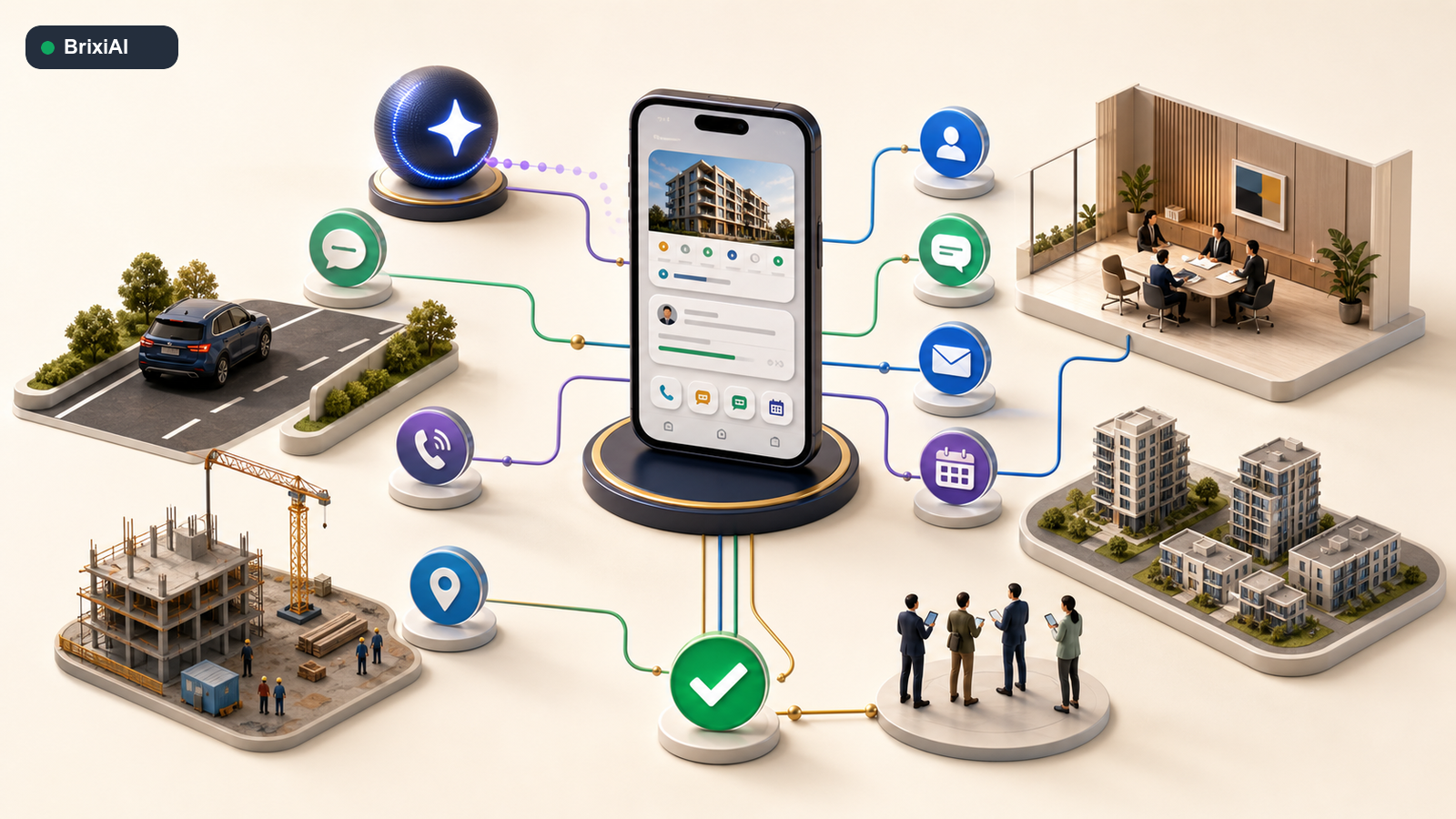
The mobile app becomes the field interface for one connected customer operating layer.
The future real estate CRM will not be judged by how many fields it stores. It will be judged by how quickly it turns a buyer signal into coordinated action. The useful system will know that a new inquiry needs an available owner, that a recorded call changed the budget, that a site visit needs confirmation, that a preferred unit is available, and that the next message should reflect all of it.
Brixi Mobile is the field interface for that larger AI-native customer platform. CRM, conversations, call recordings, WhatsApp, email, meetings, site visits, inventory, workflows, and team execution share one operating layer. The phone is not a companion to the real system. For the broker or agent standing with the buyer, it is where the system becomes real.
Download Brixi Mobile from the Apple App Store or Google Play.
Put the complete real estate workflow in every agent’s hand
See how Brixi connects lead claiming, buyer conversations, site visits, live inventory, field activity, and manager visibility in one mobile-first customer platform.