The Product-Qualified Conversation for SaaS Teams
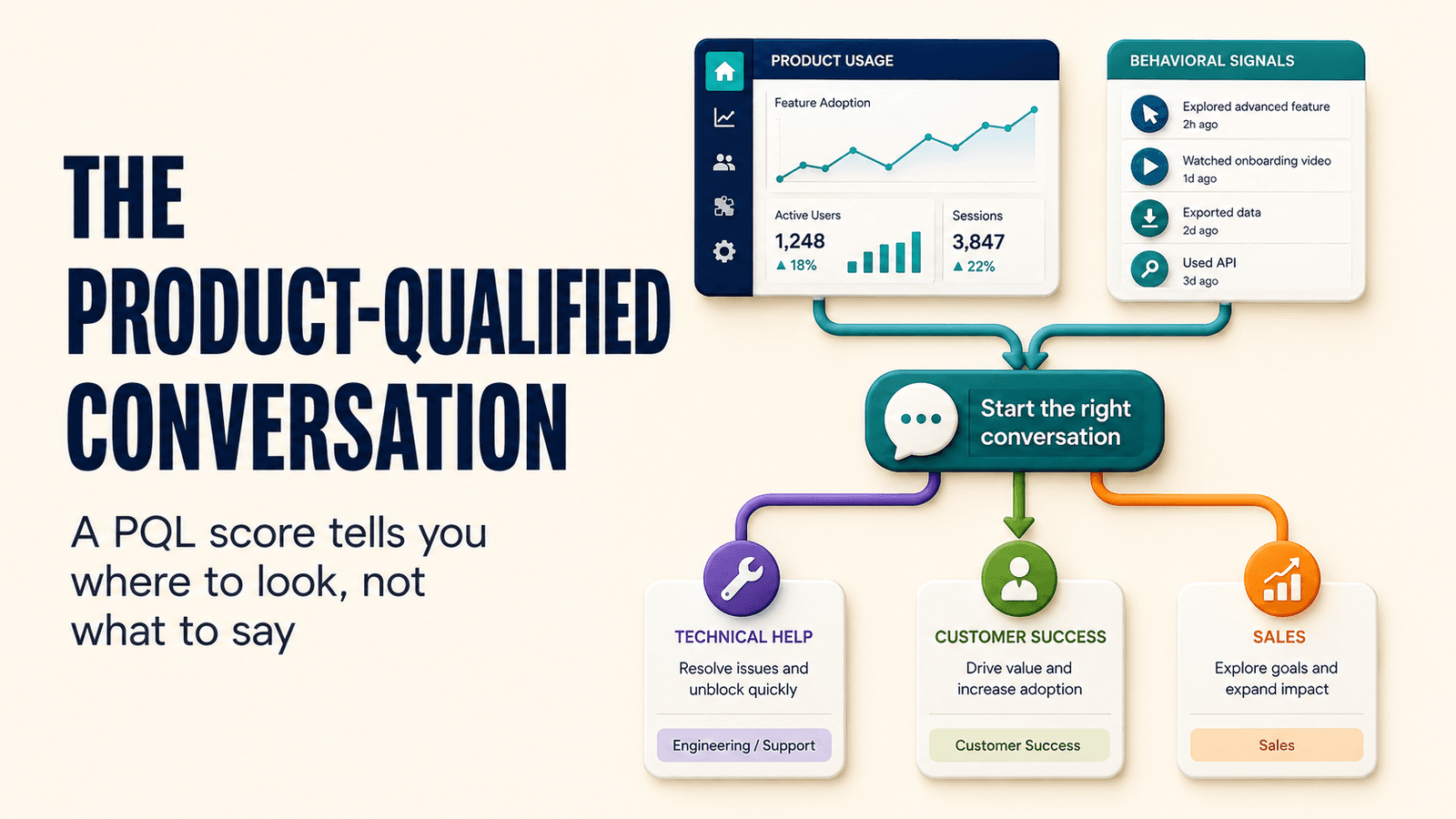
A PQL score can tell a SaaS team where to look. The Product-Qualified Conversation connects usage evidence with customer intent and the next useful intervention.
At 10:15 on Friday, a SaaS growth team sees that five trial accounts crossed its product-qualified lead threshold. Sales emails all five. Two users were testing for a manager, one was blocked by setup, one wanted security documentation, and only one was ready for a commercial conversation.

The operational moment where the hidden cost becomes visible.
The Product-Qualified Conversation begins with usage evidence but does not stop at a score. It asks what the behavior means for this user, this account, and this moment.
The PQL Certainty Trap turns evidence into premature sales pressure
Product activity is valuable because it reveals effort, interest, and possible value. It does not automatically reveal authority, budget, timing, or the help a user needs.
Treat the score as a reason to start the right conversation, not as permission to deliver the same sales sequence.
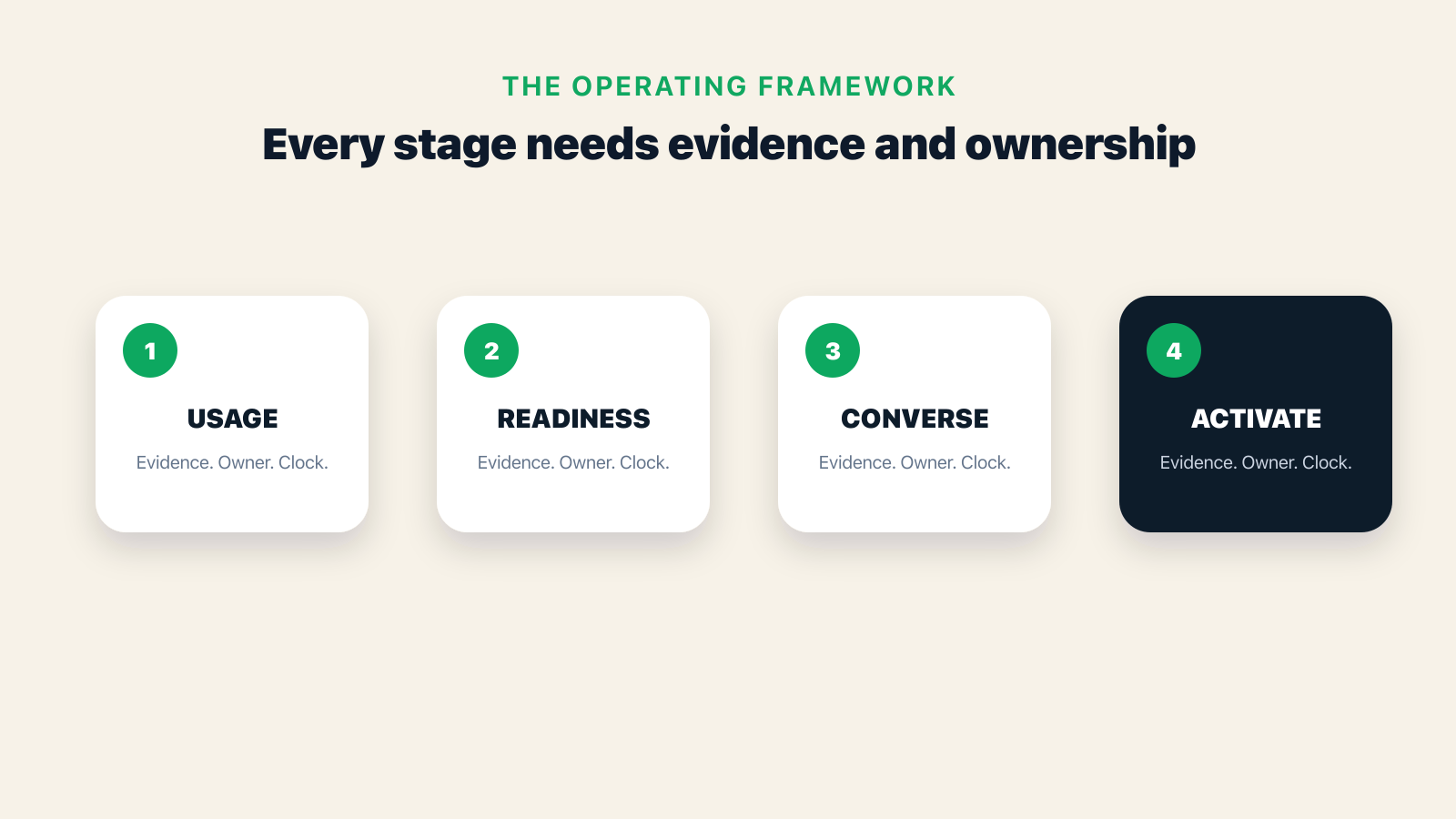
The workflow becomes manageable when causes, decisions, and owners are visible.
Separate usage depth from buying readiness
Repeated use, team invitations, integrations, data import, and feature breadth can indicate value. Buying readiness may appear through pricing visits, security questions, limits, procurement, or explicit expansion language.
The model should show both dimensions and preserve the events behind them.
- Usage depth and frequency
- Breadth across features or teammates
- Activation blockers
- Commercial and security intent
- Account role and authority
The next action should match the user's job
A blocked evaluator may need technical help. A champion may need an internal business case. An administrator may need security evidence.
Route assistance, education, success, or sales according to the observed need instead of forcing every PQL into an SDR queue.
Conversation outcomes should improve the score
If a user explains that the evaluation is for next quarter, that evidence should change readiness and follow-up timing.
Closed-loop learning connects what users did, what they said, what the team did, and what eventually converted or churned.
A PQL score tells you where to look, not what to say
The conversation turns product behavior into customer meaning and an appropriate next action.
Brixi connects product intent with conversation and execution
Brixi combines behavioral signals, CRM context, AI assistants, messaging, Voice AI, workflows, routing, and human teams.
The customer receives help or commercial engagement that fits the observed journey, while the outcome feeds future prioritization.
- Product and conversation signal unification
- Fit and readiness interpretation
- Context-aware assistance and sales routing
- Closed-loop scoring from outcomes
After a quarter, compare PQL volume with activated revenue
Track activation, qualified conversations, routed assistance, sales acceptance, expansion, time to value, and false-positive PQLs.
Review where sales outreach slowed activation or where support missed a genuine commercial signal.
- More relevant PQL outreach
- Faster blocker resolution
- Better sales and success routing
- Stronger signal-to-revenue learning
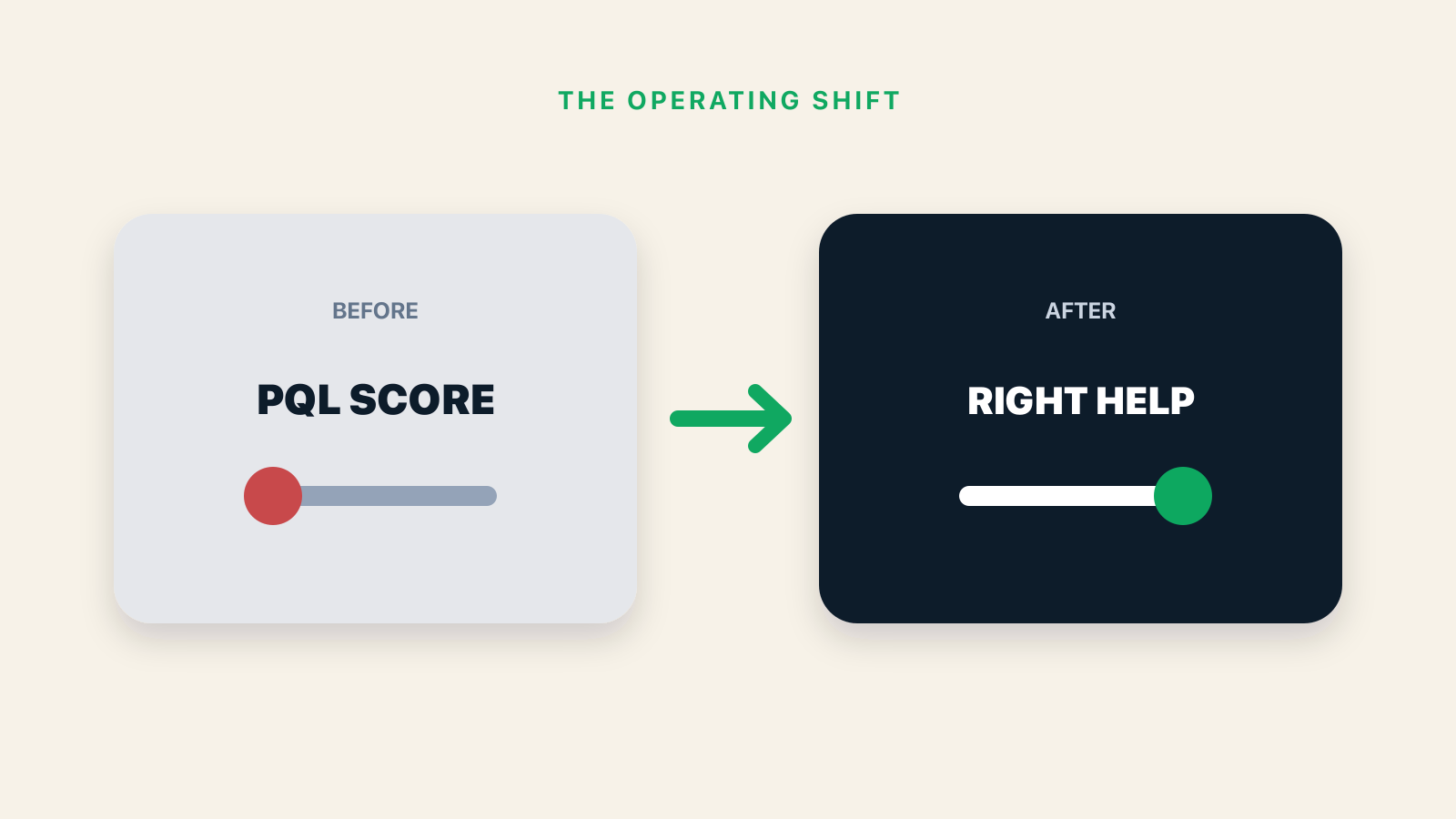
Better customer outcomes appear when the full loop is measured.
The deeper bet is that product-led growth becomes conversation-aware
Self-serve behavior and human conversation are not competing growth motions. Together they explain what the customer is trying to achieve.
The strongest SaaS teams will intervene less often, but with far more context when the moment deserves it.
Turn product signals into the right customer conversation
Use Brixi to connect behavior, CRM context, AI assistance, routing, and revenue outcomes.
See buyer intent in actionFrequently Asked Questions
It is a customer interaction triggered by meaningful product behavior and shaped by the user context, account role, readiness, and likely next need.
No. Some need activation help, technical guidance, security information, or time before a commercial conversation.
Separate product usage depth from buying readiness and retain the evidence behind both scores.