AI Lead Management Software: What Teams Need in 2026
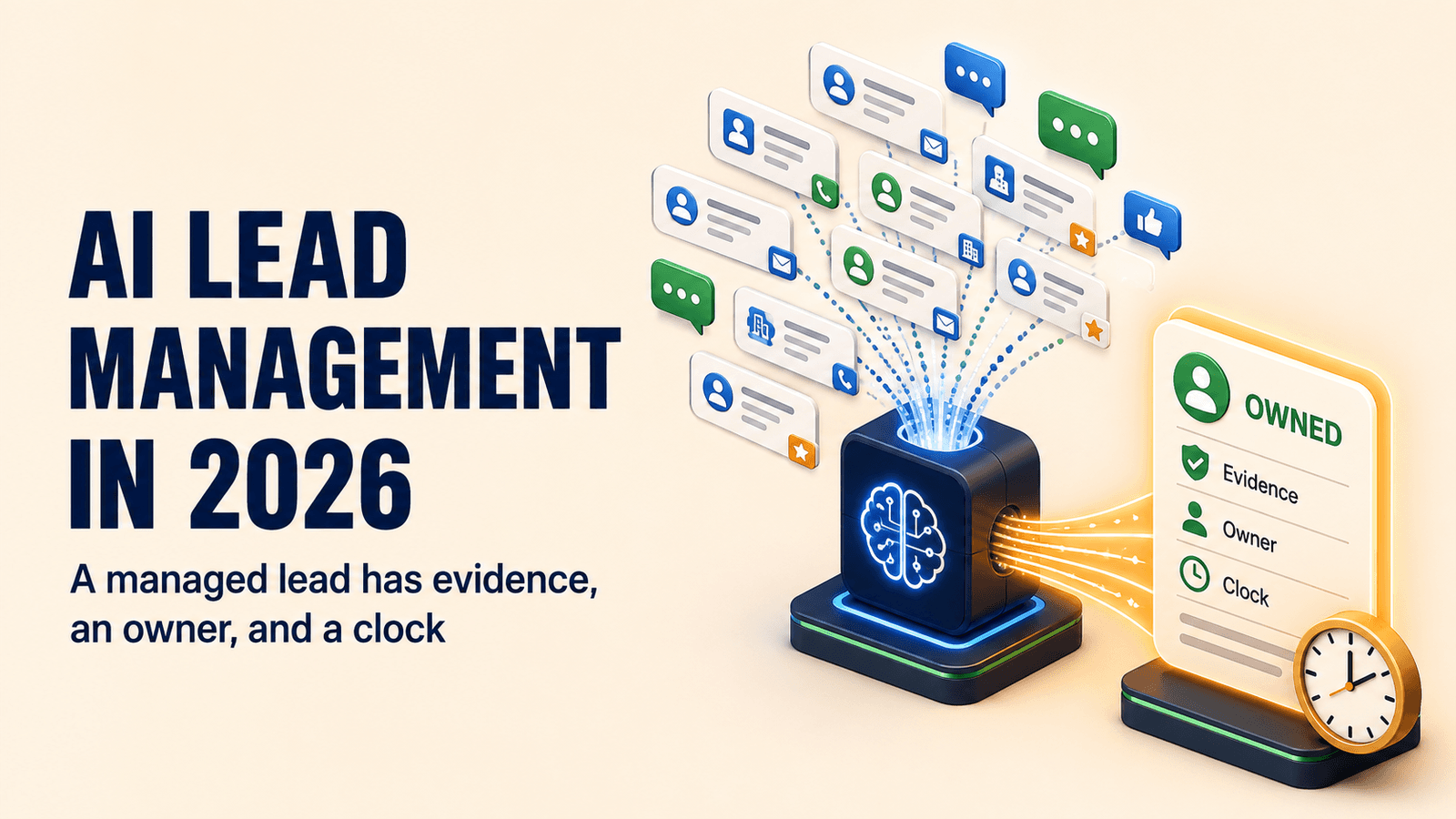
Most lead tools improve capture while leaving qualification, routing, follow-up, and manager visibility fragmented. The Action Chain shows what a complete AI lead management platform must operate.
At 9:12 on Monday, a growth manager opens the lead dashboard after a weekend campaign. There are 486 new records, three owners on leave, 71 unanswered WhatsApp conversations, and no reliable way to tell which enquiry is ready to buy. The software captured demand. It did not manage it.

The operational moment where the hidden cost becomes visible.
AI lead management software should not be judged by how quickly it fills a database. It should be judged by whether it builds an Action Chain from first signal to qualification, ownership, follow-up, handoff, and measurable outcome.
The Smart Queue Trap mistakes prioritization for execution
Many products add a score, summary, or chatbot to a conventional lead queue. The Smart Queue Trap appears when that intelligence does not change what happens next. Reps still decide whom to call, managers still chase updates, and context still disappears between channels.
A useful platform makes five decisions continuously: what the lead wants, how urgent the intent is, who can act, which channel fits, and what must happen if the first action fails. Intelligence without those decisions is decoration.
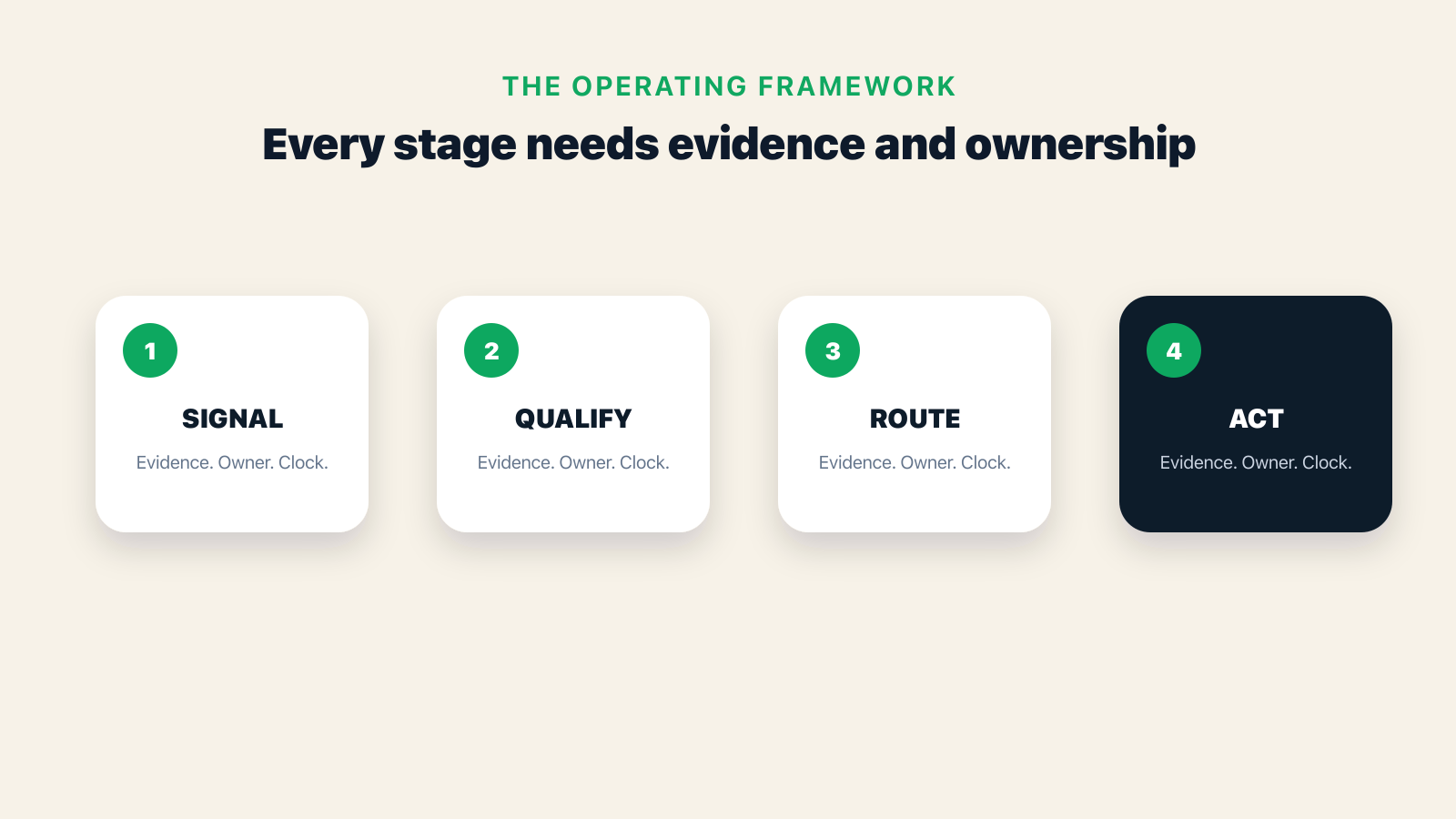
The workflow becomes manageable when causes, decisions, and owners are visible.
Capture is only the first link in the Action Chain
Forms, ads, calls, WhatsApp, email, and web chat describe different moments of intent. Treating them as equivalent records forces the sales team to rediscover context manually.
The lead record should arrive with source, conversation history, declared need, urgency, preferred language, product interest, and a recommended next action. That is the minimum useful handoff from marketing to sales.
- Unify identities across channels
- Interpret intent before assignment
- Preserve the evidence behind every score
- Create a timed next action with an owner
Routing must reflect readiness and capacity
Round-robin distribution is administratively fair but commercially blind. A high-intent enquiry can land with an unavailable rep while a low-intent download receives immediate attention.
AI routing should balance readiness, expertise, territory, language, workload, and response history. It should also reclaim leads when the first owner misses the service level.
The buying test is what happens after the first failure
Ask every vendor what happens when the rep does not call, the customer asks for tomorrow, the WhatsApp message fails, or the lead changes product interest. Production systems live in these exceptions.
A complete platform retries intelligently, changes channel when appropriate, escalates valuable cases, records the outcome, and keeps managers out of spreadsheet archaeology.
A managed lead always has evidence, an owner, and a clock
If any of those three are missing, the record is stored but the opportunity is not being operated.
Brixi operates the lead journey as one connected system
Brixi connects AI assistants, CRM, Voice AI, WhatsApp, email, web chat, buyer intent, workflows, and human teams. The same context that qualifies a lead can route it, trigger follow-up, and guide the next conversation.
Managers see what the system interpreted, what action it took, who owns the exception, and whether the journey advanced. That is the difference between lead software and a customer operating layer.
- Cross-channel identity and conversation memory
- Intent-based scoring and routing
- Automated follow-up with human escalation
- Journey-level outcome visibility
After one quarter, inspect the chain instead of the queue
Measure time to first meaningful response, qualification completion, owner acceptance, missed service levels, handoff completeness, recovery, and conversion by source. Volume alone cannot show whether the system improved.
The strongest evidence is fewer leads without next actions and fewer managers manually reconciling activity across tools.
- Faster meaningful response
- Fewer unowned leads
- Higher qualification completion
- Cleaner source-to-revenue evidence
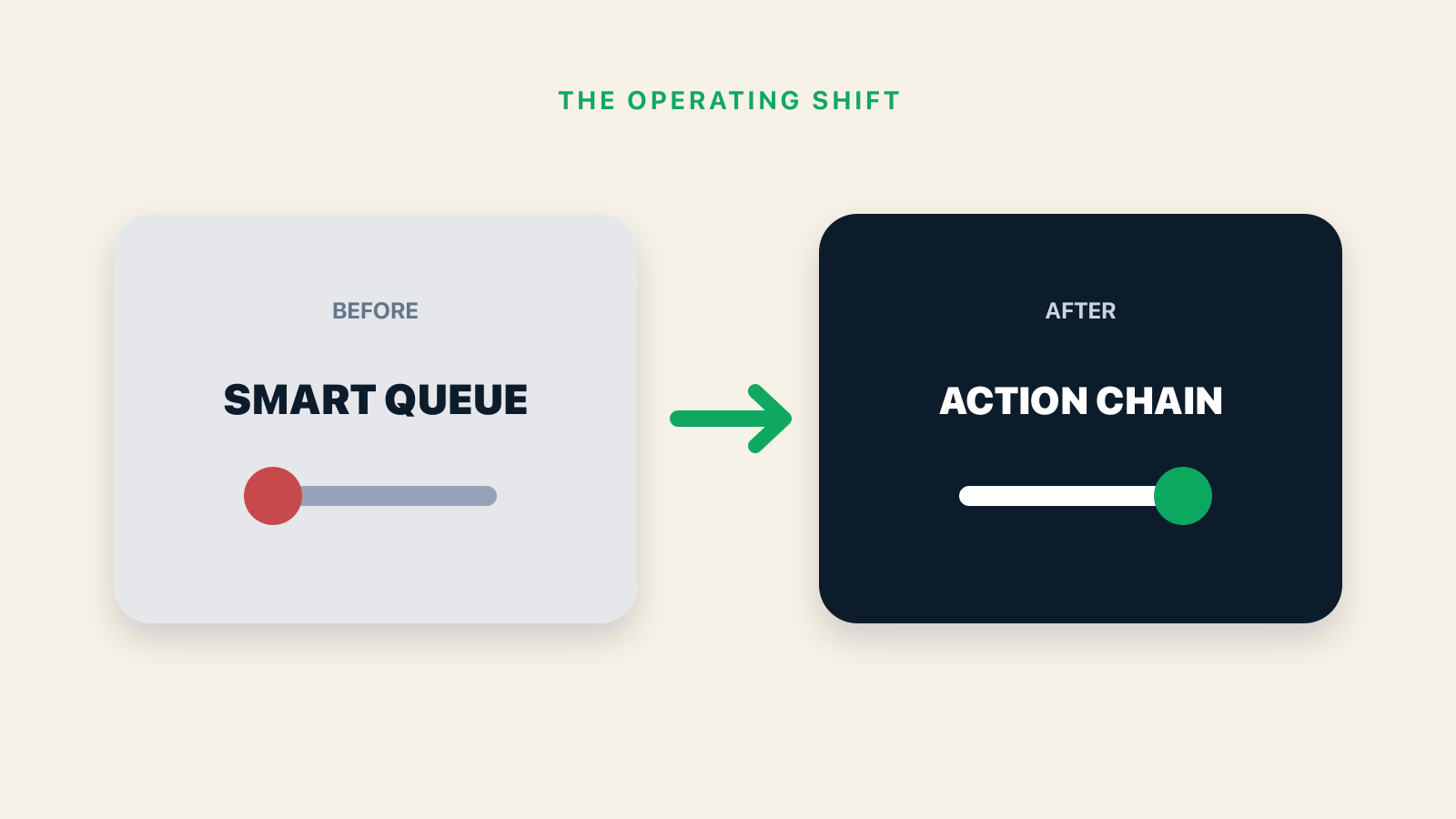
Better customer outcomes appear when the full loop is measured.
The deeper bet is that lead management becomes decision management
The next generation of CRM will not wait for people to translate every signal into a task. It will interpret the customer journey and coordinate the work while the opportunity is still alive.
Teams will keep human judgment for ambiguity, trust, and negotiation. The platform will make sure that judgment arrives with context and at the right moment.
Turn captured demand into an operated journey
See how Brixi connects qualification, CRM, routing, conversations, workflows, and team execution.
Book a lead management demoFrequently Asked Questions
It is software that interprets lead signals, qualifies intent, assigns ownership, coordinates follow-up, records outcomes, and improves decisions across the customer journey.
A conventional CRM primarily stores records and activities. AI lead management also interprets conversations and triggers the next operational action.
Start with the percentage of qualified leads that receive the correct owned action within the required response window.