The Pipeline Aging Trap: When Old Opportunities Distort Revenue
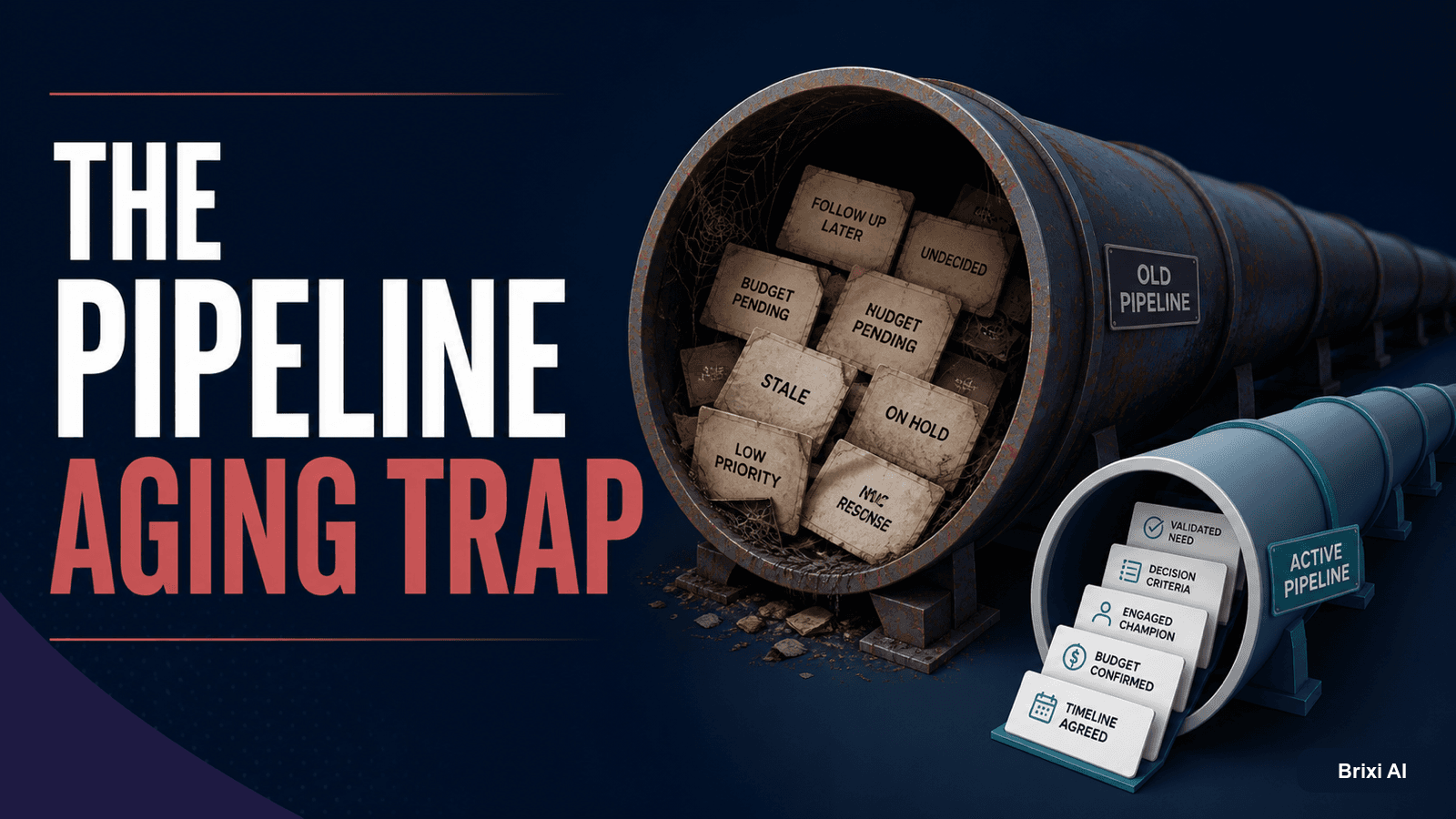
Old opportunities make pipeline coverage look safer than it is. The Pipeline Aging Trap begins when elapsed time is treated as patience instead of evidence.
At Wednesday forecast review, a manager sees four times quota in pipeline. Half of it has not produced a buyer commitment in more than forty days. Removing those deals would expose a coverage problem, so the team keeps moving close dates forward.
Old opportunities create emotional comfort and operational noise. The Pipeline Aging Trap lets elapsed deals occupy forecast, rep attention, and management discussion long after customer evidence has stopped.
The Pipeline Aging Trap confuses presence with possibility
An opportunity remains present because no one recorded a final no. That does not mean its probability remained stable. Time without reciprocal progress is evidence.
Aging should be measured against expected movement for the segment, stage, and deal type. More importantly, it should include the age of the last meaningful buyer commitment, not only days since creation.
Stage age is useful only with commitment age
A deal can sit in one stage while active legal work proceeds. Another can move stages based on rep updates while the buyer has gone silent. Stage age alone cannot distinguish them.
Track the last buyer-created action, the next mutual commitment, stakeholder activity, and changes in response velocity.
Old pipeline consumes real attention
Every stale deal appears in reports, forecasts, sequences, and manager reviews. Reps use it to defend coverage while postponing new pipeline creation.
The cost is not just forecast error. It is attention allocated to accounts without current evidence while newer demand waits.
- Forecast inflation
- Rep follow-up without learning
- Manager time spent on hopeful narratives
- Marketing suppression for contacts incorrectly marked active
Recovery and exit need explicit rules
Aging rules should create one of three actions: recover with a specific hypothesis, move to monitored nurture, or close with an evidence-based reason.
The rule should not punish long buying cycles. It should punish absence of customer-backed progress.
Time is evidence when progress is missing
A healthy old deal has recent reciprocal commitment. An unhealthy one has only seller activity.
Brixi evaluates pipeline age with conversation and intent evidence
Brixi combines CRM stages with response patterns, conversation commitments, stakeholder activity, and buyer behavior. Aging can trigger the right inspection rather than a generic overdue warning.
Workflows can launch a recovery action, route manager review, shift the account to nurture, or close the opportunity with preserved learning.
- Commitment and response evidence
- Stage-specific aging policies
- Recovery, nurture, and exit workflows
- Manager visibility into stale coverage
After a quarter, coverage becomes smaller and more credible
The first cleanup may reduce reported pipeline. That is progress if the remaining coverage contains current buyer evidence.
Track stale value, recovered value, exit reasons, close-date movement, and manager time spent on aged deals.
- Lower stale pipeline value
- Fewer repeated close-date pushes
- More credible coverage ratios
- More rep attention on active demand
The deeper bet is evidence-based pipeline value
Pipeline will stop being valued by stage amount alone. Systems will continuously adjust attention based on customer participation and momentum.
Revenue teams will prefer a smaller pipeline they can explain over a larger pipeline built from administrative optimism.
Make old pipeline prove it is alive
See how Brixi combines CRM, conversation evidence, buyer intent, and workflows to manage aging opportunities.
Explore Brixi CRMFrequently Asked Questions
Compare it with typical stage duration and recent buyer-backed progress for the segment. There is no universal day threshold.
It is the time since the buyer last completed or agreed to a concrete reciprocal action, such as a meeting, document review, stakeholder introduction, or decision step.
No. Recover, nurture, or close them with preserved history and a reason that supports future learning and reactivation.