The COD Confirmation Loop: Reduce Failed Deliveries Without More Callers
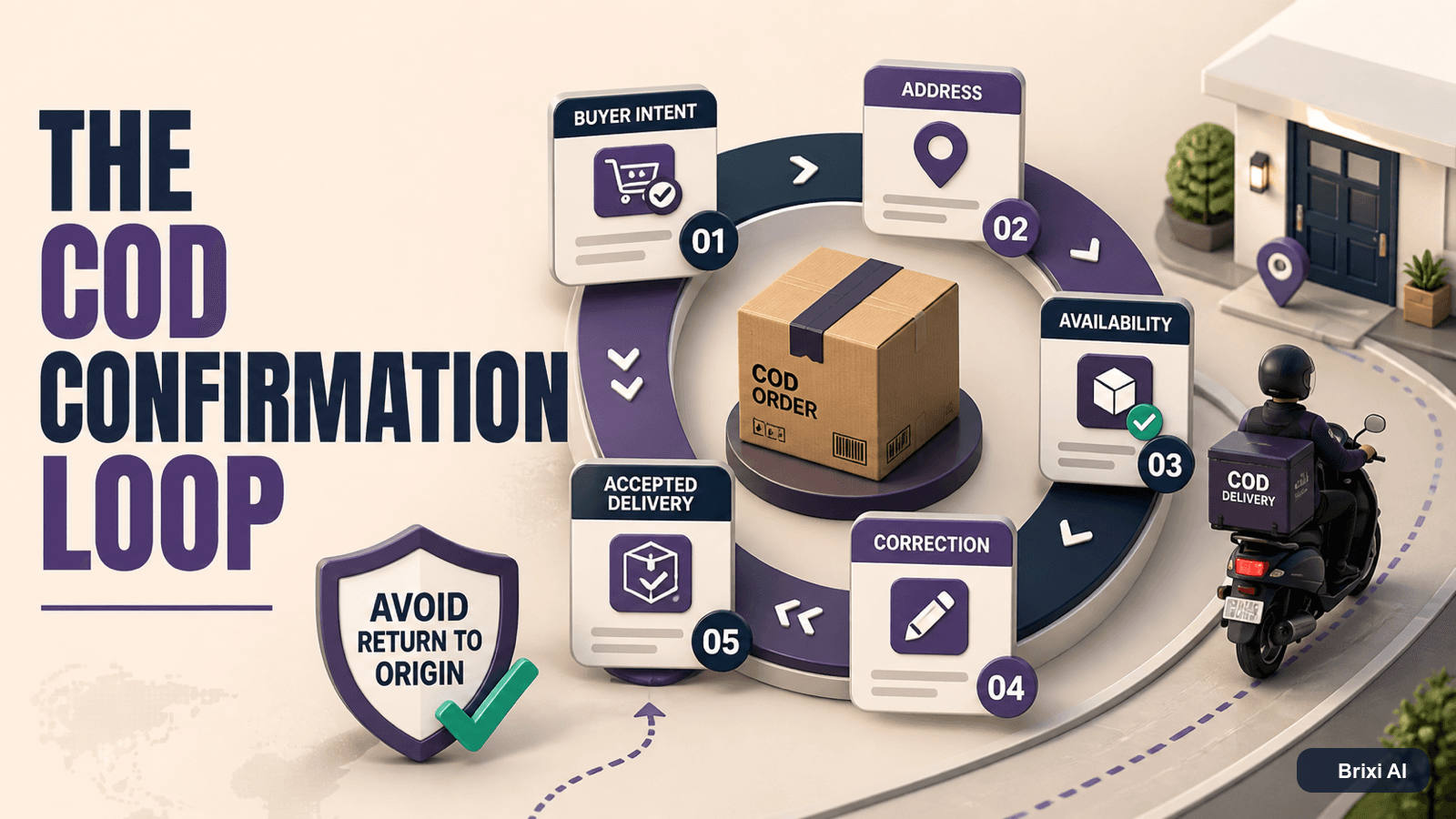
A COD order is not complete when checkout ends. The Confirmation Loop closes only when buyer intent, address, availability, and delivery expectations are clear.
At 5:15 on Wednesday, an ecommerce operations lead reviews yesterday's undelivered orders. Some buyers forgot the order. Some were unavailable. One address was incomplete. Several customers did not answer an unfamiliar number. Each failure now carries shipping, return, support, and inventory cost.
The team responds by adding more confirmation calls. Volume rises, but the workflow still treats every order as the same yes-or-no task. The COD Confirmation Loop needs to resolve readiness, not merely record contact.
The Checkout Completion Illusion hides delivery uncertainty
Checkout captures an order, not guaranteed acceptance at the door. The Checkout Completion Illusion ignores the operational questions between intent and delivery.
A confirmation loop verifies the buyer, order, address, timing, payment expectation, and exceptions, then carries that context into fulfillment.
Confirmation should use the channel the buyer will answer
Some buyers prefer a quick message, others answer a local-language call, and some need both. Repeated blind dialing wastes capacity and lowers trust.
Use consent, previous response, order value, risk, and urgency to select channel and timing.
A no can be more useful than a weak yes
Cancellation before dispatch protects logistics cost and inventory. The system should make correction or cancellation easy instead of pressuring the buyer to confirm.
Capture reasons such as duplicate, price concern, timing, address, accidental order, or changed mind. Those outcomes improve acquisition and checkout.
- Confirm order and payable amount
- Validate address and delivery availability
- Offer correction, reschedule, or cancellation
- Escalate high-value or unusual exceptions
Fulfillment needs the result, not another report
Confirmed time windows, corrected addresses, and customer instructions must travel to the delivery workflow. Otherwise confirmation creates information that operations cannot use.
Status changes should also suppress outdated messages and give support the same order context.
Confirmation protects both conversion and cost
A strong loop preserves real orders, cancels weak ones early, and sends usable customer context into delivery.
Brixi coordinates voice, messaging, CRM, and delivery action
Brixi AI assistants can confirm orders through voice or messaging, understand common exceptions, update customer context, and route cases to people.
Workflows can pass verified outcomes to operations, trigger corrections, stop irrelevant outreach, and retain the conversation for support.
- Multilingual voice and messaging confirmation
- Intent and exception classification
- Address, timing, and order correction workflows
- Human escalation with full context
After a quarter, measure cost per accepted delivery
Track confirmation, correction, pre-dispatch cancellation, dispatch, delivery, return, contact attempts, and support cost by cohort.
The right workflow may increase early cancellations while lowering total loss. Judge it by accepted deliveries and avoided waste, not confirmation rate alone.
- Lower avoidable return-to-origin cost
- Fewer manual confirmation attempts
- More usable delivery instructions
- Clearer reasons for COD failure
The deeper bet is conversational fulfillment
Commerce operations will increasingly interpret customer intent between checkout and delivery. Static status notifications are not enough when circumstances change.
A connected customer platform can turn those changes into routing, inventory, delivery, and service actions before failure becomes expensive.
Close the COD Confirmation Loop
See how Brixi connects AI voice, messaging, customer context, exceptions, and fulfillment workflows.
Book a commerce automation demoFrequently Asked Questions
Yes, for approved confirmation, correction, scheduling, and cancellation paths, with human escalation for unusual, sensitive, or high-value cases.
No. Track accepted delivery, return-to-origin, pre-dispatch cancellation, attempts, correction, support cost, and customer complaints.
Use customer preference, consent, prior response, language, order risk, value, urgency, and message failure to choose the channel.