Buyer Intent Tracking Playbook for Serious Leads
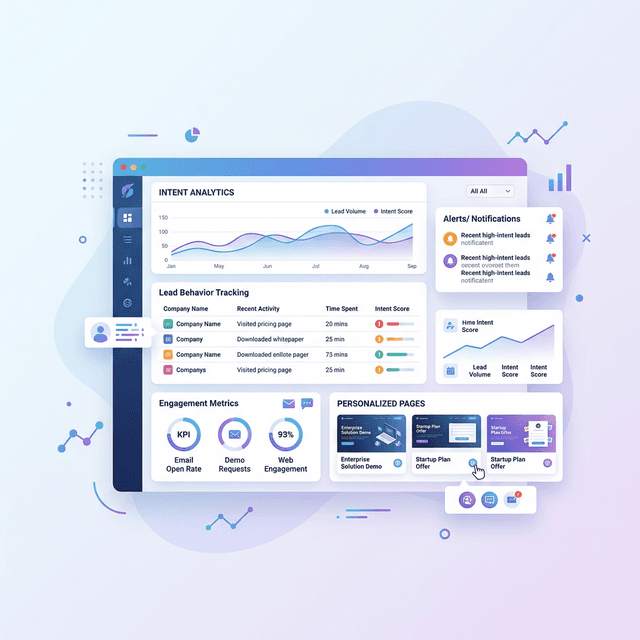
Most sales teams qualify leads by how fast they reply. This playbook shows how buyer intent tracking, lead behavior signals, and Intent Depth Scoring separate genuinely ready buyers from curious ones, before a rep wastes a call on the wrong person.
Lalit manages a team of seven real estate sales reps in Vadodara. On a Tuesday morning in February, one of his reps spent forty minutes preparing a site visit proposal for a lead who had replied to every WhatsApp message within minutes. The lead never showed up. Meanwhile, another lead who had gone quiet for three days, but had reviewed the pricing page, the payment schedule, and the floor plan document four times overnight, called the office and asked to speak to someone senior. No rep was prepped. The deal closed two weeks late because the follow-up was disorganized.
The problem was not effort. The problem was that Lalit’s team was reading the wrong signals. Quick replies are easy to count. Genuine purchase evaluation leaves a different kind of trace, one that most CRMs are not built to surface.
Why does reply speed mislead sales teams?
Response speed is visible, timestamped, and sits neatly in a CRM field. It feels like a qualification signal because it is measurable. But a fast reply can mean curiosity, boredom, or a reflex click on a notification. It says nothing about whether a person has started evaluating your product against alternatives, looked at whether they can afford it, or begun consulting the people who will share the decision.
Serious buyers often go quiet precisely when they are most engaged. They are reading, comparing, calculating. They return to pricing pages without prompting. They share a document with a spouse or a business partner at ten at night. These behaviors are invisible to a team watching for WhatsApp ticks and call answers.
The anti-pattern has a name: Reply-Rate Qualification. It is the habit of treating communication responsiveness as a proxy for purchase seriousness. Teams that run on Reply-Rate Qualification keep their pipelines full of talkative prospects and systematically under-serve the buyers who are quietly moving toward a decision.
What is an Intent Depth Score and why does it outperform lead scoring?
Traditional lead scoring assigns points based on demographic fit and form fills. A prospect who matches the ideal customer profile and downloads a brochure scores high, regardless of whether they ever look at anything decision-critical again. This is profile scoring, not intent scoring.
The Intent Depth Score is the ownable concept at the center of this playbook. It measures not whether a prospect fits your buyer persona, but how deep into decision-critical content they have traveled and how recently. A lead who visited the pricing page twice, read the payment terms, and returned the next day scores higher than a lead who opened five brochures in a single session and never came back.
Three dimensions build an Intent Depth Score: content depth (did they reach decision-stage material like pricing, legal terms, or implementation details), recency (did the behavior happen in the last 24 to 48 hours), and breadth (how many decision-relevant sections did they cover across multiple sessions). A single spike does not make a serious buyer. A pattern across these three dimensions does.
The contrarian point worth naming here: a high Intent Depth Score is not a buying signal on its own. It is an engagement signal. A prospect can be deeply engaged and still not buy, because budget is not there, because a competitor locked them in first, or because a family member vetoed the decision. What the Intent Depth Score does is tell your team where to concentrate attention. It does not replace discovery conversations. It prioritizes them.
Which buyer intent signals actually predict serious evaluation?
Not all behavior is equal. Buyer intent tracking works because it distinguishes exploratory clicks from evaluation-stage engagement. Here are the signal types that teams consistently find predictive.
- Return visits to pricing or payment pages within 24 hours of a sales conversation.
- Progressive content consumption: moving from overview material to terms, timelines, or technical specs.
- Late-evening or early-morning access patterns, which suggest personal research outside work hours.
- Document sharing behavior: when a microsite or attachment is opened from a second device or forwarded.
- Extended time on objection-related content, such as cancellation policies or comparison sections.
- Re-engagement after a period of silence, particularly on decision-stage pages rather than gallery or overview pages.
The inverse is also useful. A lead who only views image galleries, replies quickly but never visits commercial pages, and has not returned after two weeks is showing exploratory behavior, not evaluation behavior. Treating this lead the same as a high-Intent Depth Score prospect wastes a closer’s time and delays the response to the buyer who is actually ready.
How do personalized microsites improve buyer intent signal quality?
One reason intent signals are noisy is that buyers interact with content scattered across email attachments, WhatsApp forwards, and general website pages. You cannot reliably track which section of a PDF someone read or whether they opened a brochure or just downloaded it.
Personalized microsites consolidate the entire buyer journey into a single tracked environment. Each microsite is built for one prospect or household and contains everything relevant to their evaluation: the specific unit or product they enquired about, pricing for their situation, FAQs that address their stated objections, and a clear next step. Because every click and every section view is tied to a known lead record, the intent signals that come back are clean and attributable.
In practice, teams using personalized microsites report a sharper divide between exploratory and serious leads within the first two weeks. A prospect who opens the microsite once and never returns is behaving differently from one who visits three times, spends time on the payment calculator, and shares the link. Both patterns are now visible and comparable. Before microsites, both leads looked the same in the CRM.
What does a behavior-driven sales workflow look like in practice?
The workflow starts before the follow-up call, not during it. Before a rep picks up the phone or sends a WhatsApp message, they check the lead’s Intent Depth Score and the most recent behavior summary. Did the lead revisit pricing last night? Did they open the microsite on a new device? Did they spend time on the objection FAQ section?
This behavior context changes the opening of the conversation. Instead of asking "Did you have a chance to review the materials?", the rep says "I noticed you looked at the payment schedule in detail, I wanted to walk you through the flexible plan we have for your situation." The rep already knows what the buyer cares about. The buyer does not have to explain from the beginning.
Sales engagement analytics closes the loop. After the call, the team records which behavior patterns preceded successful qualification conversations and which ones led to stalls. Over six to eight weeks, the patterns sharpen. Reps start to know which signal combinations in their specific market predict a serious buyer versus a curious one.
Key contrast Behavior-driven vs. cadence-driven follow-up
A cadence-driven team contacts every lead on days 1, 3, and 7 regardless of what the buyer did in between. A behavior-driven team sends a contextual message within two hours of a high-intent signal and waits longer on low-signal leads. In most deployments, the behavior-driven approach reaches the serious buyer at the right moment and stops wasting rep time on the passive majority.
What are the most common buyer intent tracking failure patterns?
Failure pattern: treating all signals as equal
A CRM that scores a brochure download the same as a pricing page visit creates noise. Teams end up with a flat signal landscape where genuinely high-intent behavior is buried under low-stakes activity. The fix is signal tiering: define two or three tiers of intent weight and assign events to them. Pricing page visits and return sessions belong in the top tier. Newsletter opens belong at the bottom.
Failure pattern: ignoring recency in favor of volume
A lead who was very active three weeks ago but has not engaged since is less ready than a lead who looked at payment terms yesterday. Volume-based scoring systems miss this. Intent Depth Scores should decay over time, so that old engagement does not keep a lead artificially elevated in the priority queue.
Failure pattern: routing high-intent leads to junior reps
When a lead shows multi-session, decision-depth engagement and then receives a generic follow-up from a rep who has not read the behavior summary, the deal stalls. High Intent Depth Scores should trigger routing rules, not just alert notifications. The lead should land with a rep who has the context and the seniority to close, or at minimum to run a strong discovery conversation.
What changes after a quarter of using intent-based qualification?
The most visible change after ninety days is not conversion rate, though that usually improves. It is pipeline confidence. Managers stop asking "which of these fifty leads should we call today?" because the answer is visible in the priority queue. Reps stop running through the full list in queue order and start working the top of the intent-ranked feed.
The second change is conversation quality. When reps open calls with specific behavioral context, "I saw you spent time on the payment schedule section last night", buyers feel understood rather than cold-called. The tone of the conversation shifts. Objections come earlier and more honestly, which speeds up qualification.
The third change is coaching data. Sales engagement analytics starts producing patterns the team can act on. Which signal combinations predict a closed deal in this market? Which lead behaviors correlate with last-minute drop-offs? Which response timing works best for high-intent leads? These are answerable questions after ninety days. Before intent tracking, they were guesses.
- Priority queues replace queue-order calling, cutting wasted dial time in most deployments.
- Reps open conversations with behavioral context, which shortens discovery and builds trust.
- Managers can forecast more accurately because serious buyers are identified earlier.
- Coaching becomes evidence-based: signal patterns replace intuition-based rep feedback.
- Personalized microsites generate cleaner data for each account, reducing CRM noise.
- Lead response SLAs become meaningful: high-Intent Depth Score leads get priority routing within a defined window.
The deeper bet: intent tracking is a team operating model, not a feature
Lalit’s problem in Vadodara was not that he lacked a good CRM. His team had one. The problem was that the CRM recorded activity without interpreting it. It told him that a lead replied quickly. It did not tell him that another lead had been silently reading decision-critical content across three sessions over forty hours.
Buyer intent tracking only works as a sustained operating model when the whole team uses the same signal language, the same Intent Depth Score definitions, and the same routing rules. A single rep using intent data while others ignore it creates inconsistency. A manager who checks intent dashboards once a week but does not build them into daily huddles leaves value on the table.
The deeper bet is this: the teams that will consistently outperform on lead conversion over the next three years are not the ones with the biggest lead lists or the most aggressive dialing cadences. They are the ones who understand what their buyers are doing between conversations, build their responses around that behavior, and keep refining their signal definitions as they accumulate outcome data.
Lalit’s team rebuilt their qualification workflow around Intent Depth Scores and personalized microsites over about ten weeks. They did not hire more reps. They did not increase call volume. They changed what they looked at before picking up the phone. That was the entire intervention.
Ready to qualify leads by intent, not guesswork?
Brixi’s buyer intent engine tracks lead behavior across sessions, surfaces Intent Depth Scores in real time, and routes serious buyers to the right rep before they go cold.
Explore the Buyer Intent EngineFrequently Asked Questions
Buyer intent tracking is the practice of observing how prospects interact with decision-critical content, such as pricing pages, payment terms, implementation details, and comparison sections. Instead of relying on reply speed or form fills, intent tracking measures content depth, recency, and return behavior to estimate how seriously a lead is evaluating a purchase. In practice, each interaction is logged against the lead record, and patterns across sessions are used to generate an Intent Depth Score that helps reps prioritize their outreach.
A serious lead typically shows a pattern of progressive, multi-session engagement with decision-stage content. Look for return visits to pricing or payment pages within 24 to 48 hours, transitions from overview material to legal or technical detail, late-evening access that suggests personal research, and document sharing behavior that indicates multiple stakeholders are involved. A single click or a fast reply is not enough. The signal that matters is a pattern across multiple sessions and multiple decision-relevant sections.
A personalized microsite is a dedicated page built for one lead or account that consolidates all relevant purchase information in a single tracked environment: specific product or unit details, pricing for their situation, objection FAQs, and a clear next step. Because every interaction happens in one place and is tied to a known lead record, the intent signals are clean and attributable. Teams can see exactly which sections a lead reviewed, how long they spent on each, and whether they shared the link, providing far better qualification data than scattered email attachments or WhatsApp brochures.
Traditional lead scoring rewards demographic fit and form-fill activity. A prospect who matches your ideal customer profile and downloads a brochure scores high, regardless of what they do next. An Intent Depth Score measures how deep a prospect has traveled into decision-critical content and how recently. It weights content depth (did they reach pricing or commercial terms), recency (did the behavior happen in the last one to two days), and breadth (how many decision-relevant sections across multiple sessions). This makes it a better predictor of who is actively evaluating, not just who fits the profile.